How AI Improves Appliance Repair Scheduling

AI scheduling and phone answering cut missed calls, optimize routes, automate customer messages, and boost bookings and revenue for appliance repair businesses.

How AI Improves Appliance Repair Scheduling

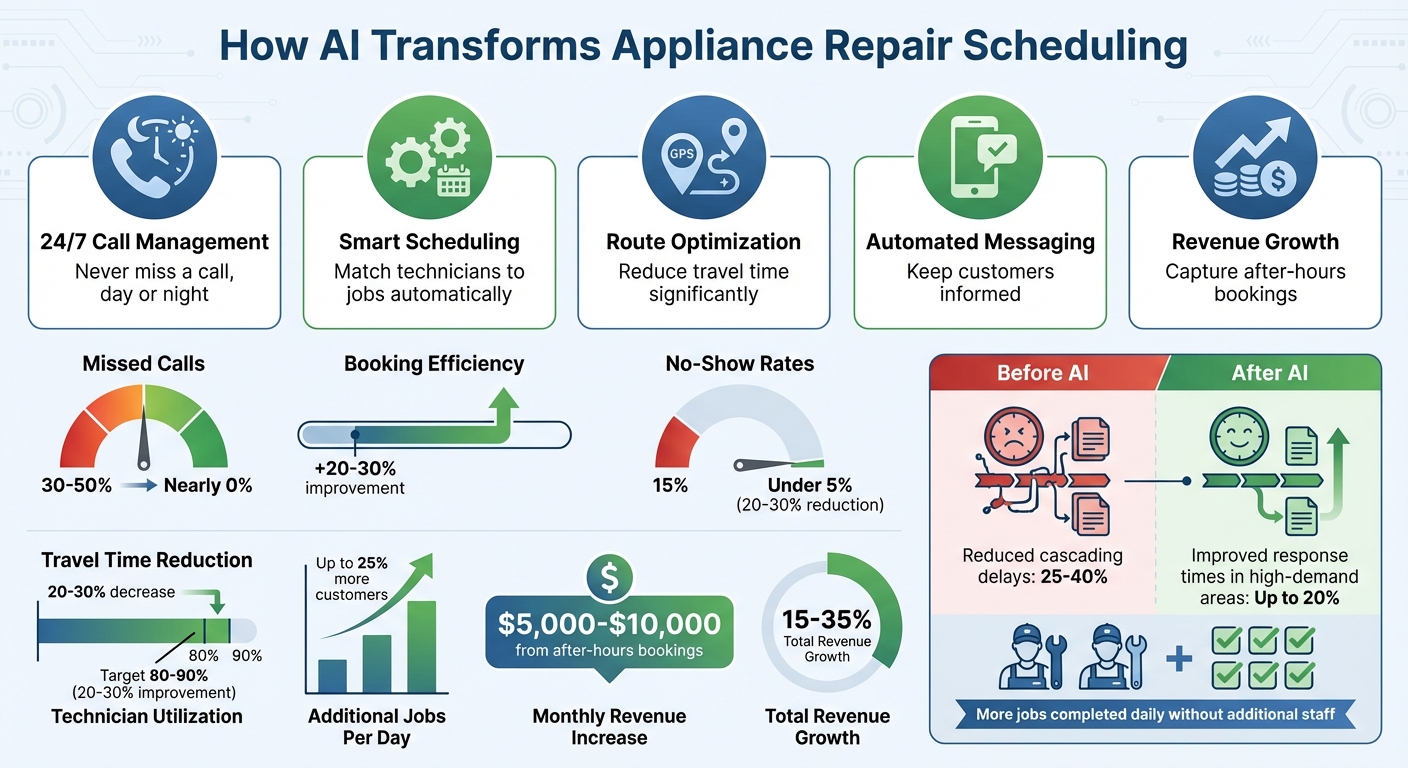
AI tools are changing how appliance repair businesses handle scheduling. They help manage appointments, answer calls, and optimize technician routes automatically, saving time and increasing efficiency. Key benefits include:

  • 24/7 Call Management: AI-powered systems answer calls anytime, book appointments, and update schedules instantly.
  • Smart Scheduling: Assigns jobs based on technician skills, location, and availability, reducing errors and delays.
  • Route Optimization: Cuts travel time by 20–30%, allowing technicians to complete more jobs daily.
  • Automated Messaging: Sends reminders, confirmations, and updates to customers, reducing no-shows by up to 10%.
  • Revenue Growth: Businesses can gain $5,000–$10,000 extra monthly from after-hours bookings alone.
AI Scheduling Impact on Appliance Repair Business Metrics

AI Scheduling Impact on Appliance Repair Business Metrics

How AI Improves Appliance Repair Scheduling

What AI Scheduling Means for Your Business

AI scheduling tools take the guesswork out of managing appointments by automatically assigning and updating schedules based on real-time factors like technician skills, location, job duration, and customer preferences. Unlike traditional methods - think phone tag, paper calendars, or basic online booking - these tools continuously optimize schedules, minimizing human error along the way.

For appliance repair businesses, this means integrating tools like AI phone answering, real-time calendar syncing, smart dispatch, and automated messaging into one streamlined system. Even smaller operations can now access features that were once only available to larger companies. With AI handling routine scheduling tasks, your team can focus on what they do best: fixing appliances.

Core Features of AI Scheduling Tools

AI scheduling tools come packed with features designed to simplify and enhance your operations:

  • Calendar Syncing: These tools connect directly with platforms like Google Calendar or Outlook, ensuring a two-way sync that prevents double bookings. They even block out time for travel or breaks. For instance, if you book a job at 10:00 AM, the system calculates travel time from the previous appointment automatically.
  • Smart Job Assignment: Matching the right technician to the right job is key. The system considers certifications, experience, appliance type, brand expertise, and proximity. For example, a seasoned technician might handle a complex refrigerator compressor repair, while a newer team member could take on a simpler dryer belt replacement. This approach improves first-time fix rates and keeps customers happy.
  • Route Optimization: By analyzing real-time traffic, geography, appointment windows, and job durations, AI can create efficient daily routes. This can reduce driving time by up to 20–30%, often freeing up time for technicians to complete an additional job each day. Historical data also helps predict job durations - like estimating a refrigerator compressor replacement at three hours - so schedules stay realistic and delays are minimized.
  • Automated Messaging: From booking confirmations to reminders, these tools send texts and emails to customers. For example, customers might receive a message saying, "Your appointment is scheduled for tomorrow between 10:00 AM and 12:00 PM." They also provide real-time updates, such as estimated arrival times. If something changes - like a job running long or an emergency popping up - the system can dynamically reschedule and notify affected customers.

These features work together to create a seamless scheduling experience, laying the groundwork for enhanced phone answering services.

How AI Phone Answering Services Work

AI phone answering services, like Answering Agent, take customer service to the next level by managing calls and bookings around the clock. Imagine a customer calling about a broken refrigerator late at night. The AI instantly answers with a natural, human-like voice, using a customized script to gather essential information such as the customer’s name, address, appliance details, issue description, and preferred time window. It then checks your live calendar to find available slots that fit the job’s requirements.

Once the customer selects a time, the AI books the appointment directly into your schedule and sends a confirmation message with all the details - date, time window, and even preparatory instructions like "Please have the model number ready." The system logs the lead, tags it by urgency, and syncs it with your CRM or field-service software so technicians can access it on their mobile devices.

The best part? This process runs smoothly whether it’s 2:00 PM or 2:00 AM. The AI can handle multiple calls simultaneously, eliminating hold times and ensuring no booking opportunity slips through the cracks. With these tools in place, your team can stay laser-focused on repairs while the AI takes care of the rest.

How to Add AI Scheduling to Your Workflow

Review Your Current Scheduling Process

Before diving into AI scheduling, take a close look at how you currently handle appointments. Map out each step - from the first customer contact to when a technician arrives. Pay attention to who answers calls, what details are collected (like appliance type, brand, issue, address, and preferred time), and how long these calls typically last.

Gather data from the past 30 to 90 days to get a clear picture of your call volume, voicemail rates, callback times, bookings, no-shows, and cancellations. Look at how you manage emergencies versus routine repairs and the time windows you promise customers (e.g., 10:00 AM–12:00 PM). Identify any bottlenecks - like late-night calendar juggling or double-bookings during busy hours. This information will act as your baseline for measuring improvements once AI scheduling is in place.

To make the transition smoother, standardize job types and assign realistic durations. These templates will help the AI create accurate scheduling rules, ensuring your time slots are based on real data instead of guesswork.

Once you’ve established this baseline, you’re ready to integrate AI tools into your scheduling process.

Connect AI Tools to Your Calendar

After understanding your workflow, select an AI scheduling tool that works well with the calendar system you already use - whether it’s Google Calendar, Microsoft 365, or a field service management platform. Look for features tailored to home services, such as 24/7 booking options, flexible service windows, job duration templates, and route-aware scheduling.

Set up technician schedules, including their working hours, days off, and service areas (defined by ZIP codes or a specific radius). Then, configure essential booking rules, like setting a minimum notice period (e.g., no same-day bookings after 3:00 PM), limiting the number of jobs per technician each day, and enabling automatic job reassignment for route optimization.

Use historical data to create realistic job durations. For example, if a refrigerator repair typically takes two hours, set the template for 2.5 hours to account for variability. Add 15–30 minutes of buffer time between jobs for documentation, cleanup, or unexpected delays. In cities with heavy traffic, consider larger buffers to accommodate fluctuating drive times. If your business gets a lot of after-hours calls, an AI-powered phone answering service like Answering Agent can integrate with your calendar. This ensures you don’t lose potential bookings by automatically scheduling available slots, capturing leads, and managing multiple calls at once.

Once your calendar is set up, focus on automating customer communications to streamline the appointment process.

Set Up Automated Customer Messages

Automate communication with your customers to make the process seamless. Send appointment confirmations via SMS or email, including the date, time window, fee estimate, and any preparation instructions. Since many U.S. customers rely on text reminders, schedule follow-up messages 24 hours and again 2–3 hours before the appointment. Make sure these messages include clear options for confirming, rescheduling, or canceling.

If your AI system allows, send a "technician en route" text about 30 minutes before arrival. This not only keeps customers informed but also reduces the chances of wasted trips. After the service is completed, automate follow-up messages to request reviews, remind customers about maintenance for larger repairs, or provide updates on parts that are still on order.

AI phone answering services like Answering Agent can also handle intake, confirm appointments, and send timely reminders. These tools can be customized to match your brand’s voice and tone, ensuring the AI feels natural while collecting all the necessary details - day or night. This way, you can stay connected with customers without missing a beat.

Tracking Results from AI Scheduling

Metrics to Monitor

To measure how well your AI scheduling system is working, keep an eye on a few key metrics. Start with missed call rates - AI phone answering services can drastically cut missed calls, taking them from 30–50% down to nearly zero. This alone can lead to a 15–20% boost in bookings.

Next, focus on booking efficiency, which measures how effectively calls turn into appointments. Thanks to faster calendar integration and smart slot suggestions tailored to job types, AI systems can improve this rate by 20–30%.

Another vital metric is no-show rates. Automated reminders and accurate ETA notifications can make a huge difference, reducing no-shows from around 15% to under 5%. Some businesses even report reductions of 20–30%.

Technician utilization rates are equally important. This is calculated by dividing billable hours by total available hours, with a target range of 80–90%. AI-driven route optimization and smarter dispatching can raise utilization by 20–30%, cut travel times by as much as 30%, and allow technicians to handle up to 25% more customers daily - all without hiring extra staff.

Lastly, track the revenue impact. For mid-sized appliance repair businesses, capturing after-hours bookings through AI can add an extra $5,000–$10,000 in monthly revenue. This can contribute to total revenue growth of 15–35%.

These metrics provide a clear picture of your system's performance and highlight areas for improvement.

Using Data to Improve Your AI Setup

With these insights in hand, make it a habit to review your AI dashboard weekly. Adjust scheduling templates based on trends in conversions and job duration discrepancies to maintain the progress you've achieved. Dive into call transcripts to identify gaps - perhaps customers are asking about services in areas you haven’t configured or hinting that job duration estimates need tweaking. If no-shows are climbing, it might be time to revisit how reminders and time windows are being set.

Historical repair data can also be a goldmine for fine-tuning. For example, if your logs show that washer repairs typically take 90 minutes while dryer repairs average 120 minutes, update your scheduling templates accordingly. This adjustment alone can reduce cascading delays by 25–40%.

Geographic patterns in call data can reveal high-demand areas. If urban zones account for 30% more calls, expanding your service coverage there could improve response times by up to 20%.

AI tools like Answering Agent can further enhance your efforts by providing call summaries, sentiment analysis, and performance reports. These features help you pinpoint opportunities to refine your scheduling system and keep improving over time.

AI Scheduling For Appliance Repair Businesses: What’s Working in 2025?

Conclusion

AI scheduling is reshaping how appliance repair businesses handle their operations. By ensuring no call goes unanswered and appointments can be managed around the clock, it turns every inquiry into potential revenue. Say goodbye to missed calls and the lost income that comes with them.

But the benefits don’t stop there. AI-driven scheduling brings a new level of efficiency to the table. With smarter scheduling, technicians can complete more jobs each day without stretching resources thin. Advanced dispatching ensures the right technician is assigned to the right task, cutting down on costly callbacks and keeping the workflow smooth. Plus, automated reminders help reduce no-shows, keeping schedules packed and productive.

On the customer side, the experience is elevated. Instant responses and accurate information build trust, leading to happier clients, stronger loyalty, and glowing reviews.

For mid-sized appliance repair companies, the financial upside is undeniable. Capturing after-hours bookings means more revenue, while the operational improvements allow you to serve more customers profitably. Answering Agent makes this possible with natural, human-like conversations that can handle unlimited calls at once, sync seamlessly with your existing calendar systems, and provide detailed call summaries to fine-tune your operations.

FAQs

How can AI scheduling boost efficiency for appliance repair technicians?

AI-powered scheduling takes the hassle out of appointment management by automating the process and cutting down on missed calls. With real-time updates sent directly to technicians, they can stay on top of their schedules and concentrate fully on repairs without unnecessary interruptions. This efficient system helps them make better use of their time, reduces downtime, speeds up service, and boosts customer satisfaction.

How does AI help reduce missed repair appointments?

AI plays a key role in reducing missed repair appointments by sending automated reminders and follow-ups at any time of the day. These reminders ensure customers stay informed and engaged, increasing the chances that they'll arrive for their scheduled appointments.

On top of that, AI tools can swiftly handle rescheduling when appointments are canceled. This helps keep your calendar organized and ensures your operations stay on track. By minimizing no-shows, this approach not only boosts efficiency but also enhances customer satisfaction.

How do AI-powered phone answering services help appliance repair businesses?

AI-driven phone answering services are a game-changer for appliance repair businesses, ensuring no customer call goes unanswered - even after hours. With round-the-clock availability, these services handle appointment scheduling and answer inquiries effortlessly, helping businesses capture opportunities they might otherwise miss while keeping customers happy.

Beyond just answering calls, these tools simplify operations by automating scheduling and providing consistent, professional communication. The result? Businesses save time, cut costs, and convert more calls into revenue, all while maintaining top-notch service standards.

Related Blog Posts

Answering Agent