Most calendar sync errors come from three problems. Two systems disagree about who owns an event. A booking lands in a slot another calendar already filled. Or a time zone gets converted twice, or not at all. Whatever tool you pick has to handle all three in the place your bookings actually come from.
This post checks six tools against four things: sync reliability, integrations, conflict detection, and time zone handling. If most appointments come in by phone, start with Answering Agent. If they come from meetings, tasks, or shared team calendars, skip to the comparison table.
1. Answering Agent
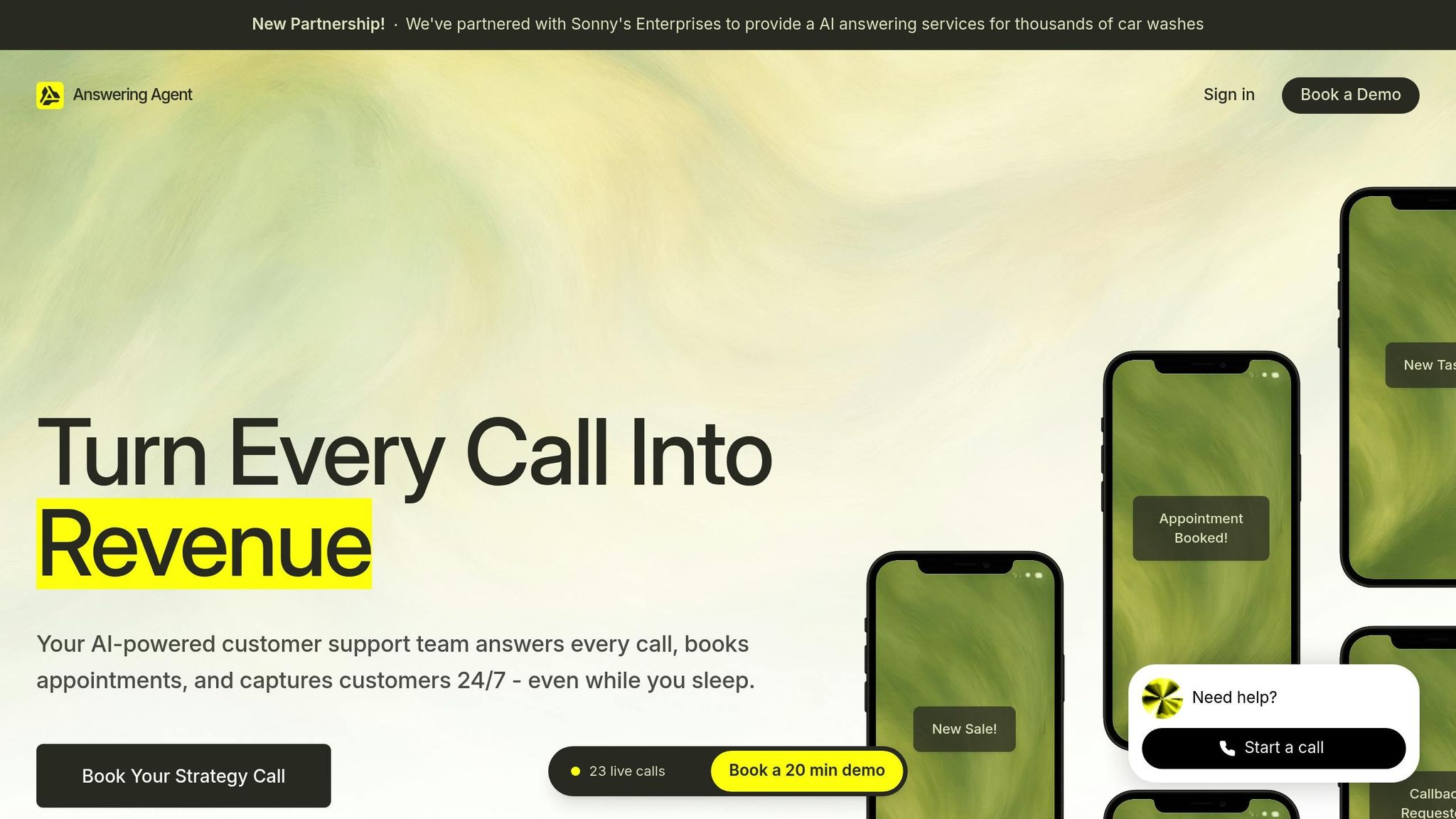
Answering Agent answers business calls and books appointments during the call. The calendar updates as the booking happens, so a phone booking can't sit in someone's notes waiting to be entered by hand.
- Sync: Each booking writes to the calendar in real time.
- Integrations: Connects to Google Calendar, Calendly, Acuity Scheduling, and other apps through Zapier, so you keep your existing calendar.
- Conflicts: Checks availability while the caller is on the line and offers an open slot instead of double-booking.
- Time zones: Converts times automatically, including daylight saving changes.
For how this works in a service business, see AI Phone Scheduling for Service Businesses.
2. Reclaim AI
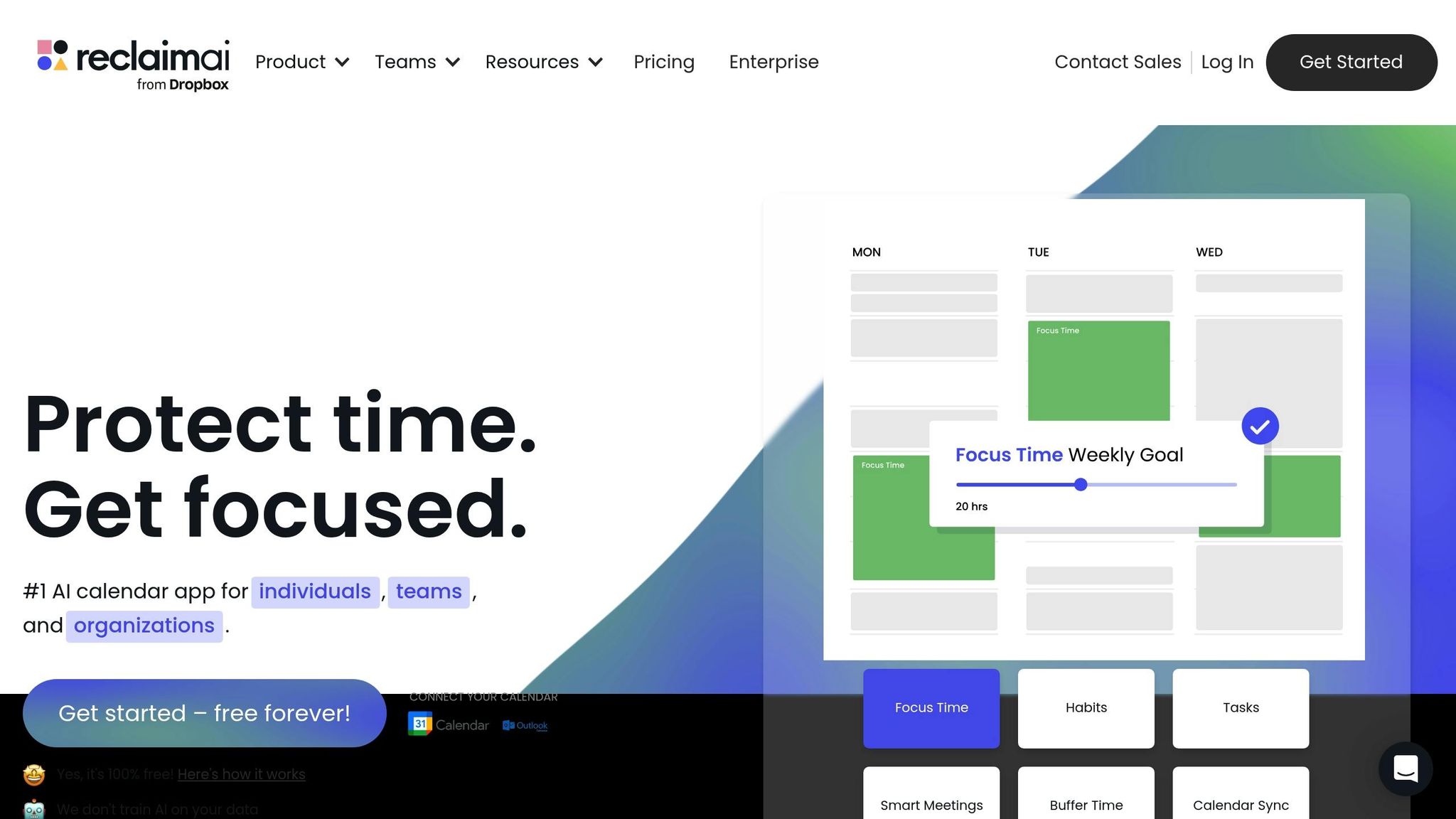
Reclaim works with Google Calendar and Microsoft Outlook. It reschedules flexible events automatically when something new takes the slot.
- Sync: Stores data only from your primary calendar and processes connected calendars temporarily. Its Calendar Sync feature lets you set custom sync policies, which controls which events copy where.
- Integrations: Slack, Google Tasks, Todoist, Asana, Jira, ClickUp, Linear, and Raycast. It needs read and write access to connected calendars. Without write access, changes won't propagate.
- Conflicts: Calendar Sync merges work and personal calendars into one availability view and keeps personal event details private.
- Time zones: Smart Meetings detects each participant's time zone. Your default comes from Google or Outlook and can be changed in Hours settings. The Planner shows events in your browser's local time, so check that setting when you travel.
3. Akiflow
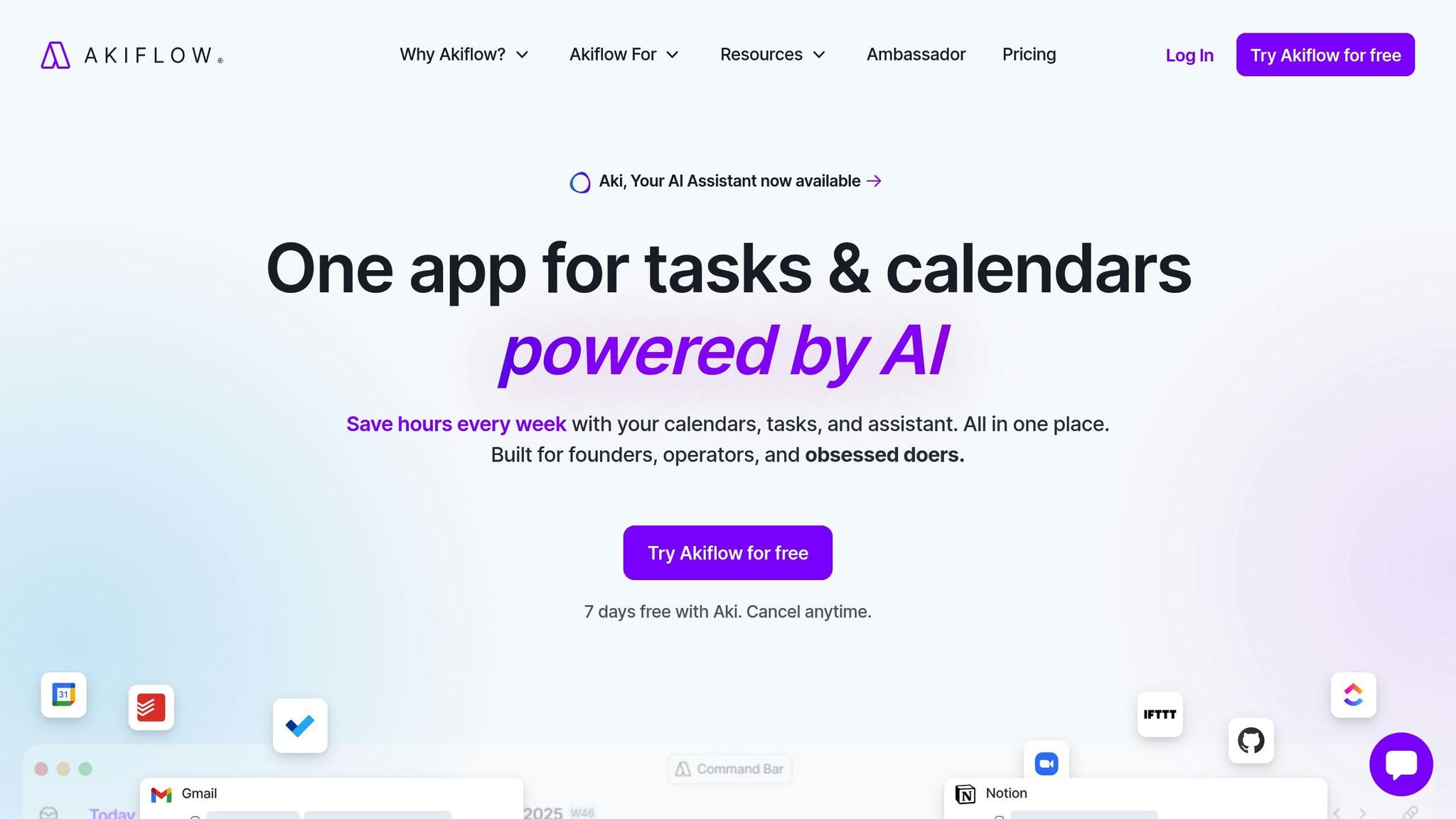
Akiflow puts tasks and calendar events in one workspace, so you stop checking several project tools to see what's due.
- Sync: Syncs in real time with Google and Outlook calendars. Users report occasional delays with Trello and glitches when dragging tasks. A page refresh usually fixes both.
- Integrations: Direct Google and Outlook calendar connections, plus iOS Calendar and other apps through IFTTT.
- Time zones: Uses the primary time zone from your computer's system settings, so a laptop set to the wrong zone shifts your schedule. You can add a secondary zone, and DST adjusts automatically.
4. Motion
Motion plans your day automatically around meetings and tasks. Its sync rules are the most important thing to understand before you rely on it.
- Sync: Events sync both ways with Google Calendar, Outlook, and iCloud Calendar. Tasks sync one way only: tasks made in Motion appear on external calendars, but tasks made elsewhere don't come back. Task sync works only with Google and Outlook, and iCloud can lag up to 10 minutes.
- Integrations: Zoom, Microsoft Teams, and Google Meet. You can create tasks from Gmail or Siri. Zapier, Make.com, and an API cover custom workflows.
- Conflicts: Set one Main Calendar and add the rest under My Calendars so free/busy status is accurate. Motion warns you when your schedule is overloaded.
- Time zones: Booking pages show availability in the visitor's time zone.
5. Clockwise
Clockwise rearranges team meetings to protect focus time.
- Sync: Updates Google Calendar and sets Slack statuses such as "Focus Time" or "In a Meeting."
- Integrations: Google Calendar, Slack, Zoom, Outlook, an API, and Zapier.
- Conflicts: Its GPT-based AI Scheduler flags overlaps and proposes times that avoid focus blocks.
The main risk is automatic rescheduling. One analyst described it this way on Capterra or Software Advice reviews:
"Sometimes when I reorganize, the integrations will be confused and end up not showing what meeting I am actually in." – Julia B., Analyst
If other systems read your status, test a few reschedules before rolling Clockwise out to the whole team.
6. Lindy
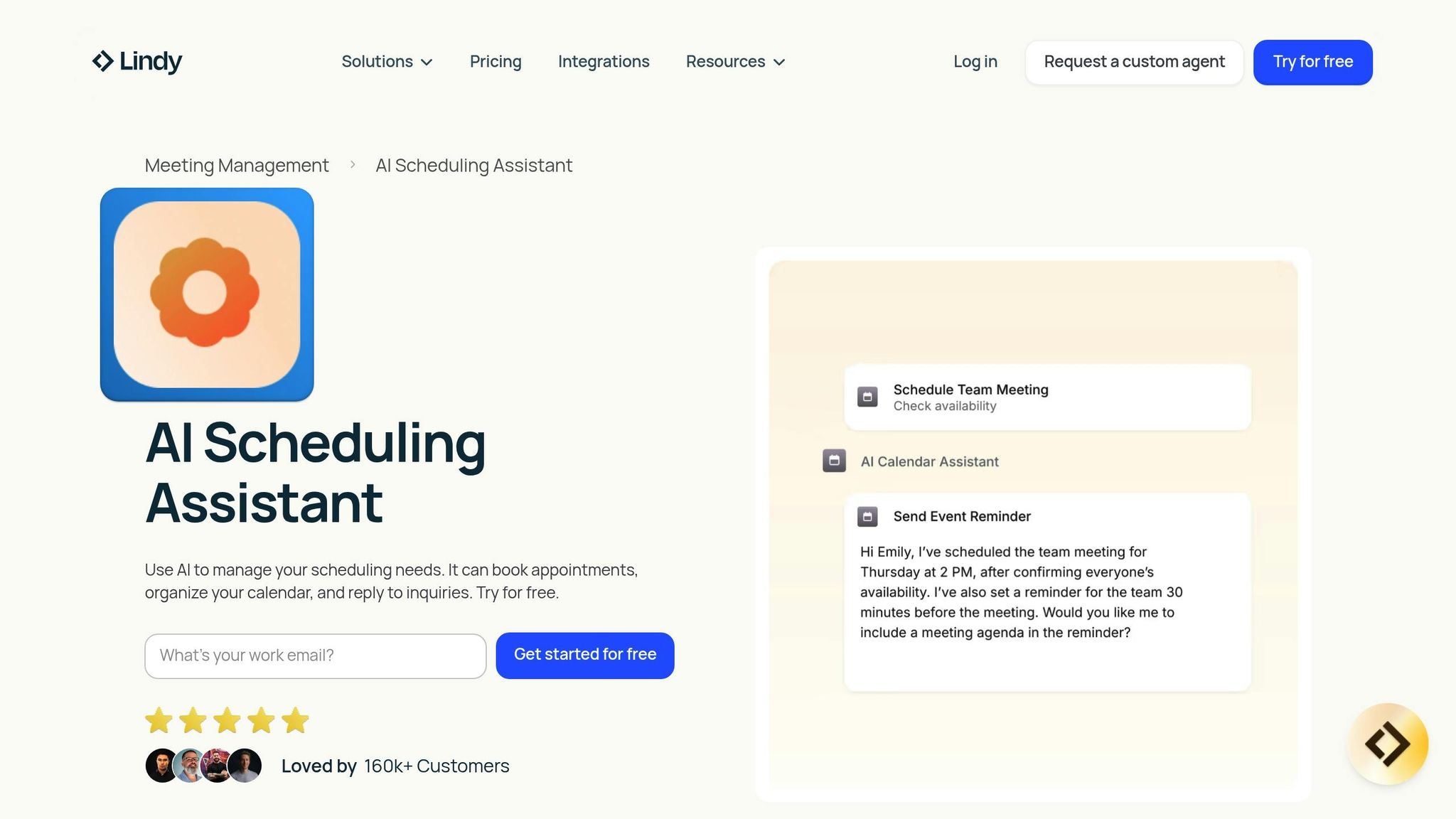
Lindy is a general AI assistant with more than 1,500 integrations. Scheduling is one of many workflows you can build with it.
- Sync: Connects to Google Calendar and Outlook and supports multiple accounts, so personal and work calendars can sit side by side. Creating or deleting an event updates every connected calendar.
- Conflicts: A "Check Availability" step confirms a slot is open before booking. If a conflict appears, Lindy moves the meeting to the next open time.
- Time zones: Finds overlapping work hours across cities, such as New York, Seattle, and Tucson, then emails a proposed time and adds the event to everyone's calendar.
- Templates: Ready-made workflows include Gmail reminders 30 minutes before a meeting and alerts when a new event is added.
Comparison: Strengths and Weaknesses
| Tool | Best for | Sync and conflict handling | Watch out for |
|---|---|---|---|
| Answering Agent | Service businesses that book by phone | Writes bookings during the call and checks availability live | Covers phone-based scheduling only |
| Reclaim AI | Individuals protecting focus time and habits | Merges calendars, keeps personal events private, and reschedules flexible events | Needs write access and takes time to learn |
| Akiflow | Task-heavy workflows | Syncs Google and Outlook in real time and shows tasks and events together | Follows the system time zone and has occasional Trello lag |
| Motion | Busy schedules that need automatic planning | Syncs events both ways and flags overload | Tasks sync one way, iCloud lags, and premium features cost more |
| Clockwise | Teams sharing calendars | Moves meetings around focus time and updates Slack status | Reschedules can confuse integrations, with limited individual customization |
| Lindy | Complex multi-tool operations | Checks availability before booking and reschedules automatically | More setup than basic scheduling needs |
Conclusion
Choose based on where bookings start. Phone bookings point to Answering Agent. Tasks and projects point to Motion or Akiflow. Team calendars point to Clockwise or Reclaim. A large tool stack points to Lindy.
Before you commit, use the trial to break it on purpose:
- Create an event in the tool and confirm it appears on every connected calendar. Then create one in the external calendar and confirm it appears in the tool.
- Delete an event on each side and confirm the deletion carries over.
- Try to book a slot that another calendar already holds.
- Book across a time zone and across a daylight saving change, then check the time each attendee sees.
If a tool fails any of these tests, it will eventually produce the errors you bought it to prevent. For more on the booking side, see How AI Improves Appointment Scheduling.
FAQs
How do AI scheduling tools manage time zone differences to ensure seamless coordination for global teams?
They detect each participant's time zone and show proposed times in local time, with daylight saving applied automatically. Most also account for working hours. Check where each tool gets your default zone, since some use your calendar settings and others use your computer or browser.
What key features should businesses look for in an AI scheduling tool to prevent calendar sync issues?
Look for real-time two-way sync, an availability check before any booking, automatic rescheduling when a conflict appears, and direct connections to the calendars you already use. Also confirm which items sync one way only, such as tasks in Motion.
Can AI scheduling tools work with my existing apps, and how do they improve workflow efficiency?
Yes. All six connect to Google Calendar and Outlook, and most add Zoom, Slack, or Zapier. When bookings and changes flow into one calendar automatically, you do less manual entry and see fewer double bookings.
Related Blog Posts
Book a walkthrough
See it handle your calls.
Book 20 minutes, or hear a sample call first.