AI Phone Systems for Restaurants: Integration Guide
AI phone systems can help restaurants handle calls efficiently, recover lost revenue, and improve customer experience. Here's why they matter:
- Missed calls hurt revenue: Over 21% of restaurant calls go unanswered, and 70% of those callers choose competitors instead.
- AI systems boost bookings: They convert 35–45% of calls into reservations or sales, adding $3,000–$18,000 monthly revenue per location.
- 24/7 availability: AI assistants manage after-hours calls, reducing missed opportunities and ensuring customers are always served.
- Staff efficiency: By automating routine tasks like reservations and takeout orders, AI frees staff to focus on in-person guests.
Integration with tools like OpenTable and POS systems enhances operations. For example, AI assistants can check real-time reservation availability, manage bookings, and sync takeout orders with kitchen systems, reducing errors and saving time. Testing and setup take less than an hour, with results showing improved call answer rates (95–98%) and reduced missed calls (1–7%).
Want to optimize your restaurant's phone line and never miss a customer call again? AI phone systems are the solution.
Voice AI Agent for Restaurants: Take Orders + Push to POS (VAPI Guide) | KwickPOS or Clover

Benefits of Integrating AI Phone Systems with Restaurant Management Tools
Integrating tools like Answering Agent with systems such as OpenTable and your POS can transform every phone call into a smooth, automated process. When these systems work together, they help eliminate hiccups in operations and boost guest satisfaction.
24/7 Call Handling and Reservation Management
With Answering Agent, real-time OpenTable availability is checked before offering reservation slots to callers. This prevents double bookings. Once a guest confirms their reservation, the system handles the booking automatically, freeing up staff to focus on in-person service during peak hours. This automation reduces errors and improves overall efficiency.
The results are impressive. One hospitality group saw a 31% jump in incremental bookings and saved over 725 labor hours. Automated SMS confirmations and reminders, sent immediately after bookings, also help cut down on no-shows. In another example, an AI assistant managed over 700 calls in a single month, securing more than 100 bookings. These benefits also extend to smoother order processing.
Order Synchronization with POS Systems
Answering Agent integrates directly with your POS, inputting takeout orders - complete with customizations, dietary restrictions, and special instructions - just as a staff member would. Orders show up on the kitchen display system seamlessly, reducing the likelihood of human error.
The system also syncs inventory in real time, ensuring out-of-stock items aren’t offered to customers. This eliminates the need for follow-up calls to correct orders. For example, a San Francisco restaurant integrated its AI phone system with its POS in just 55 minutes, cutting phone wait times by 75% and increasing takeout order accuracy to 98%.
Cost Savings and Improved Operations
Answering Agent can handle multiple calls simultaneously, eliminating the need for additional staff. While a single host can only manage one call at a time, Answering Agent handles dozens - even during off-hours.
This automation translates into significant savings. Restaurants save 12–95 labor hours monthly, which equals $180–$1,425 in wages at $15 per hour. Plus, automating call management ensures you capture revenue from calls that might otherwise go unanswered. Notably, 58% of diners aged 18–38 say they’re more likely to return to restaurants that incorporate automation into their operations.
Step-by-Step Guide to Integrating AI Phone Systems
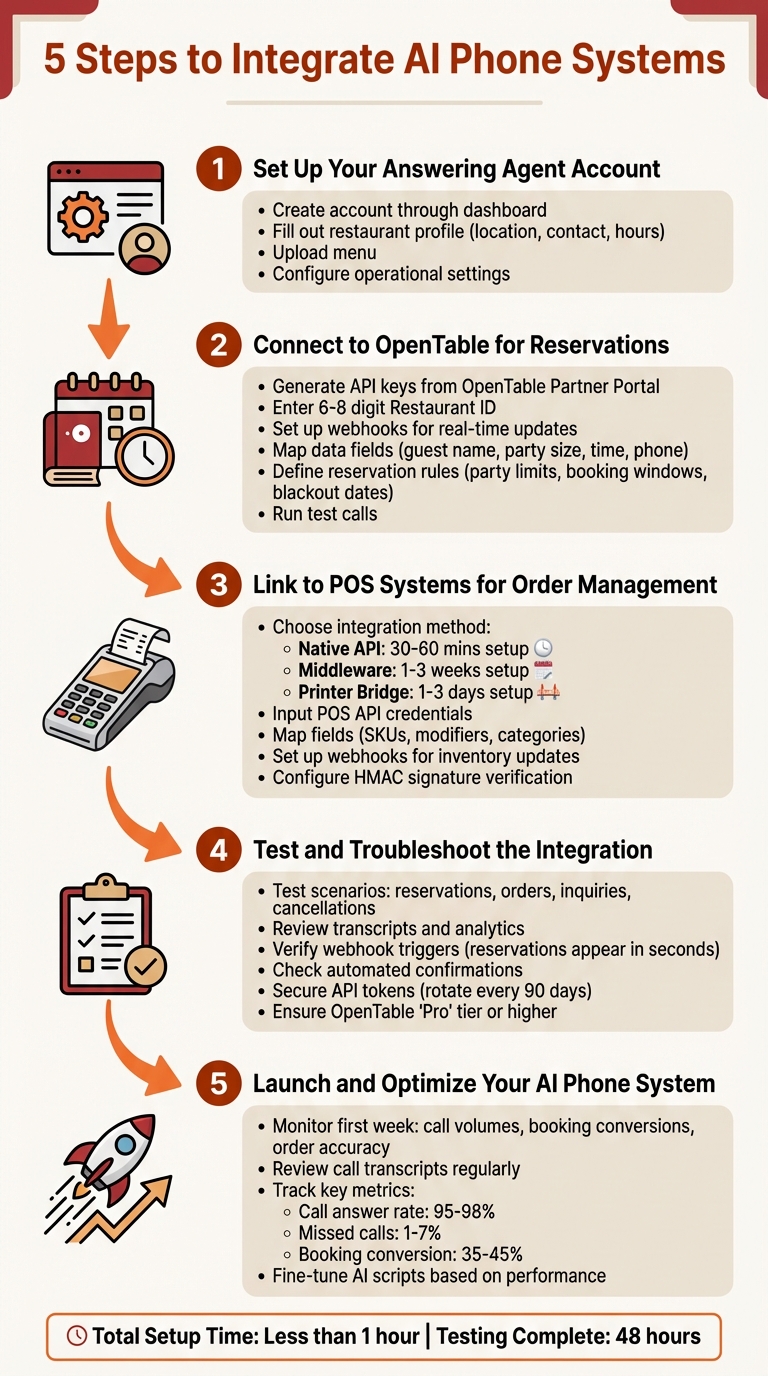
5-Step AI Phone System Integration Guide for Restaurants
Here’s how to seamlessly integrate an AI phone system with your restaurant’s tools. These steps ensure your system works effortlessly with your existing setup, making every customer interaction count.
Step 1: Set Up Your Answering Agent Account
Begin by creating an Answering Agent account through the dashboard. Fill out your restaurant profile with accurate details such as your location, contact information, and hours of operation. Upload your menu and configure operational settings like business hours, staff notifications, and service tiers. These settings help the AI deliver accurate responses tailored to your restaurant.
Step 2: Connect to OpenTable for Reservations
Log into your OpenTable Partner Portal to generate API keys and find your 6–8 digit Restaurant ID. Enter this information into the Answering Agent integration dashboard. Next, set up webhooks in OpenTable to enable real-time updates for reservations. Map key data fields - such as guest name, party size, reservation time (in ISO 8601 format), and phone number - to ensure both systems align perfectly.
Define rules in the AI dashboard for managing reservations, including party size limits, advance booking windows, blackout dates, and operating hours. Before launching, run test calls to confirm the AI can check availability, create bookings that sync with OpenTable, and handle changes or cancellations. Configure the system to transfer calls to staff for complex requests, such as large parties or VIP guests.
Step 3: Link to POS Systems for Order Management
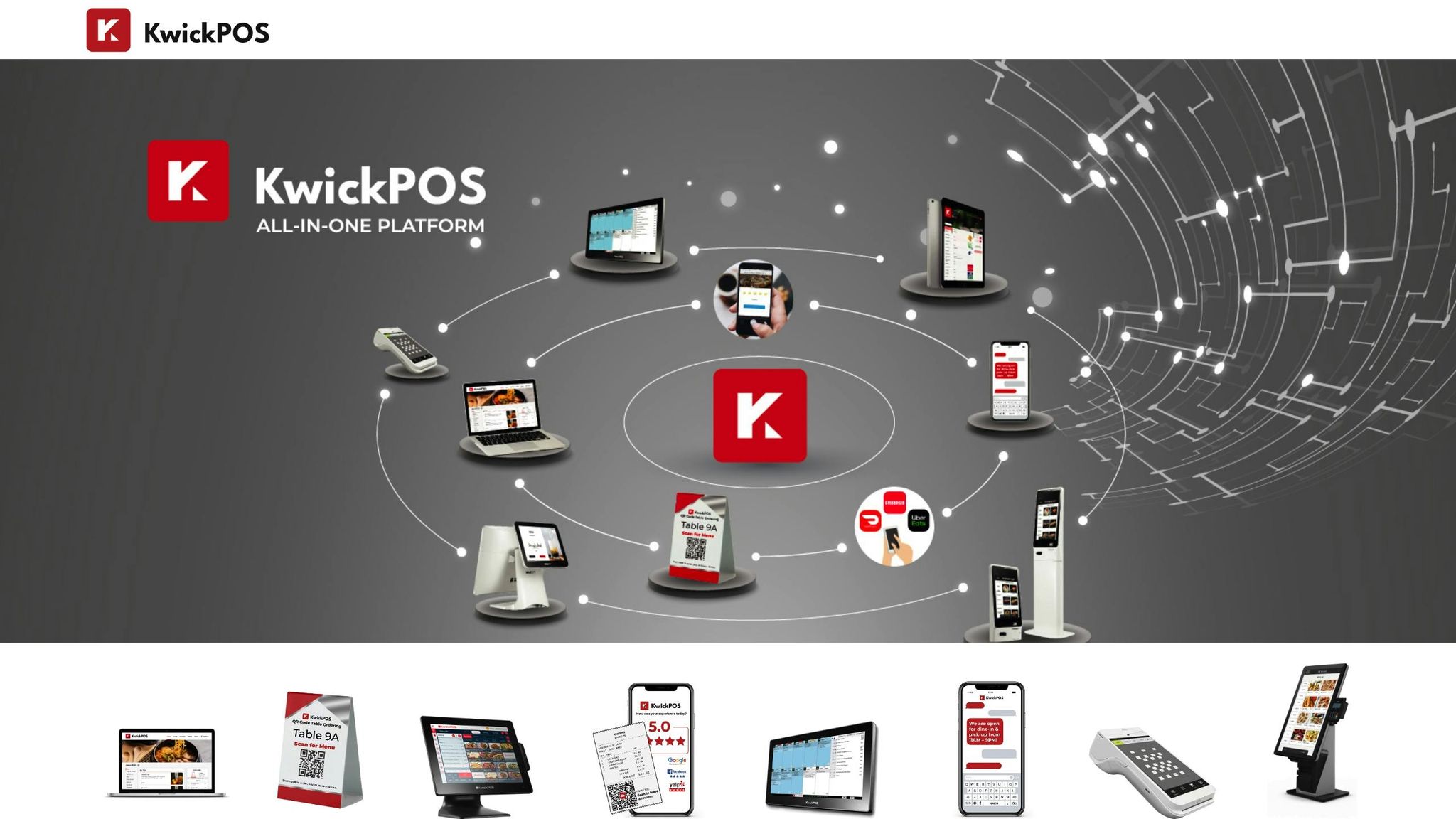
If you use POS systems like Square or Toast, you’re in luck - they now offer native AI voice ordering APIs that integrate directly with your menu and payment systems. Square’s integration launched in October 2025, while Toast rolled out its beta version in June 2025. For other POS systems, middleware platforms like Checkmate or Olo can bridge the gap between your POS and Answering Agent.
To integrate, input your POS API credentials into the AI dashboard. Map fields like SKUs, modifiers, and categories to ensure orders are correctly formatted with accurate pricing. Set up webhooks for real-time inventory updates and configure HMAC signature verification to secure order data. Also, establish backup protocols to transfer complex orders or technical issues to human staff.
Here’s a quick comparison of integration methods:
| Integration Method | Setup Time | Complexity | Pros | Cons |
|---|---|---|---|---|
| Native API | 30–60 mins | Moderate | Real-time sync, built-in payments | Limited to certain POS providers |
| Middleware | 1–3 weeks | Moderate | Works across platforms, full API access | Requires a monthly subscription |
| Printer Bridge | 1–3 days | Low | Quick setup, no API approval needed | Staff must manually enter orders |
Choose the method that fits your current POS setup and operational needs.
Step 4: Test and Troubleshoot the Integration
Run tests across different scenarios, such as reservations, orders, inquiries, and cancellations. Review transcripts and analytics to ensure accuracy, and verify that webhooks trigger real-time updates. For example, reservations should appear in OpenTable within seconds, and orders should flow seamlessly to your kitchen display system. Check that automated confirmations and reminders are sent to reduce no-shows.
If issues arise, they’re often due to incorrect API credentials, mismatched data fields, or webhook errors. Keep API tokens secure and rotate them every 90 days. Ensure your OpenTable account is at the "Pro" tier or higher, as lower tiers may not include the necessary Connect API access.
Step 5: Launch and Optimize Your AI Phone System
Once testing confirms everything is functioning properly, it’s time to go live. During the first week, monitor call volumes, booking conversions, and order accuracy. Adjust scripts or rules as needed based on performance. Regularly review call transcripts to fine-tune the AI’s responses and address any gaps in the scripts.
Keep an eye on key metrics like missed call rates, booking conversion rates, and order accuracy to measure the system’s impact. Fine-tune the AI’s scripts to address common customer questions or new trends that emerge. Remember, an estimated 43% of restaurant calls go unanswered, potentially costing a typical establishment $15,600 to $23,400 annually. Your AI phone system can help capture this lost revenue effectively.
sbb-itb-abfc69c
Key Features of Answering Agent for Restaurants
Natural, Human-Like Conversations
Answering Agent, often referred to as Jasmine, creates conversations that feel genuinely human. It’s designed to navigate the intricate details of restaurant interactions - think dietary restrictions, allergen concerns, or even planning for special occasions. Plus, you can tailor its personality to reflect your brand. Want a polished and formal tone for your upscale steakhouse? Or perhaps a friendly, laid-back vibe for your neighborhood eatery? Jasmine can adapt to fit.
With support for 20 languages, it’s perfect for welcoming guests from diverse backgrounds or international travelers. And here’s the impressive part: it can seamlessly switch languages mid-conversation if a guest changes their preference.
Michelle Mah, Director of Operations at Slanted Door, shared: "Thanks to Answering Agent, we can spend more time connecting with our guests. That personal attention has really come across in online reviews, with many guests mentioning how warm and attentive our team is."
Unlimited Call Management
Busy Friday nights? Overflowing call volumes? No problem. Answering Agent ensures zero hold times and a 100% call answer rate, no matter how hectic things get. It can handle an unlimited number of calls simultaneously, so your team can focus on delivering exceptional in-person service without being interrupted by a constantly ringing phone.
Another standout feature? The system captures the 15-25% of calls that typically come in after hours. Midnight inquiries about reservations or menu options no longer go unanswered - they’re turned into confirmed bookings instead. This way, you never miss a revenue opportunity.
Call Analytics Dashboard
Beyond managing calls, Answering Agent provides a powerful analytics dashboard to help you fine-tune operations. It tracks key metrics like call answer rates, reservation conversions, order accuracy, and customer satisfaction. Want to know which hours are busiest? The dashboard gives you clear insights, making it easier to adjust staffing or streamline workflows.
You’ll also gain data on your most popular menu items and can calculate the ROI from AI-managed orders and bookings. Real-time alerts notify you of high call volumes or system issues, so you can step in right away. Weekly call transcript reviews let you refine scripts and address recurring customer questions. Aim for a call answer rate above 95% and a reservation conversion rate of 35-45% for after-hours calls to maximize your revenue potential.
Conclusion
Integrating Answering Agent with your restaurant systems helps recover revenue that might otherwise slip through the cracks.
The setup is quick and simple. You can connect Answering Agent to OpenTable and your POS in less than an hour, with testing wrapped up in just 48 hours. After launch, you’ll see call answer rates soar to 95–98%, missed calls drop to just 1–7%, and booking conversions improve noticeably.
By simplifying call management and order processing, your staff can concentrate on what matters most - delivering an outstanding dining experience. This system not only reduces the burden on your team but also ensures consistent results. With features like capturing after-hours bookings, lowering labor costs, and reducing mistakes in order handling, AI phone systems provide a clear return on investment.
Want to make the most of every customer interaction? Answering Agent offers 24/7 availability, smooth OpenTable and POS integrations, and lifelike conversations that turn every call into revenue.
FAQs
How long does it take to set up an AI phone system with a restaurant's tools?
Integrating an AI phone system with a restaurant's current tools - like reservation platforms or POS systems - usually takes between less than an hour and up to 48 hours. The time frame largely depends on how complex the tools are and the specific integration steps required.
Thanks to simplified setup processes and easy-to-use configurations, most restaurants can get their AI phone system operational quickly, keeping any interruptions to their daily workflow to a minimum.
How can AI phone systems help streamline restaurant operations?
AI phone systems are transforming how restaurants manage daily operations, making tasks smoother and enhancing the customer experience. One major advantage is their ability to handle reservation management around the clock. These systems can book new reservations, update or cancel existing ones, and ensure no calls go unanswered. This not only lightens the load for staff but also reduces the chance of mistakes.
Another game-changer is their integration with POS platforms like Toast or Square. This connection streamlines processes like order management, payment processing, and menu updates. AI systems can also handle voice orders, answer customer questions, and adapt to last-minute changes instantly. By automating these tasks, restaurants can save time, make better use of their staff, and keep customers happy - all while driving revenue growth.
How can AI phone systems help restaurants minimize missed calls and boost revenue?
AI phone systems make sure every customer call gets answered, no matter the time of day, by running 24/7. This means no more missed calls or lost revenue, as they can handle tasks like taking reservations, answering frequently asked questions, and managing takeout or delivery orders - all without needing a human on the line.
These systems can also work effortlessly with tools such as OpenTable and POS systems, simplifying bookings and minimizing manual mistakes. By automating call management, restaurants can optimize table usage, boost customer satisfaction, and let staff concentrate on providing great in-person service. In the end, AI phone systems help businesses increase revenue while delivering a smoother, more customer-focused experience.
Related Blog Posts
Related Articles
How AI Handles Multilingual Guest Inquiries 24/7
AI handles guest inquiries in 100+ languages, integrates with PMS, boosts bookings and satisfaction while cutting costs and staffing needs.
Top 6 AI Receptionists for Small Business (2025 Pricing & Features)
Compare the 6 best AI receptionist services for small businesses. See pricing from $29-$99/mo, unlimited call plans, and real results.
Why Service Businesses Need AI Answering
AI phone answering systems enhance service quality, reduce wait times, and cut costs for service businesses, driving growth and customer satisfaction.