
White-label partner onboarding is the process businesses use to help partners rebrand and sell their products under the partner's name. It involves setting up technical systems, forming agreements, and training partners to ensure they can succeed quickly. A structured onboarding process is critical - it can reduce cancellations, improve retention by up to 60%, and help partners launch three times faster.
Key Takeaways:
- What it is: A process to integrate partners into a system for rebranding and selling.
- Why it matters: Poor onboarding leads to cancellations; effective onboarding boosts retention and speeds up success.
- Steps involved: Technical setup, training, agreements, and communication systems.
- Results: Faster launches, fewer support issues, and stronger partnerships.
This guide covers how to prepare, execute, and improve onboarding to build long-term partner success.
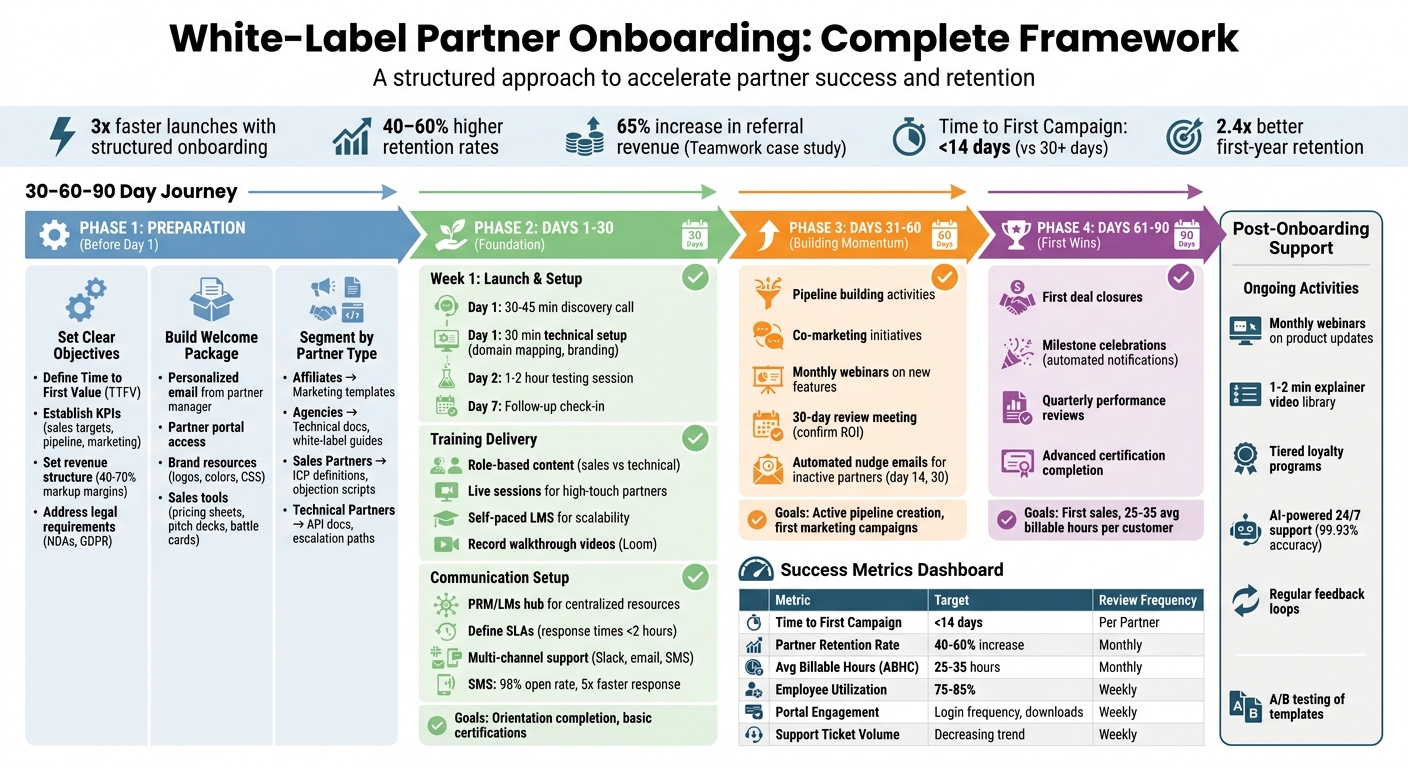
White-Label Partner Onboarding Process: 30-60-90 Day Framework
Preparing Your Onboarding Process
Setting Clear Onboarding Objectives
The goal of onboarding is to reduce the time it takes for a partner to achieve their first measurable success - whether that's generating a qualified lead, closing a sale, or completing an implementation. This is often referred to as time to first value (TTFV). As Kacper Gugała from PartnerPlace.io explains:
Onboarding is not an administrative hurdle or a one-off welcome call - it is a revenue acceleration strategy.
To set the stage for success, clearly define responsibilities. For instance, your internal team might oversee uptime and technical maintenance, while partners focus on client acquisition and support. Establish key performance indicators (KPIs) early on, such as sales targets, pipeline contributions, and marketing activities. Additionally, outline your revenue structure upfront, including commission rates, typical markup margins (40–70%), and payout schedules. Address legal requirements like NDAs and GDPR compliance before diving into technical integration.
A 30-60-90 day plan can provide structure and momentum. For example:
- Days 1–30: Orientation and foundational training.
- Days 31–60: Building a pipeline.
- Days 61–90: Achieving initial wins.
This phased approach not only ensures smoother onboarding but also sets the stage for ongoing training and support. Agencies that use structured onboarding processes report 40–60% higher client retention rates compared to those with less organized methods.
Once objectives are clear, the next step is to create a welcome package that reinforces these goals.
Building Your Welcome Package
A well-crafted welcome package can make a strong first impression. Start with a personalized email from a dedicated partner manager to establish a human connection. Include immediate access to essential tools like your partner portal, learning management system, and technical documentation.
To avoid overwhelming new partners, provide a clear onboarding roadmap and link to a centralized resource hub. Incorporate brand resources, such as logos, color palettes, and CSS guidelines, alongside sales tools like pricing sheets, pitch decks, competitive battle cards, and discovery questions.
One example of onboarding done right comes from Teamwork. In 2021, the company revamped its partner onboarding with a structured 30-day plan that included an offer flyer, quick start guide, and automated milestone emails. The results were impressive: a 65% increase in referral revenue. Nancy Mai Harnett, Partner Marketing Specialist at Teamwork, shared:
Developing advertising and enablement resources to help our affiliates succeed was one of our main priorities this year... the investment is definitely worth it if the outcome is success for our partners.
To build early momentum, set achievable goals - like offering a bonus for the first five trial signups.
The next step is to refine your onboarding approach to suit the needs of different partner types.
Adapting Onboarding by Partner Type
Not all partners are the same, so your onboarding process shouldn't be either. Start by segmenting partners by relationship type. For example:
- Affiliates may need marketing templates and referral tracking tools.
- Agencies often require in-depth technical documentation and white-label customization guides.
- Sales-focused partners benefit from clear definitions of your ideal customer profile (ICP) and objection-handling scripts.
- Technical partners need detailed API documentation and escalation paths for troubleshooting.
Industry-specific onboarding is also essential. For instance, Fintech partners face unique regulatory challenges compared to those in ecommerce or healthcare. With vertical SaaS growing at 32% annually in areas like healthcare and financial services, tailoring onboarding by industry becomes increasingly important.
Finally, use role-based sequencing to streamline the process. Deliver technical setup instructions only to IT teams, while providing sales tools to sales reps. As Kacper Gugała puts it:
The key principle: not everyone needs everything at once. Onboarding should be role-based and sequenced to avoid overwhelming participants.
Tiered resource access can also help. For example:
- A simple affiliate might receive a quick start guide and email templates.
- A full white-label agency could get branding documentation, integration testing protocols, and dedicated technical support.
sbb-itb-abfc69c
White Label Onboarding Process Explained for Agencies
Running the Onboarding Process
This stage transforms all the groundwork you've done into actionable steps for integrating partners effectively.
Platform Training and Demonstrations
Kick things off with a 30–45 minute discovery call. Use this time to gather vital business details like use cases, operating hours, CRM or calendar preferences, and any compliance requirements.
Next, conduct a 30-minute technical setup. This includes configuring a white-label environment, mapping custom domains, and incorporating branding elements. On Day 2, schedule a 1–2 hour testing session to validate both standard operations and edge cases. Many platforms now utilize website scraping to automatically generate knowledge bases in under 15 minutes, cutting down on manual setup efforts. Ming Xu, Chief Information Officer at Trillet, highlights the importance of this phase:
The first 30 days of a client relationship determine long-term success. Clients who experience confusion during setup... are significantly more likely to cancel within 90 days.
When delivering training, break it into manageable sections. Tailor the content to specific roles: sales teams benefit from ICP definitions and talk tracks, while technical staff need setup guides and troubleshooting workflows. To make the process easier, record a walkthrough video using tools like Loom, so partners can revisit the material whenever needed. For scalability, combine live sessions for high-touch partners with self-paced learning through a Learning Management System (LMS).
Once training wraps up, focus on establishing strong communication channels to keep partners engaged and supported.
Setting Up Communication Systems
Create a centralized hub, such as a Partner Relationship Management (PRM) platform or LMS, where partners can access training materials, brand assets, and updates.
Set clear rules of engagement during the kick-off meeting. Document Service Level Agreements (SLAs) to outline uptime guarantees, response times, and reporting schedules. For instance, many white-label providers promise response times of under 2 hours on dedicated Slack channels during business hours. Clearly define roles: your team handles technical maintenance and API stability, while partners manage first-line support and client relationships.
Use multi-channel support systems to address varying levels of urgency. Real-time troubleshooting can happen via Slack or dedicated chat, while shared inboxes work well for team coordination. For critical updates, SMS is highly effective - boasting 98% open rates and response times that are five times faster than email.
Plan for regular touchpoints to maintain momentum. Automate follow-up emails at 7 and 30 days to confirm ROI and address potential issues. If partners remain inactive after 14 days, send a "nudge" email offering extra resources or incentives. Beyond onboarding, keep communication alive with a monthly newsletter and quarterly performance reviews.
These communication strategies lay the groundwork for tracking success through measurable outcomes.
Defining Success Metrics and KPIs
Start tracking metrics from Day 1. Focus on Time to First Value (TTFV), as partners who achieve early wins are more likely to sustain momentum. Keep an eye on activation rates and portal engagement (e.g., login frequency, asset downloads) to identify areas where additional support might be needed. A structured onboarding process can speed up launches by three times and improve first-year retention by 2.4x.
Implement a 30-60-90 day measurement framework. During the first 30 days, track orientation completion and basic certifications. Between days 31–60, look for signs of pipeline building and co-marketing activities. By days 61–90, partners should ideally begin closing their first deals. This phased approach provides clear checkpoints to intervene if progress stalls.
Pay attention to support ticket volume as a health indicator. A sudden increase in tickets may point to confusion or gaps in your training. On the other hand, no tickets at all could indicate that a partner is stuck but not seeking help, signaling the need for proactive outreach.
Supporting Partners After Onboarding
The first 30 days are important, but long-term success hinges on what happens afterward. Partners need consistent support to stay engaged, informed, and aligned with your product's ongoing updates.
Providing Regular Training Updates
Without regular updates, partner expertise can fade - especially in SaaS, where new features are introduced frequently. Hosting monthly webinars is a great way to dive into these updates, demonstrating how partners can use new features effectively in sales scenarios. Keep the sessions short and focused so partners can absorb the key points without feeling overwhelmed.
For partners who miss live sessions, create a library of short explainer videos (1–2 minutes each) that cover specific features or address common issues. These can be hosted in a Learning Management System (LMS) or a partner portal for easy access. Kacper Gugała from PartnerPlace emphasizes:
Knowledge fades over time. Keep partners up to date with refresher webinars and periodic video content to maintain engagement and product expertise.
A great example of this approach in action is SaaS platform Teamwork. In January 2026, they reported a 65% boost in referral revenue after revamping their partner support system. Led by Partner Marketing Specialist Nancy Mai Harnett, the initiative included automated emails for inactive partners at 14 and 30 days, along with a centralized resource center featuring updated marketing materials and "Quick Start" guides. The takeaway? Regular touchpoints paired with fresh, relevant content encourage partners to stay active and engaged.
Rewarding Partner Milestones
Recognition is a powerful motivator. Set up automated notifications to celebrate key milestones - like the first 10 clicks on a referral link, the first user signup, or the first customer sale. These small acknowledgments reinforce progress and remind partners that their contributions matter.
For sustained engagement, consider a tiered loyalty program. Partners who achieve specific goals - such as hitting sales targets, completing advanced certifications, or maintaining high customer satisfaction - can earn VIP perks. These could include faster support response times, co-marketing opportunities, or early access to beta features. Be sure to define clear KPIs, such as certification rates or monthly sales volume, so partners understand what they’re working toward.
Quarterly reviews are another way to keep the program effective. Use these sessions to gather feedback and adjust incentives as needed. And as your partner network grows, automated solutions can help manage rewards consistently without manual bottlenecks.
Using AI to Handle Partner Communications
As your partner network expands, scalable support becomes essential. AI-powered tools can handle many routine tasks, such as answering common questions, scheduling training sessions, and providing 24/7 assistance - all without requiring human intervention. This ensures partners across different time zones receive immediate help when they need it.
One example is Answering Agent, a tool designed to manage partner communications at scale. With 99.93% accuracy across over 17,724 scored calls, it can handle unlimited simultaneous calls, answer FAQs, schedule training, and escalate urgent issues to the right team member - all in a natural, conversational tone. For white-label providers juggling multiple partners, this eliminates delays and ensures consistent, reliable support.
To balance automation with a human touch, combine AI tools with scheduled personal check-ins. A 7-day follow-up can help address early concerns, while a 30-day review meeting can confirm ROI and solidify the relationship. This hybrid approach ensures partners receive immediate answers while maintaining the personal connection that builds trust over time.
Measuring and Improving Your Onboarding
If you’re not tracking the right data, you’re essentially flying blind. The best onboarding processes aren’t built on assumptions - they’re shaped by what’s actually working.
Tracking Onboarding Performance Data
Once you’ve established a structured onboarding process and clear communication channels, the next step is tracking performance data. This helps you refine your approach over time. A key metric to watch is time to first campaign. With a well-structured onboarding plan, this can drop from over 30 days to less than 14 days. Why does this matter? If it takes partners longer than 14 days to launch, their risk of churn increases significantly.
Another critical metric is the partner retention rate. High-quality onboarding can improve retention by 40–60% compared to unstructured approaches. Keep an eye on support ticket volume too - if new partners are submitting a high number of tickets in their first 30 days, it’s a sign your training materials might need more clarity.
For service-based partnerships, monitor average billable hours per customer (ABHC). A good target is to grow from 25 to 35 hours as partners expand their offerings. Internally, track employee utilization to ensure your team isn’t stretched too thin or underutilized. Utilization rates outside the 75–85% range often lead to onboarding delays due to capacity issues.
Here’s a quick summary of these metrics:
Metric Target / Benchmark Review Frequency Time to First Campaign Under 14 days Per Partner Partner Retention Rate 40–60% Increase Monthly Avg Billable Hours (ABHC) 25 to 35 hours Monthly Employee Utilization 75% to 85% Weekly
Combine these metrics with direct partner feedback to get a clearer picture of what’s working and what isn’t.
Gathering Partner Input
Data is essential, but it only tells part of the story. To get the full picture, you need direct input from your partners. Regular feedback through scheduled check-ins or dedicated communication channels is key. For example, you can set up dedicated Slack channels or hold weekly Q&A sessions where partners can share their challenges in real time.
If you use a Learning Management System (LMS), pay attention to module completion rates. If a significant number of partners drop off at a specific point, it’s a sign you might need to simplify the content or add more foundational material. Nancy Mai Harnett, Partner Marketing Specialist at Teamwork, underscores the importance of this approach:
The investment [in enablement resources] is definitely worth it if the outcome is success for our partners.
By combining quantitative data with qualitative feedback, you’ll have the insights needed to fine-tune your onboarding process.
Making Data-Driven Improvements
Once you’ve gathered the data, don’t just let it sit - act on it. Update interactive modules and templates based on what the numbers are telling you. For example, set up automated triggers for key milestones, like 10 clicks, the first signup, or the first sale. Pair these triggers with gentle nudges to re-engage inactive partners, which can lead to a noticeable boost in referral revenue.
Look for patterns in partner performance. If partners who complete interactive modules consistently outperform others, consider adding more interactive content. If specific partner types are struggling at the same stage, segment your materials to address their unique challenges. Use insights from the most common questions in the first 60 days to update your knowledge base, and A/B test different templates or messaging sequences to see what drives better results.
Think of your onboarding process as a living system - it should adapt and improve with each new partner. By staying proactive and data-driven, you’ll create a process that not only works but continues to get better over time.
Conclusion
Why First Impressions Matter
The onboarding process is your first opportunity to prove the strength of your partnership. And the stats don’t lie: agencies with structured onboarding programs see faster launches and higher first-year retention rates. This isn’t just about getting up and running quickly - it’s about instilling confidence. When partners start off with the right tools, clear guidance, and solid support, they’re much more likely to view your solution as something worth recommending.
Think of onboarding as more than just a procedural step - it’s a strategy for accelerating revenue. The sooner your partners achieve their first success, the stronger your relationship becomes. That early momentum lays the groundwork for a supportive, ongoing partnership.
How Answering Agent Supports Partner Programs
For white-label programs, partner questions can pop up at any time - setup, branding, or technical configurations don’t wait for business hours. Delays in addressing these inquiries can create unnecessary friction. That’s where Answering Agent steps in, providing 24/7 support with 99.93% accuracy across 17,724+ scored calls. It ensures partners get immediate answers without waiting in line.
For agencies offering AI phone answering in their white-label stack, Answering Agent simplifies the onboarding process even further. Its auto-generated knowledge bases allow new partners to get operational in just 15 minutes. This means your team can skip repetitive setup tasks and focus on driving growth and strategy instead.
Building a Better Onboarding Process Over Time
Great onboarding doesn’t stop at the first win - it evolves. Use the data you collect - metrics like time to first campaign, retention rates, and support ticket trends - to pinpoint areas for improvement. For instance, if you notice partners struggling with a specific training module, try simplifying it or adding more foundational material.
Regular check-ins can also make a big difference. A 7-day follow-up can help catch early technical hiccups, while a 30-day review is perfect for confirming ROI and identifying growth opportunities. Keep your welcome materials, templates, and training videos current by addressing the most frequent questions from new partners. Every tweak you make improves the experience for the next group, strengthening your partnerships over time. This approach is particularly effective when managing white-label AI solutions for multi-unit operators where consistency is key. By continuously refining your process, you ensure each new partner feels supported and equipped for success.
FAQs
What should I include in a white-label partner welcome package?
A well-thought-out welcome package sets the tone for your partnership and ensures your white-label partners have everything they need to succeed. Here's what to include:
- Introduction to Your Business or Program: Share an overview of your company, your mission, and what the partnership entails. This helps set expectations and establish a strong connection right from the start.
- Marketing Materials and Product/Service Details: Provide promotional tools, detailed product or service information, and clear objectives to help your partners market effectively.
- Process, Policy, and Compliance Documentation: Include essential documents like tax forms, NDAs, and any operational guidelines. This ensures everyone stays aligned and compliant.
- Success Stories and Tips: Inspire your partners by sharing examples of others who have succeeded in similar roles, along with actionable advice for achieving results.
- Contact Information and Support Resources: Make it easy for partners to reach out for help. Include key contacts, FAQs, and links to ongoing support tools or training.
This combination of resources ensures your partners feel informed, motivated, and equipped to represent your brand effectively.
How do I set SLAs and support responsibilities with partners?
To establish effective SLAs (Service Level Agreements) and define support roles in a white-label program, you need a clear and structured plan. Start by documenting detailed standards, such as intake processes, response times, and escalation rules. These guidelines ensure everyone knows what to expect and how to act in different scenarios.
Consistency is key. Use standardized service definitions and create uniform reporting templates to simplify tracking and communication. This helps avoid misunderstandings and ensures that performance metrics are easy to monitor.
Regular communication is equally important. Schedule kickoff meetings to align on goals and expectations, and plan for ongoing status updates to keep everyone informed. These touchpoints help maintain transparency and ensure that any issues are addressed promptly.
By following this structured approach, you can deliver reliable support, track progress effectively, and manage escalations with confidence.
What KPIs best predict early partner churn risk?
Certain KPIs can help spot early signs of partner churn, allowing businesses to take action before it’s too late. These include:
- Onboarding duration: If onboarding takes more than 14 days, the likelihood of churn increases.
- Time-to-first-deal: Partners who close their first deal quickly tend to stick around longer.
- Partner activation rates: The speed at which partners become fully operational is a strong indicator of retention.
Other red flags include low engagement with training or resources within the first 60–90 days and delays in closing deals. Keeping a close eye on these metrics makes it easier to identify at-risk partners and take steps to improve retention.
Related Blog Posts
Book a walkthrough
See it handle your calls.
Book 20 minutes, or hear a sample call first.
Ready to see it handle your calls?
Book a walkthrough, or hear a short sample call first.
Related Articles

How to Handle Lost or Stolen Car Wash Membership Tag Calls
Handle lost or stolen car wash membership tag calls. Check five tag paths before promising a free replacement, then follow wash rules.

How to Handle Pickleball After-Hours and Door Access Calls
Handle pickleball after-hours door access calls by forking member fob, guest, hours, and booking asks before you promise entry.

Car Wash Membership Billing Phone Calls: A Desk Guide
Desk guide for car wash membership billing calls: fork failed payment, double charge, plan change, and pause vs cancel before you process.