
An AI answering service is software that picks up your business phone, talks to the caller, and finishes the request. If it can reach your POS, that means looking up the membership, answering a billing question, or processing a cancellation on the call. The work does not wait in a voicemail pile for Monday.
If you run a wash with unlimited memberships, you already know what is on that line. Members calling to cancel. Members calling because a card declined. Your manager is on the lot with a loaded tunnel, and the POS is sitting behind a counter with nobody at it.
How does an AI answering service work?
An AI answering service picks up your business line and talks to the caller the way a person at the desk would. It follows the rules you set, and if it can reach your POS it looks up the account and finishes the request. You are not paying someone to write down a name and a number.
From your side, the setup is a forward. Calls hit your existing number, then route to the agent. No hold music. No "press 4 for billing."
The caller says they need to cancel. The agent finds the account and works the request under your rules. A working AI phone answering setup is boring on purpose. The call is short, and then it is documented.
The median phone call is about 75 seconds. That is a cancel or a card update, not a long sales conversation.
How is an AI answering service different from a traditional answering service or voicemail?
The difference is whether the work gets finished on the call. A traditional answering service takes a message and emails it over, so the real job still sits on your desk. Voicemail is worse. Members hang up. An AI answering service that can hit your POS looks up the membership and works the request on the call.
| Traditional answering service / voicemail | AI answering service that can hit your POS | |
|---|---|---|
| Who answers | A person reading a script, or a beep | A voice agent working from your rules |
| What happens on the call | Name and callback number get written down | The actual request gets worked |
| Can it look up the membership | No. They do not have your POS | Yes. Account is open while the caller is talking |
| Cancel / billing / account update | "Someone will call you back" | Pause, explain the charge, process the cancel, update the card |
| After the call | A message in your inbox. More work for you. | A record of what happened |
| Nights and weekends | Voicemail, or an overflow operator who has never seen your POS | Same rules, and it can still open the account |
The old model bills you to generate callbacks. Every message is a task for your manager. Then you spend the afternoon playing phone tag over a declined card.
An AI receptionist that can hit POS changes the job. The call is the work. When it ends, the request is done, or your team gets it with notes instead of a mystery voicemail.
What does it actually do on a cancel or billing call?
On a cancel or billing call, the agent should do the same job your best manager would do if they were standing at the POS. That means looking up the account and working the request under your rules, then leaving a record. Connecting the phone to your system is the whole point.
Cancels are the bucket that eats the day.
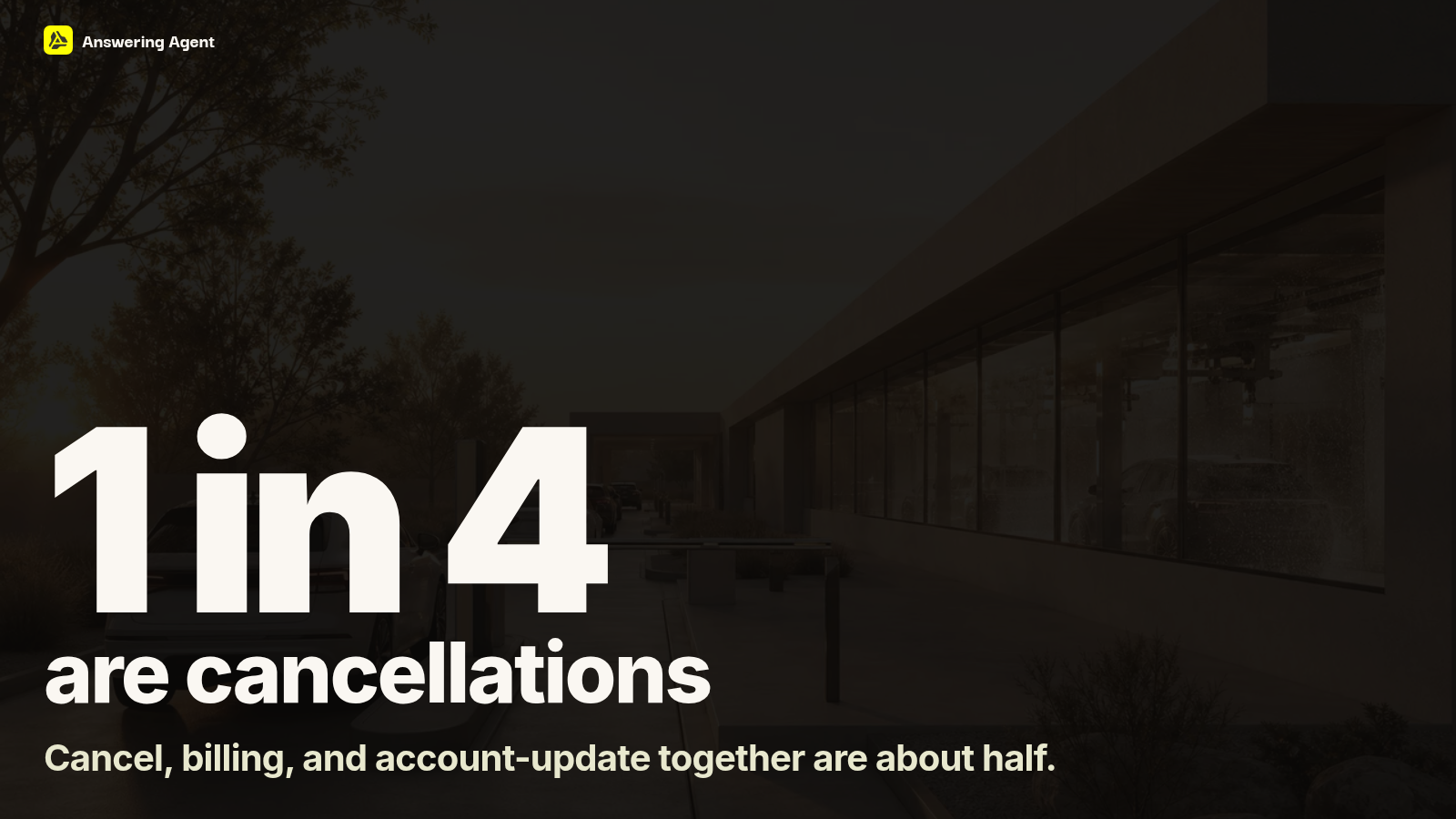
On categorized member calls (spam, no-answer, and blank excluded), cancellation is the single biggest category, about one in four.
Cancel, billing, and account-update calls together are about half of those categorized member calls.
That queue is why your manager's phone never stops, and it is the queue an AI answering service is supposed to take.
Here is what a real cancel or billing call should look like:
- Pick up and find out what the caller actually needs. "Cancel" sometimes means "explain this charge."
- Look up the membership in the POS while they are still talking.
- Walk the approved path. Offer a pause or a downgrade if your playbook allows it, explain the charge, update the card, or take the cancel without a fight.
- Confirm out loud before anything is changed on the account.
- Write it down so your manager reads a summary instead of reconstructing the call from a voicemail and a hunch.
Among cancel calls with a stated reason, moving and no longer needed lead. Price is not the top reason.
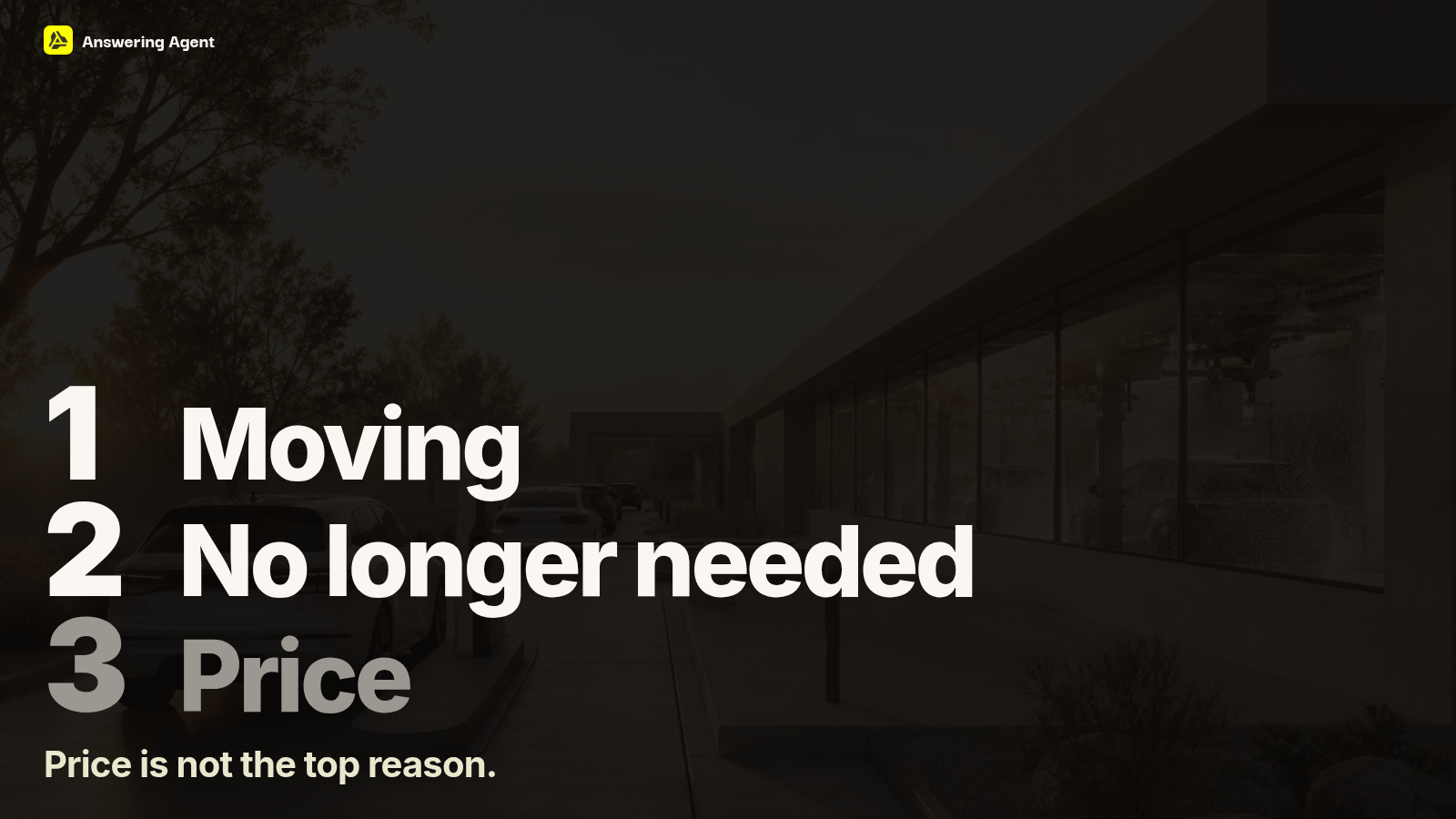
If they are moving, a discount does not help. If they do not need it right now, a pause might. That is why the reason on the call matters more than a script that always fights to keep the membership.
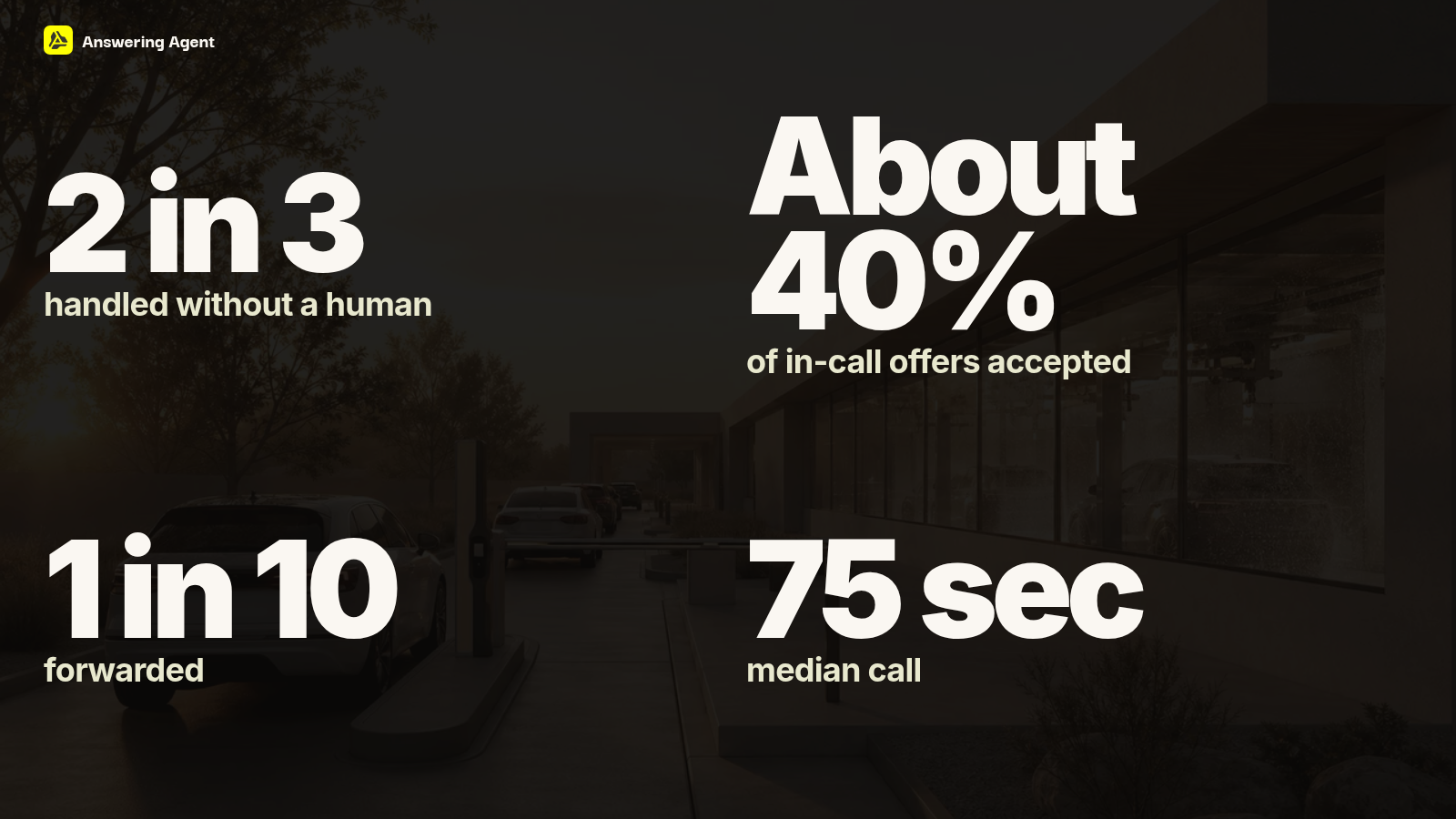
About 40% of contextual offers made during a call are accepted, based on the last twelve months.
A voicemail box does not make that offer.
How much does an AI answering service cost?
Pricing varies by vendor, but the thing to watch is what the bill buys. A message-taking service charges you to create a callback list. An AI answering service should charge a predictable amount to close calls. Compare plans on whether cancel and billing work actually gets finished in your POS.
Think like someone who has to return those calls. A cheap service that only takes messages still costs you the manager who is walking back from the vacuums to sit in the office and dial. That cost never shows up on the invoice. You still pay it every Saturday.
You want a flat bill you can forecast before the month starts. After a cancel call, look in the POS and see if the work is actually there. Current plans are on the pricing page.
Who is an AI answering service for?
This is for any service business where the phone rings with account work, and membership car washes are the clearest fit. Unlimited plans mean members call to cancel, to ask about a charge, and to update a card, and those calls hit hardest when your team is out on the lot running cars.
Car wash operators with unlimited programs live on recurring billing. Recurring billing means recurring phone calls. If you run multiple sites, it is the same cancel queue copied across every location, and hoping each site manager handles it the same way is how you get five different pause policies.
If you run one site, you are the phone system. You are in the tunnel clearing a jam and the phone is ringing in the office. That member can wait, or they can hit voicemail. If they were calling to cancel, the next thing you see is a dispute on the statement.
How do you set one up without ripping out your phones?
You keep your existing number and forward calls to the service. Forward everything, forward after a few rings, or forward only after hours. Nothing about your phone hardware changes, and you can flip the forwarding off if you need to. Start narrow. Widen coverage once you have listened to the calls.
Nights and weekends are the usual first step, because nobody is at the desk anyway. Your shop still gets calls after close. Right now those calls hit voicemail. Members who wanted to update a card or ask about hours just stop. An after-hours answering setup catches those first, without changing how your daytime team works.
Once the agent is handling cancels the way you would, widen it. Overflow during the Saturday rush is the usual next step. Your greeter should not be choosing between the car in front of them and the phone in their pocket.
What should you check before you buy?
Before you sign, check whether the agent can actually finish account work in your POS, and what happens when a call needs a human. Ask for a track record in your industry. A demo with your own cancel scenarios beats a sales deck, so run a fake billing call live and watch what it does in the system.
Ask how escalation works. Some calls should reach a person. About 1 in 10 phone calls get forwarded. What you want to know is what your team receives when that happens. A transfer with the account already pulled up is useful. A raw forward with no notes is voicemail with extra work.
Ask how long they have been doing this, and at what volume. Answering Agent has been in the space for two years. Answering Agent has answered more than 350,000 calls for service businesses. The agent picks up and responds in about a second and a half. About two out of three calls are handled start to finish without needing a human. Make any vendor show you a real cancel call handled end to end. If they cannot, you are not buying a working service yet. The fastest way to test it is to book a demo and bring your ugliest cancel calls from last week.
Ready to stop dumping members into voicemail? Check current plans and pricing, forward after-hours first, and listen to the recordings. The calls will tell you whether it is working.
FAQ
Does it answer after we close?
Yes. Your shop still gets calls after close, and an AI answering service can take them. Members calling about a declined card at 9pm should not hit voicemail. The agent picks up and responds in about a second and a half. If nights are the gap, start with the after-hours answering setup and listen to the recordings before you widen coverage.
Can it handle a membership cancel, or does it just take a message?
It should work the cancel in your POS, not park it on a callback list. Look up the account, walk your pause or downgrade path, confirm out loud, then process it. On categorized member calls (spam, no-answer, and blank excluded), cancellation is the single biggest category, about one in four. A message pad cannot touch that queue.
What happens when the caller actually needs a person?
You set the rules for when a human should take over, then the agent forwards those calls. About 1 in 10 phone calls get forwarded. What matters is what your manager gets on that transfer. The account should already be in front of them, with the reason. A raw forward with nothing attached is voicemail with extra work.
Does it need to connect to our POS?
You can start without it, but cancel and billing work will not finish in the system. Without POS access the agent can still talk to the caller and take details. With POS access it can pull up the membership and complete the change while they are on the line. If you run unlimited plans, that connection is the job.
Should we offer a pause instead of taking every cancel?
Yes, when the reason fits. Among cancel calls with a stated reason, moving and no longer needed lead. Price is not the top reason. A member who is gone for two months often needs a pause. About 40% of contextual offers made during a call are accepted, based on the last twelve months. A voicemail box does not make that offer.
We get slammed on Saturdays. Does overflow actually matter?
Yes, because your busiest lot days are when nobody can grab the phone. Your crew is loading the tunnel. Line two is ringing. Overflow means the agent takes what your team cannot. The median phone call is about 75 seconds. That is a short, answerable call your cashier should not be juggling between cars.
Is this only for big chains?
No. If you run one site, you are the phone system. The membership math does not change because you only have one tunnel. Cancel, billing, and account-update calls together are about half of those categorized member calls. Those are the calls that pull you off the lot. See how this looks for washes at answeringagent.com/industries/car-wash.
Do we have to change our phone number to try this?
No. Keep your number and forward no-answer or after-hours calls. Nothing new to install at the site. On a demo, run a real cancel from last week and watch whether it lands in your POS. Then run a call that should go to a human and see what your team receives.
Book a walkthrough
See it handle your calls.
Book 20 minutes, or hear a sample call first.
Ready to see it handle your calls?
Book a walkthrough, or hear a short sample call first.
Related Articles
How to Handle Car Wash Membership Reactivation Calls
Handle car wash membership reactivation calls. Fork five paths before promising the old rate, then follow wash rejoin rules.
How to Handle Car Wash Membership Transfer Calls
Handle car wash membership transfer calls. Fork five paths before promising yes, then follow wash transfer rules.
How to Handle Lost or Stolen Car Wash Membership Tag Calls
Handle lost or stolen car wash membership tag calls. Check five tag paths before promising a free replacement, then follow wash rules.