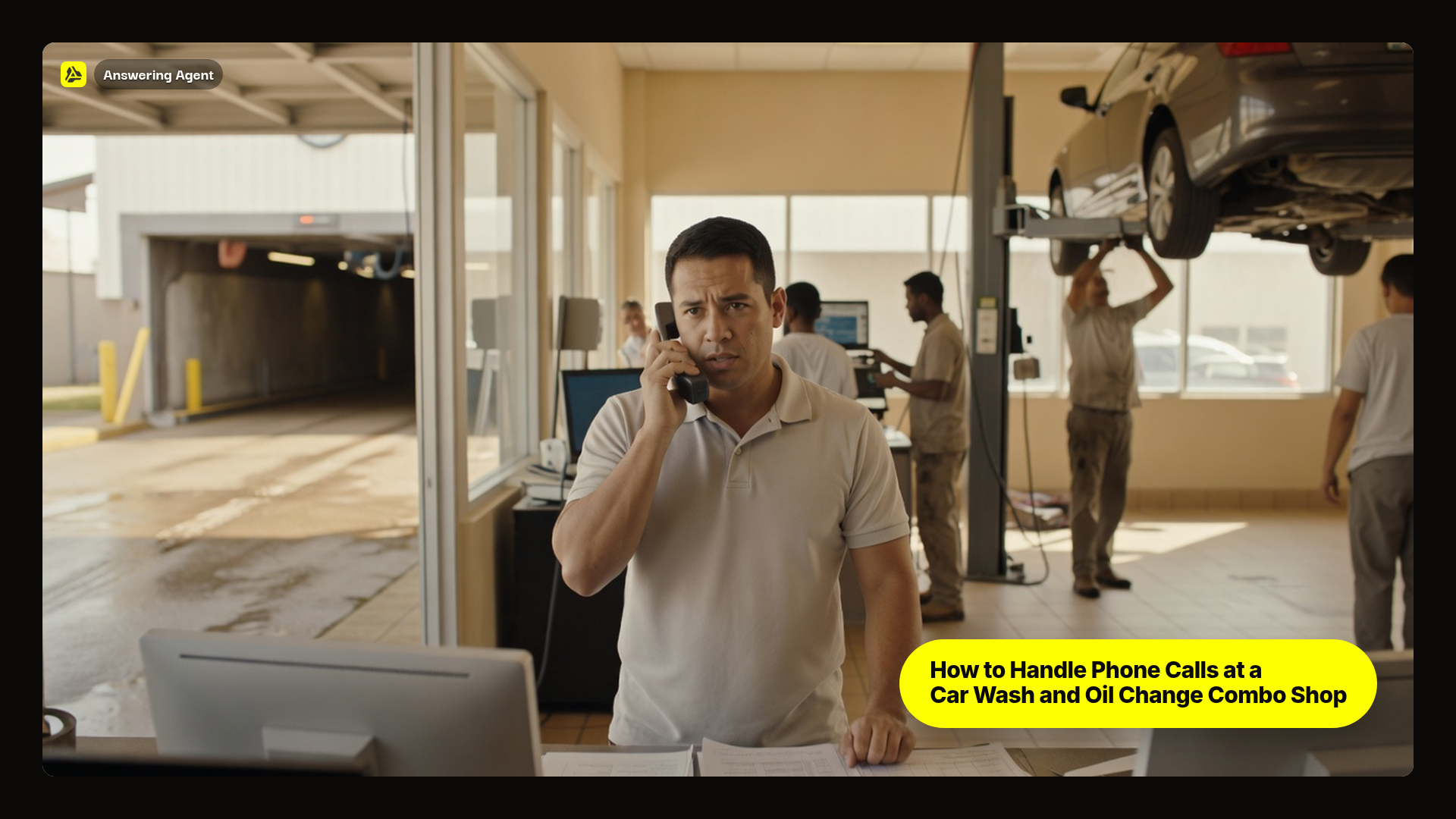
The best combo shop call ends with two labeled answers: a wash wait from the tunnel side, a bay wait from the lube side, and a desk note that says which side owns the one open item. Getting there takes one question before any answer. Which side of the building owns this call? Wash, lube, or both. Name it, answer from that side's written rules, and when both sides are in it, give two answers and say which is which.
What makes a combo shop call different from a wash call?
A combo shop runs two businesses behind one phone number. The wash tunnel and the quick lube bays can keep different hours and run separate queues, and each one follows its own written rules for membership, price, wait, and claims. A stand-alone wash desk answers from one rulebook. A combo desk has to pick the right rulebook first.
An answer from the wrong side's sheet can be accurate and still wrong for this caller.
Which side owns this call?
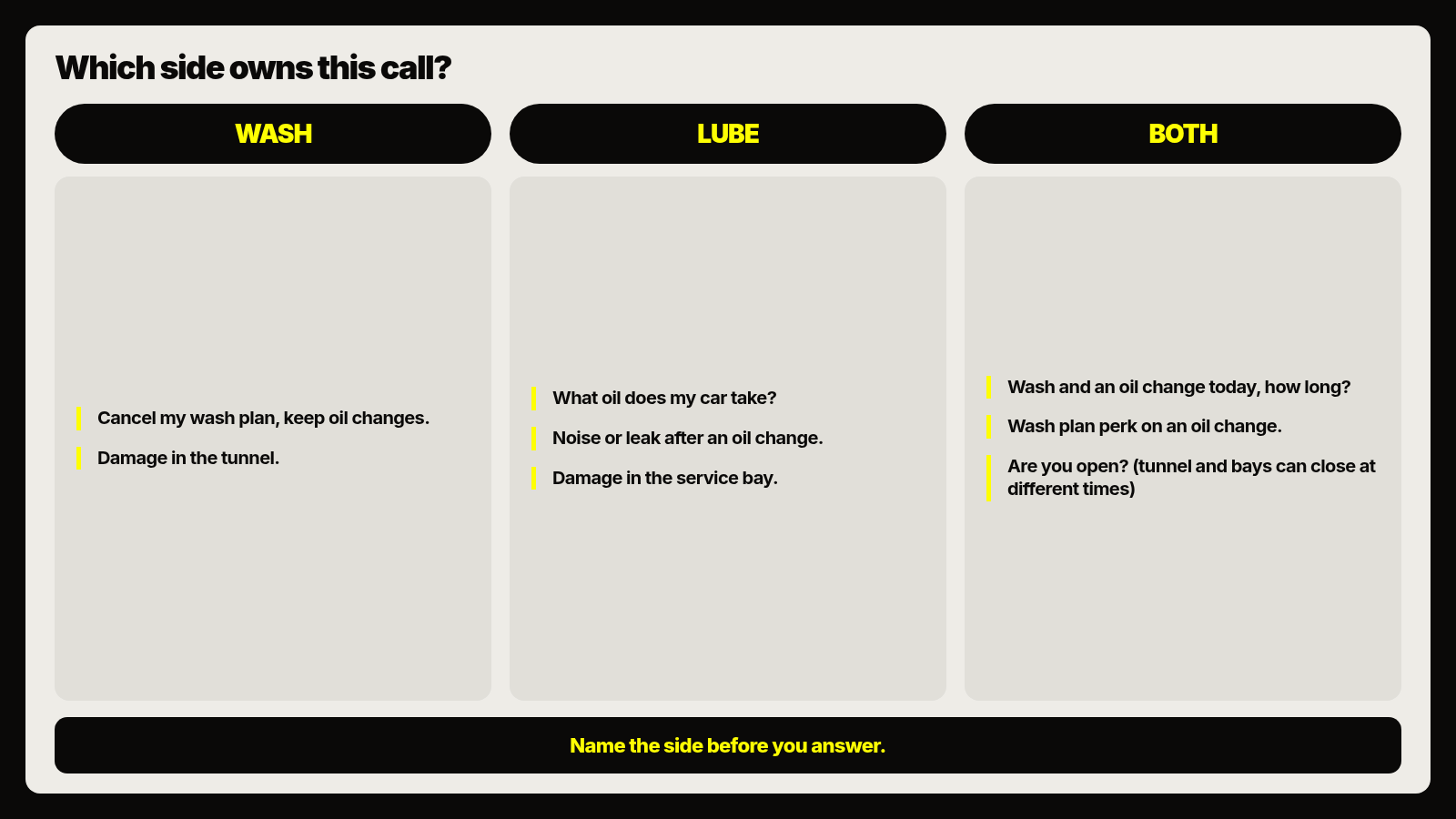
Sort by what the question is about. Anything touching the tunnel, the unlimited wash plan, or a wash line on the receipt belongs to the wash side. Anything about oil, add-on services, a service bay visit, or a lube line belongs to the lube side. A question that touches both gets two answers.
| Call type | What you hear | Which side owns it | Answer from | Do not promise |
|---|---|---|---|---|
| Wash plus oil change today | "Can I get a wash and an oil change today, and how long?" | Both | Bay wait and wash wait as quoted now, plus any written order | One combined time or guessed minutes |
| Wash plan perk on lube | "Does my unlimited wash plan get me anything off an oil change?" | Side the perk is written under | The perk as written, or "no perk on file" | A discount nobody wrote down |
| Oil type | "What oil does my car take?" | Lube | Approved service info for that year, make, and model | A spec from memory |
| Two-line receipt | "I was charged for both and one is wrong." | The side that owns the disputed line | That side's rule | Any change to the other line |
| Damage | "Something got damaged." | The side whose bay it happened in | Wash: claim path. Lube: lube manager | Fault, a fix, or a diagnosis |
| Hours | "Are you open?" | Both | Tunnel hours and bay hours, separately | One closing time for the building |
| Cancel wash, keep oil | "Cancel my wash membership, I still want oil changes." | Wash | The wash membership cancel rule | Any lube side change |
| Lube comeback | "I was just in for an oil change and now there's a noise." | Lube | Visit details, handed to the lube side | A cause, a warranty, or a free fix |
Some rows open a bigger job with its own how-to:
-
Wash side damage: handling car wash damage claim calls.
-
Holiday or closure hours: car wash holiday hours and closure calls.
-
Two membership drafts on one card: handling a double charge on a car wash membership.
-
Lube line ringing out during the rush: oil change shop missed calls and walk-in flow.
Name the side before you answer, then read from that side's sheet and nothing else.
What is the desk playbook for a combo shop call?
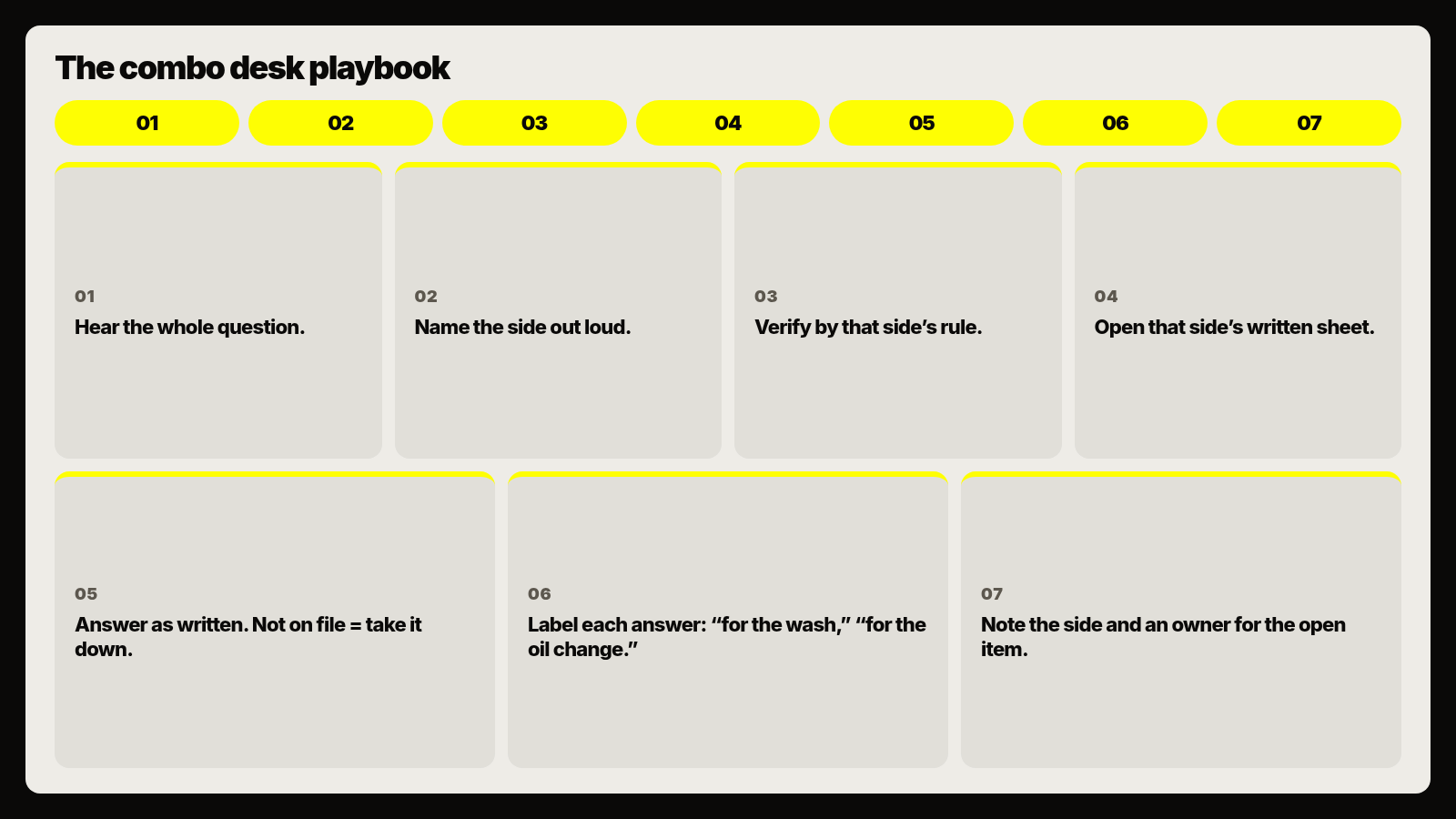
Run the same seven steps on every call. Hear the whole question, name the side, verify the caller, open that side's sheet, answer from it, label each answer and leave the other side alone, then write the note with an owner for anything still open. The order matters more than speed.
Hear the whole question before you sort it. One sentence can carry a wash question and a lube question
Name the side out loud: "that's a lube side question," or "that one touches both, so you'll get two answers."
Verify the caller by that side's rule, such as the membership account or the vehicle and visit
Open that side's written sheet: membership terms, price list, per-bay hours, quoted waits, claim path, or approved service info
Answer from the sheet as written. If it isn't on file, say so and take it down for that side
Label each answer "for the wash" or "for the oil change," and leave the other side alone
Write the note with the side named and an owner on that side for the open item
What do you say when the answer needs both sides?
Give two answers and put a label on each. Start with the side the caller asked about first. Say "for the wash" or "for the oil change" before each piece, and never blend the two into one answer. If the shop has a written order for combo visits, say it.
| Call that needs both sides | What the wash side answers | What the lube side answers |
|---|---|---|
| Wash and oil change today | The tunnel wait the shop is quoting now | The bay wait the shop is quoting now, plus any written combo order |
| Wash plan perk on lube | The wash plan terms as written | Any lube perk as written, or "no perk on file" |
| Two-line receipt dispute | The wash line, under wash rules, if disputed | The lube line, under lube rules, if disputed |
| Damage after a visit to both | Logged to the tunnel, sent down the wash claim path | Logged to the service bay, handed to the lube manager |
| Tunnel and bays close at different times | Tunnel hours | Bay hours |
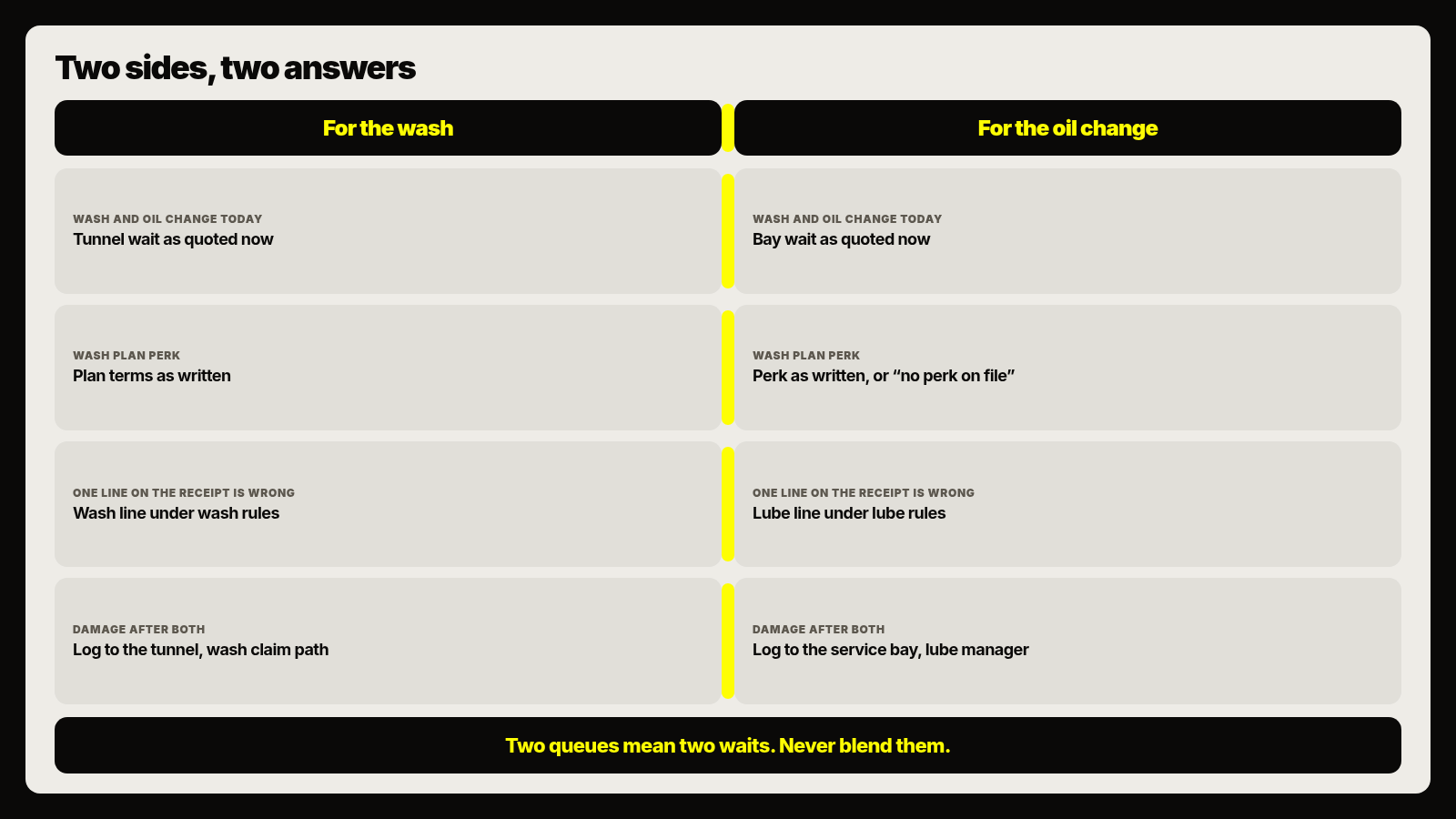
The tunnel and bays move separately, so a short wash wait says nothing about the bays. Read each off what the shop is quoting.
For damage after both, write down what the caller saw and which bay they think it was. If they can't say, log it to both and flag both owners. Don't assign fault or guess at a cause.
Does a wash membership cover anything on the lube side?
Only what the shop wrote down. If the membership terms or the lube price sheet list a perk for plan members, quote it word for word and say which side it lives under. If nothing is written, the answer is that there is no perk on file, and the desk does not create one.
Cancelling works the same way. A caller leaving the wash plan but keeping oil changes has a wash side job only. Run the cancel under wash rules with the car wash membership phone calls desk guide, and don't offer a lube perk to save the plan unless the shop wrote one.
What belongs in the desk note?
The note names the side first, then splits everything by side: the question, the rule checked, the answer given, what was granted versus pending, and which bay for any damage or comeback. The last line names the open item and its owner on that side, so the next shift can pick it up without asking where it came from.
DESK NOTE: COMBO SHOP
Side: [Wash / Lube / Both]
Caller: [name, callback number]
Verified by: [membership account / vehicle and visit]

WASH SIDE
Question:
Rule checked:
Answer given:
Granted / Pending:

LUBE SIDE
Question:
Rule checked:
Answer given:
Granted / Pending:

Bay: [named / caller unsure, logged to both]
What the caller saw: [their words, no diagnosis]

Open item:
Owner: [side + role]
Write "none" under a side with nothing on the call. A blank looks like someone forgot.
What should a combo shop check before handing these calls to phone coverage?
Check that the coverage answers from each side's written rules and nothing else. Every note should name the side. Wash membership and lube service should stay separate, two queues should get two waits, and damage should be logged to the bay where it happened. Test it with calls that touch both sides before you go live.
Run test calls against the call-type table above. Here's what I listen for:
-
Every question, oil type included, is answered from its side's sheet or marked "not on file" and taken down.
-
Every note opens with Wash, Lube, or Both, and every open item has an owner.
-
A perk question gets the perk as written or "no perk on file," and a wash cancel leaves lube alone.
-
A wash plus oil change call gets two labeled waits, read off what the shop is quoting.
-
Damage goes to the bay the caller named, or to both, with no fault, cause, or diagnosis.
If you're looking at Answering Agent, see the combo shop page and the quick lube page. The agent picks up and responds in about a second and a half. About two out of three calls are handled start to finish without needing a human. Write each side's rules down first, then read how phone answering works, check pricing, and run your own both-sides test calls.
FAQ
What is the first question to ask on a car wash and oil change combo shop call?
Which side of the building owns it: wash, lube, or both. Each side has its own written rules for membership, price, hours, wait, and claims. Name the side, then answer from that side's sheet.
How do you quote a wait for a wash and an oil change on the same visit?
Give two waits. The tunnel and the bays run separate queues, so read the wash wait and the bay wait off what the shop is quoting right now and label each one. If the shop has a written order for combo visits, say it. Never guess minutes.
Does an unlimited wash plan include anything on an oil change?
Only if the shop wrote that perk down. Quote it word for word and say which side it lives under. If nothing is written, the answer is that there is no perk on file, and the desk does not create one.
What do you do when a customer disputes one line on a combo receipt?
Find the line in question and work it under that side's rule. Leave the other line alone. If it turns out to be two membership drafts on one card, run the double-charge playbook instead.
How do you log a damage call at a combo shop?
Write down what the caller saw and which bay they believe it happened in, the wash tunnel or the service bay. Wash side damage goes down the wash claim path, and lube side damage goes to the lube manager. If the caller can't say, log it to both and flag both owners. No fault, cause, or diagnosis on the phone.
Can a member cancel the wash plan and keep getting oil changes?
Yes. The cancel is a wash side job only. Run it under the wash membership rules and leave the lube relationship as it is.
Book a walkthrough
See it handle your calls.
Book 20 minutes, or hear a sample call first.