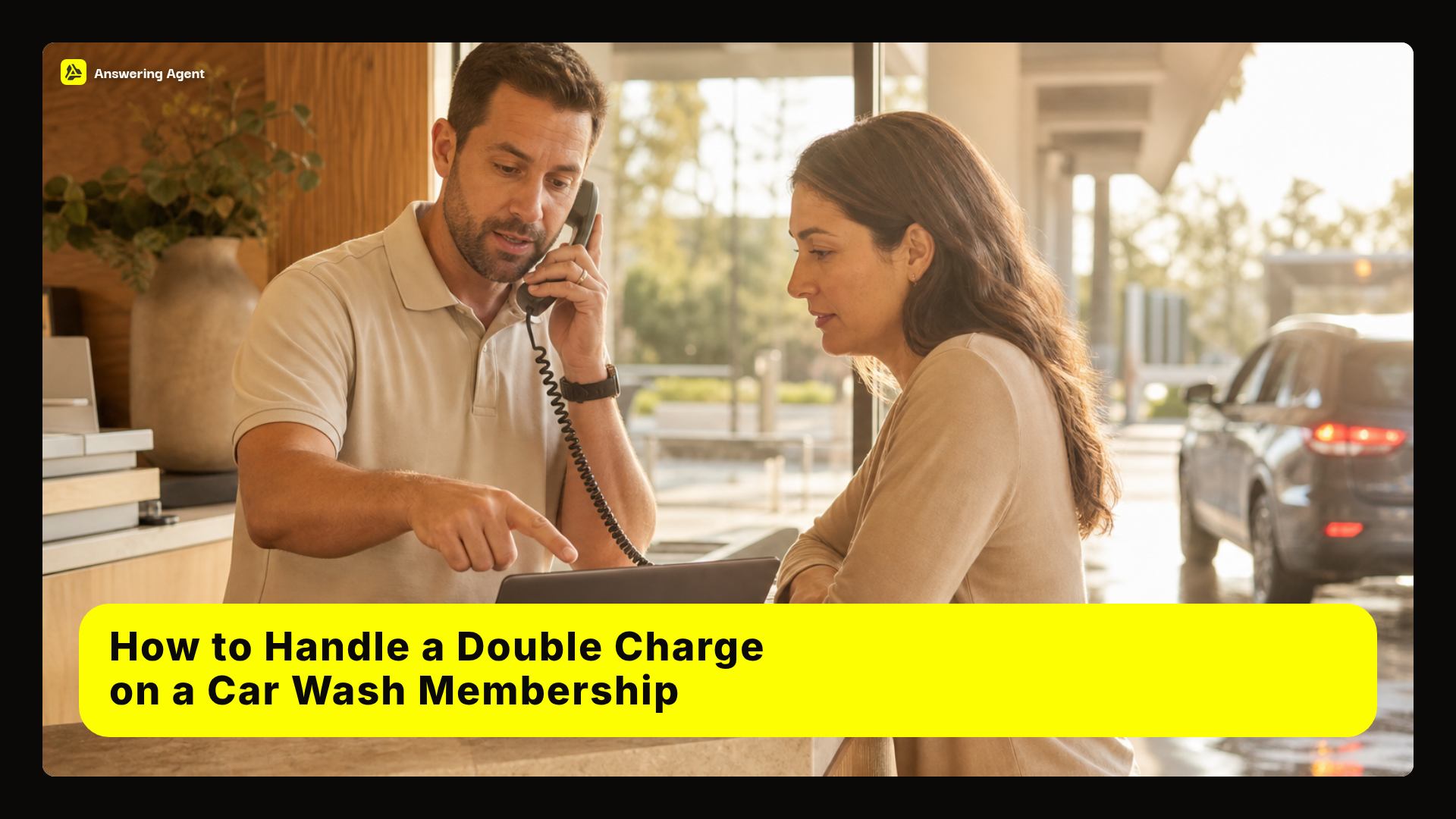
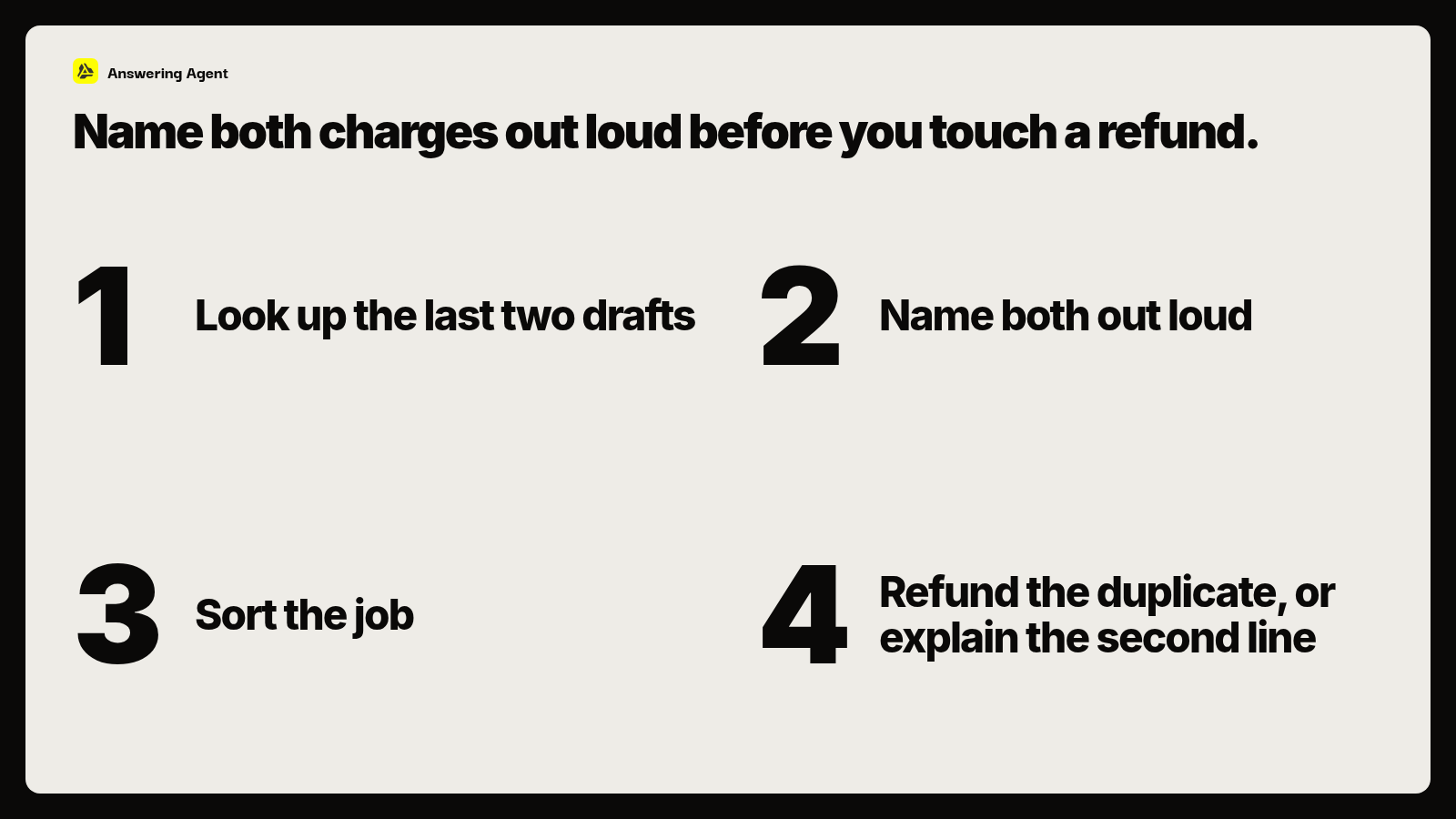
When a member calls about two charges, pull the last two drafts while they are on the line. Read both charges out loud with dates and amounts. Then refund the true duplicate or explain the second line.
Most of these calls come after someone checks their bank app at night. Many of those second lines are real charges, so answer with the member record open.
Why does a car wash membership get charged twice?
Two lines usually come from one of five causes: a true double draft, a single wash bought before the plan started, a mid-cycle upgrade, an extra vehicle, or a retry that posted twice after a decline. Pull the account before you refund anything.
Wash plus plan is the most common. Someone buys a single wash on Saturday and signs up for unlimited the same day. Both charges are real.
An upgrade looks worse on the statement. The prorated line posts next to the new draft, so the member sees two membership charges in one week.
An extra vehicle is easy to miss because the caller is often not the person who added the car. Adding a car is its own job, covered in how to add a vehicle to a car wash membership.
A retry duplicate is the one you have to fix, and fast. If the call is really about a declined draft or a card that needs updating, use the failed payment process instead of a refund. If someone opened a second plan for a member who already drafts at another site in your chain, see handling a member from another car wash location. Every car wash running memberships sees all five.
What should you actually do on that call?
If you can see both charges, you can close the call on the line. If you can't, it becomes a callback. Run these steps every time:
- Look up the last two drafts while they are on the line. Get dates and amounts on the screen. Don't open a ticket.
- Name both charges out loud. For example: "I see the 14th for the unlimited plan and the 16th for a single wash."
- Sort it into one bucket. True double draft, wash plus membership, upgrade, extra vehicle, or retry.
- Follow the approved path. Refund a true duplicate on the call. Explain a real second charge. Give a credit if your rules allow it. Don't process a cancellation from someone who was only confused.
- Confirm what happens next. Tell them next month's draft amount and whether a refund is already on its way.
- Leave a note on the account so the next shift doesn't refund the same line again.
Step two is the one people skip.
Two drafts, a wash plus a plan, or they upgraded: how do you tell them apart?
Check the plan name, amount, and date on each line. The bank statement makes the charges look alike. Your POS shows the difference.
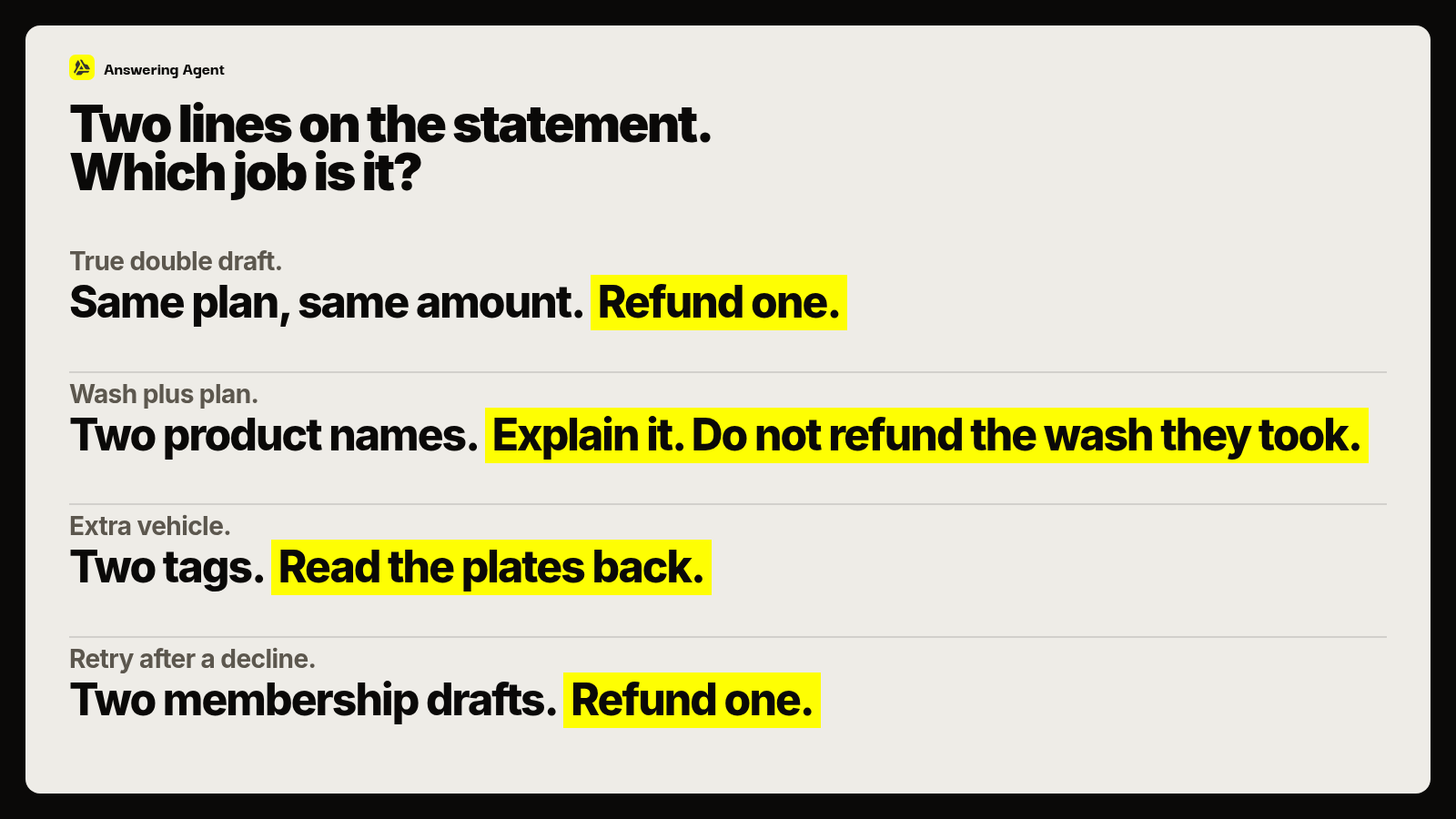
- True double draft: Same plan, same amount, posted the same day or a day or two apart. Refund one line and apologize.
- Wash plus plan: Two different product names. Explain the charges. Don't refund a wash they drove through.
- Upgrade: A prorated line next to the new plan amount. Walk through the math, then tell them next month is one line at the new price.
- Extra vehicle: Two tags. Read back the plates. Callers often realize it's the spouse's truck.
- Retry: Two drafts for the same plan right after a decline. This is a duplicate. Refund it without argument.
Two rules apply every time. Never refund a wash they took just to end the call faster. Never sit on a true duplicate because Saturday is busy.
What do you do when they want a refund right now?
For a true duplicate, refund it on the call and tell them when to expect it. For a real second charge, explain it plainly and offer only what your rules allow. A member asking for a refund is still a member, so don't stall. If the ask is a rewash credit, promo dispute, or mid-cycle billing refund instead of a duplicate draft, switch to the refund and credit call playbook.
Name both charges out loud before you touch a refund.
Reading the lines back turns a dispute into two people looking at the same screen. A clear no beats a mumbled maybe. Chargebacks start when nobody names the lines, so name them on this call.
How is this different from taking a voicemail?
Voicemail and message-taking services can't see the member record, so they can't name the two lines. Naming the lines is the whole job.
| Voicemail | Message-taking service | Coverage that can work the membership | |
|---|---|---|---|
| Who answers | A recording | Someone reading a script far from your lot | A person or agent with the member record open |
| What they can see | Nothing | A name and a callback number | Both drafts, dates, amounts, plan names |
| Two drafts vs wash-plus-plan vs cancel | Cannot tell them apart | Writes "billing issue" for all three | Sorts the bucket on the call |
| After the call | A message you play tomorrow | A callback on your morning pile | An account that is already right |
| Refund vs explain | Neither | Neither | Refund the duplicate, explain the real charge |
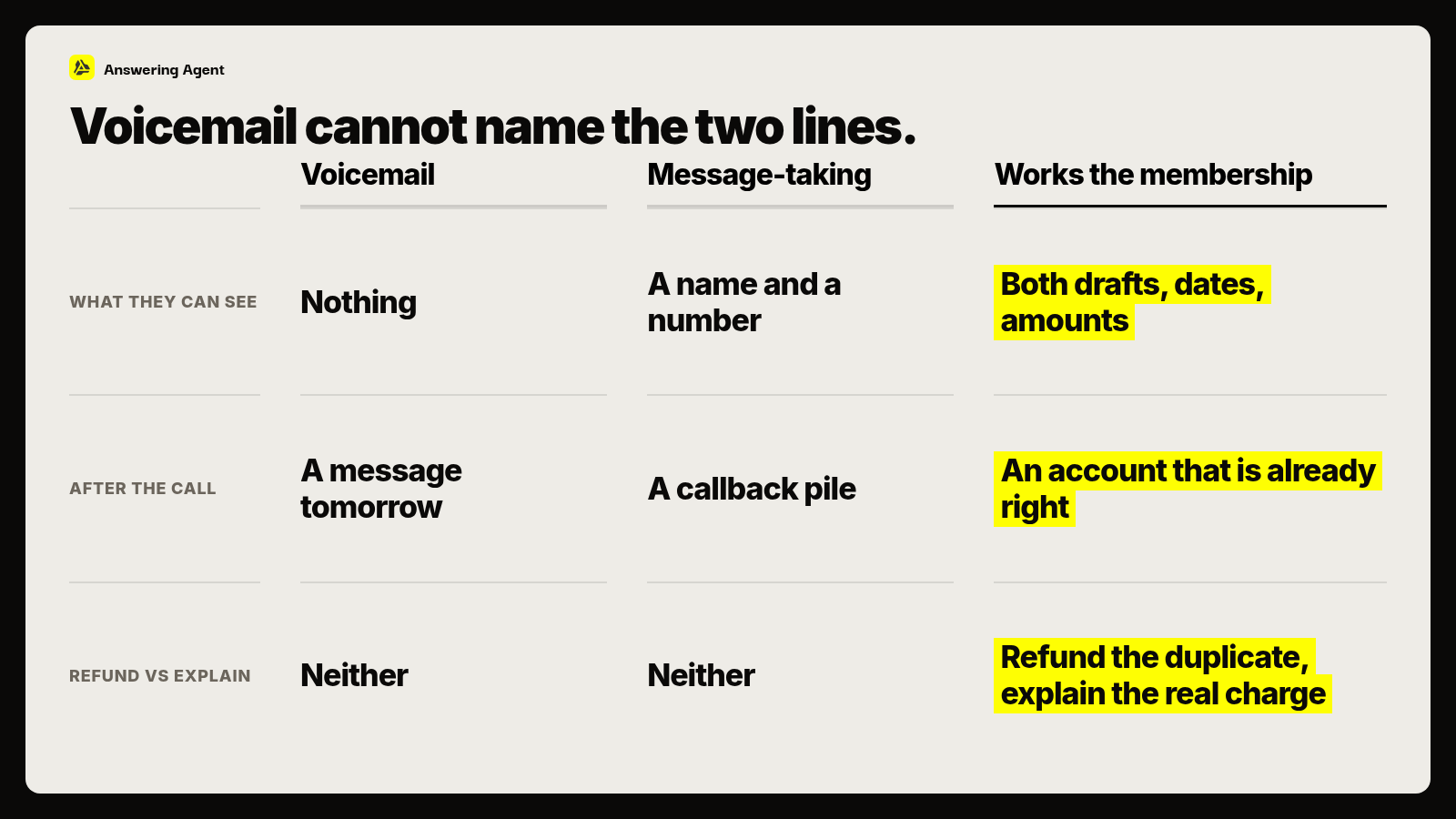
A name-and-number service works for a lost-sunglasses call. A double charge only ends when both lines are named and the account is fixed.
What should you check before software takes that call?
Hold it to the standard of a good cashier. It should look up the member, pull the last two drafts, tell a duplicate from a wash they took, follow your refund rules, and hand unusual cases to a human. If it can't do that, it's just taking messages.
Test whether Answering Agent's AI phone answering can see the member record in your wash POS and handle those steps. About two out of three calls are handled start to finish without a human. The broader case for a wash-specific setup is in the car wash phone coverage post.
Other membership calls need their own scripts:
- Rain and rewash calls
- Gift card balance and lost-card calls
- Damage claim calls
- Membership pause calls
The car wash membership phone calls desk guide maps all of them.
To test it, check pricing, put it on the membership line, and call it three times: once with a true double draft, once with a wash plus a plan, and once with a straight refund request. If it handles all three the way your best cashier would, keep it.
FAQ
How fast should a true duplicate refund actually land back on their card?
Tell them you refunded it today and that their bank may take several business days to post it. Text them the refund date. Don't promise a date you can't hit.
What if the second charge is an extra vehicle they added and forgot about?
Pull the account before you mention a refund. Two drafts on the same day often means two plans, usually because someone in the household added a second car. Read back the plate on each plan. Most of these calls end without a refund.
A declined card retried and both payments went through. Do we refund one?
Yes. Refund one the same day, tell them which draft you kept, and text a confirmation. It's a true duplicate, so don't make them argue for it.
Does phone software like this only work if we connect our wash POS?
No. Without a connection, the agent collects the account details, both charge dates, and the vehicle on file, then hands your office a complete ticket. A connected POS is better because lookups happen during the call. See how it fits a wash at answeringagent.com/industries/car-wash.
What happens when they already filed a chargeback before calling us?
Don't refund on top of it, or you pay twice. The processor holds the money once a dispute is open. Confirm the charge dates, note whether it was a duplicate or a wash plus a plan, and respond through the dispute portal. Tell the customer the bank now controls the timeline.
The office is closed and a cashier is alone in the booth. Can they still handle this?
They can handle the conversation even if they can't push the refund. Have them pull the account, sort the charge into a bucket, and log it for the morning. If the booth can't answer, software can take the call.
How do we try this without changing the number on our signs?
Forward your existing line on no answer or after a set number of rings. Your team still picks up when they're free, and the software catches the rest. Start with billing calls, then expand if it earns trust. Book a walkthrough at answeringagent.com/book-a-demo and bring a real billing call.
What should a demo prove on a double-charge call before we sign anything?
Make them run your actual scenario. The demo should separate a duplicate from a wash plus a plan, ask for the vehicle on file, state refund timing honestly, and produce a ticket your office can act on. If it apologizes vaguely and takes a message, it's still just taking messages.
Book a walkthrough
See it handle your calls.
Book 20 minutes, or hear a sample call first.