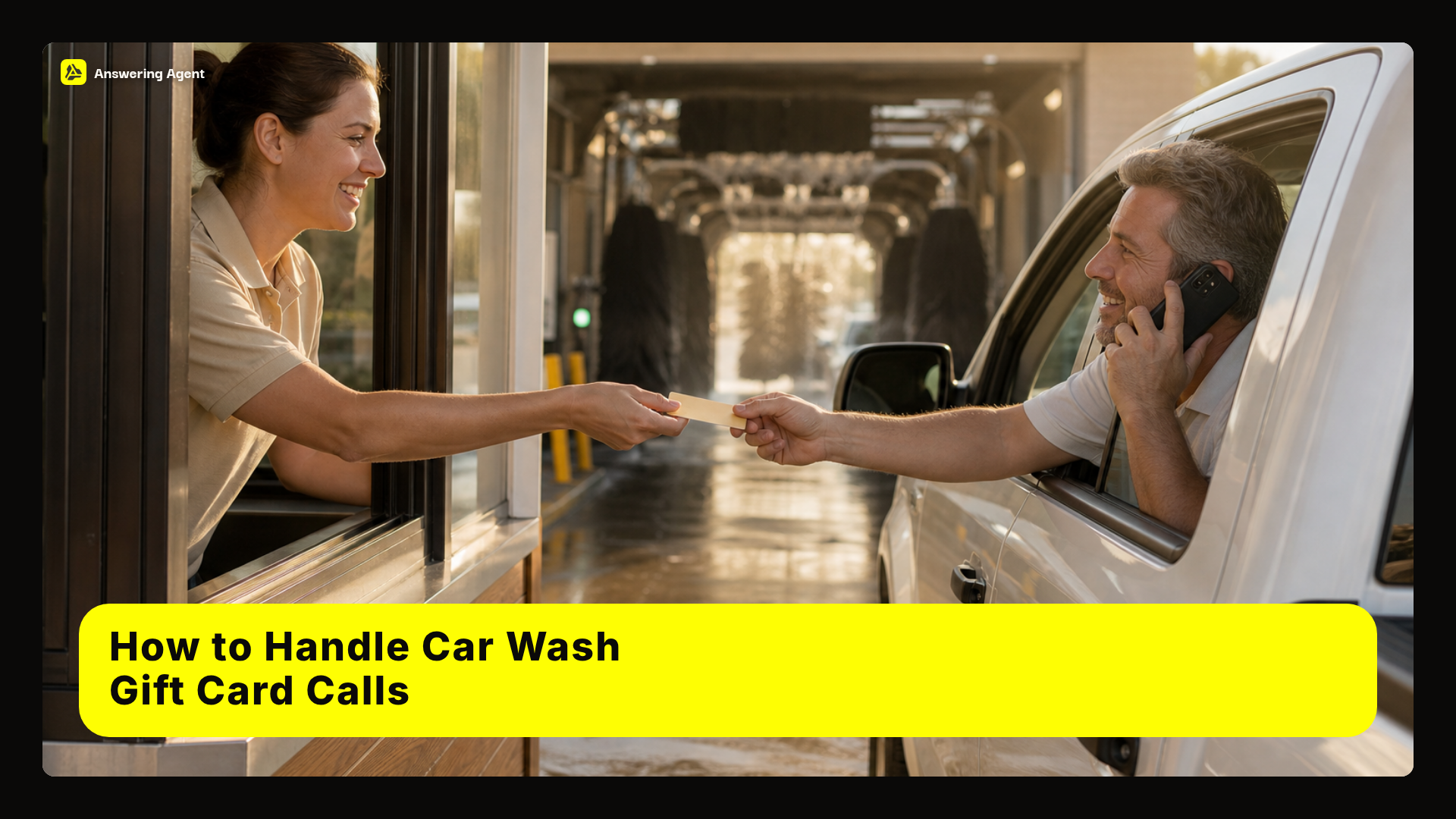
A gift card call is done when you have pulled the card, read the balance out loud, and said whether it covers today's wash. If the card is lost, it is done when the old number is frozen and a replacement is started.
The caller should hang up knowing exactly what will happen at the pay lane.
Why do people call about a wash gift card?
Gift card calls come in for five reasons:
- They want the balance.
- They want to redeem the card before they drive in.
- They lost the card.
- They have a few dollars left after a wash.
- They want to buy a card for someone else.
Balance checks are the most common. People call first so they don't find out the card is empty while a line of cars waits behind them.
Lost cards worry managers more than they should. The value lives on the card record in your wash POS, not on the plastic. Once you freeze the number, the balance is safe. The car wash page covers how washes route this kind of call.
Some calls sound similar but belong somewhere else:
- A surprise membership draft is a billing call. See how to handle a double charge on a car wash membership.
- A dispatcher asking which trucks are covered is fleet account work.
- A customer whose plan drafts at another site is a member from another car wash location.
Keep those separate from gift card calls.
A referral credit is not a gift card either. If the caller is asking whether a friend's sign-up earned them credit, read the wash's current referral rule instead. See how to handle car wash referral credit calls.
What should you actually do on that call?
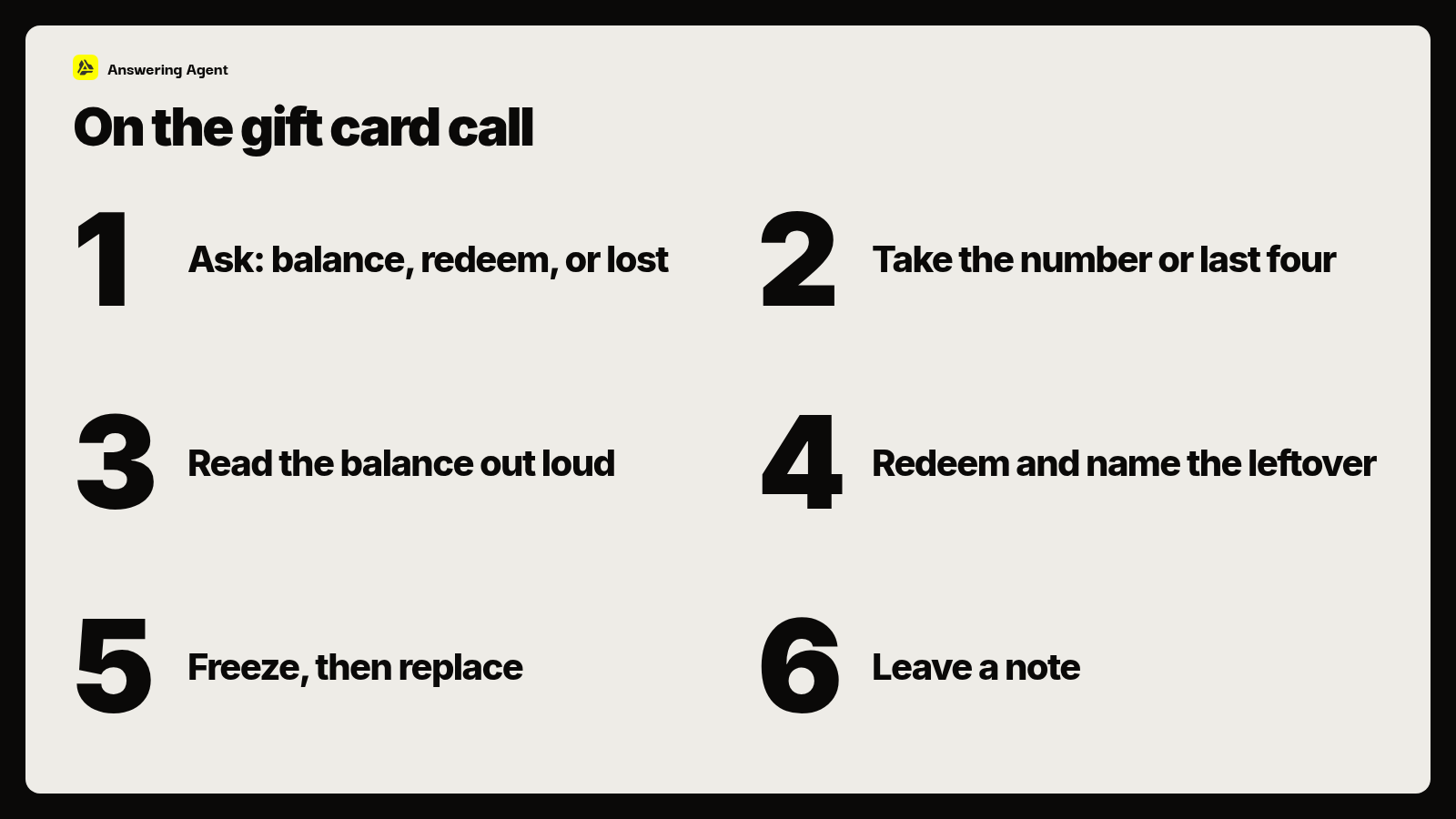
The common mistake is treating the call like a message. Someone writes "gift card question" on a note, and the caller still doesn't know if they can wash today. Run these steps instead:
- Ask what they need. Balance, redeem, or lost card. That one question sorts the call.
- Get the card number, or the last four digits plus the name on the receipt. Online buyers can find the number in their confirmation email.
- Read the balance out loud and say whether it covers today's wash. For example: "You have $18. Our top wash is $22, so the basic is covered."
- If they are redeeming, apply the card and name what's left. For example: "That leaves $6 on the card for next time."
- If the card is lost, freeze the old number first, then start the replacement. Never leave the old card live while you set up the new one.
- Leave a note the next shift can see. The pay lane cashier shouldn't learn about a quoted balance or a pending replacement from the driver.
Balance, redeem, or lost: how do you tell them apart?
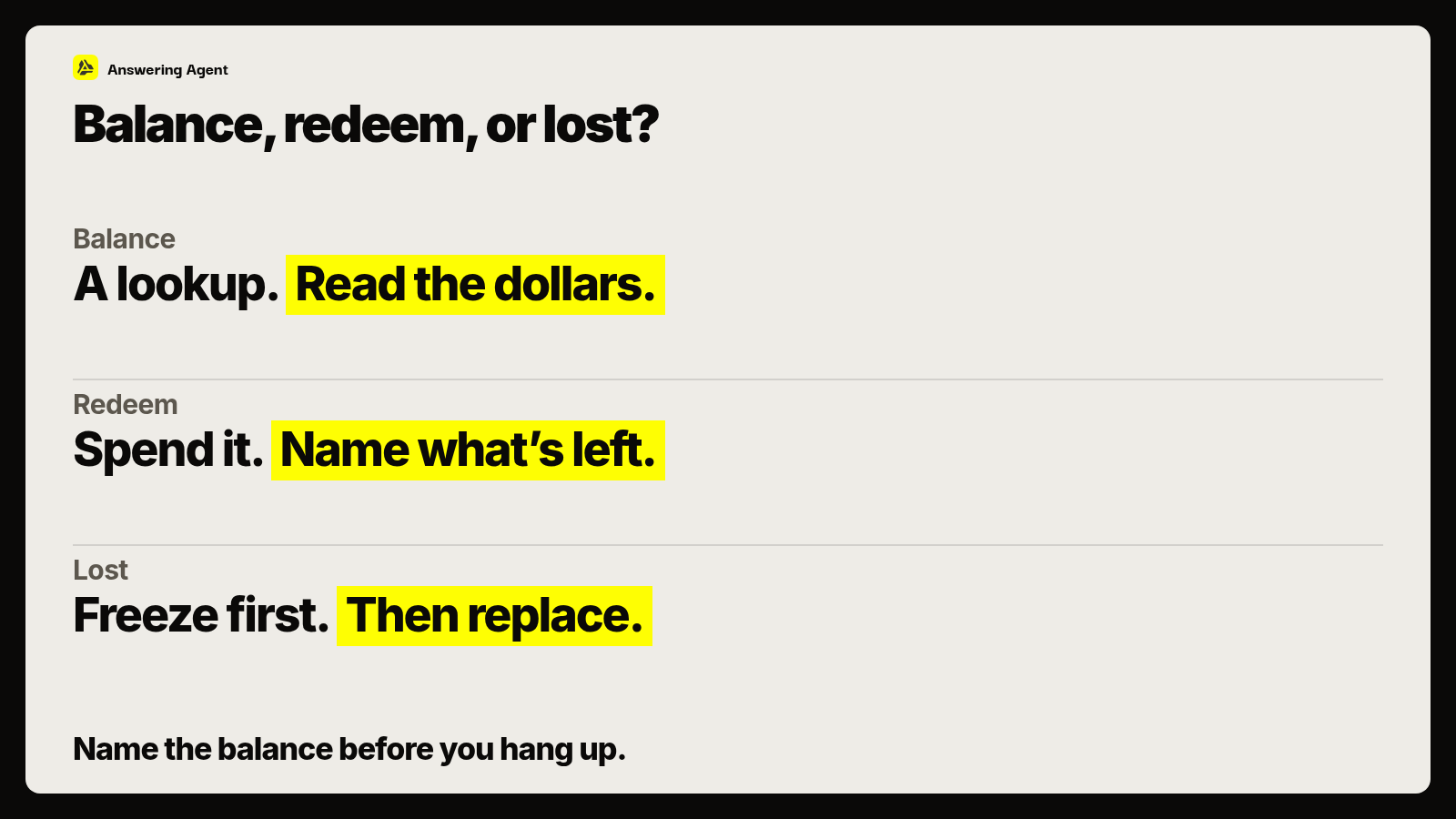
Each type of call ends differently. Handle them all the same way and you get callbacks, which tend to turn into arguments at the pay lane.
Balance check. The usual failure is being vague. "There should be something on there" is not an answer. Give the dollar amount and say which wash it buys.
Redeem. Always name the leftover. If someone spends $22 of a $25 card, tell them $3 remains. If nobody mentions it, that $3 comes back next month as a confused call that sounds like a billing dispute.
Lost card. Freeze the old number first, then move the same balance to a replacement. Don't move the value onto a membership or a credit card without asking. Some people want new plastic because the card was a gift, so ask what they want.
What if they are already at the pay lane?
Sometimes the caller is three cars back in your lane, holding a card the terminal rejected. The only good outcome is a balance read out loud while they are still in line.
Name the balance before you hang up.
If a cashier is in the booth, they can run the card. The harder case is a caller who dialed the number on the sign because the booth was empty. A callback in an hour doesn't help someone sitting in the lane now. Whoever answers has to get the card number and give the balance on the same call.
If they are calling because the wash shut down for weather, that is a different call. See how to handle rain and rewash calls at a car wash. Don't let a weather closure get logged as a gift card problem.
How is this different from taking a voicemail?
A voicemail can record the question, but it can't answer it. The gift card call ends when the caller hears a balance or the lost number is frozen. Neither happens on a recording. When you evaluate phone coverage, ask whether it can reach the card record.
| Voicemail | Message-taking service | Coverage that can look up the card | |
|---|---|---|---|
| Who answers | A recording | A person reading a script | Something with access to the card record |
| What they can say | Nothing back | "I'll pass that along" | The actual balance, in dollars |
| Balance vs redeem vs lost | Cannot tell them apart | Writes down whichever word the caller used | Sorts the job and finishes it |
| After the call | Message sits until morning | Note goes to the desk, someone calls back | Balance quoted, lost number frozen, note on the record |
| When they are already at the pay lane | They hang up and honk | They wait in the lane for a callback | They hear a number and pull forward |
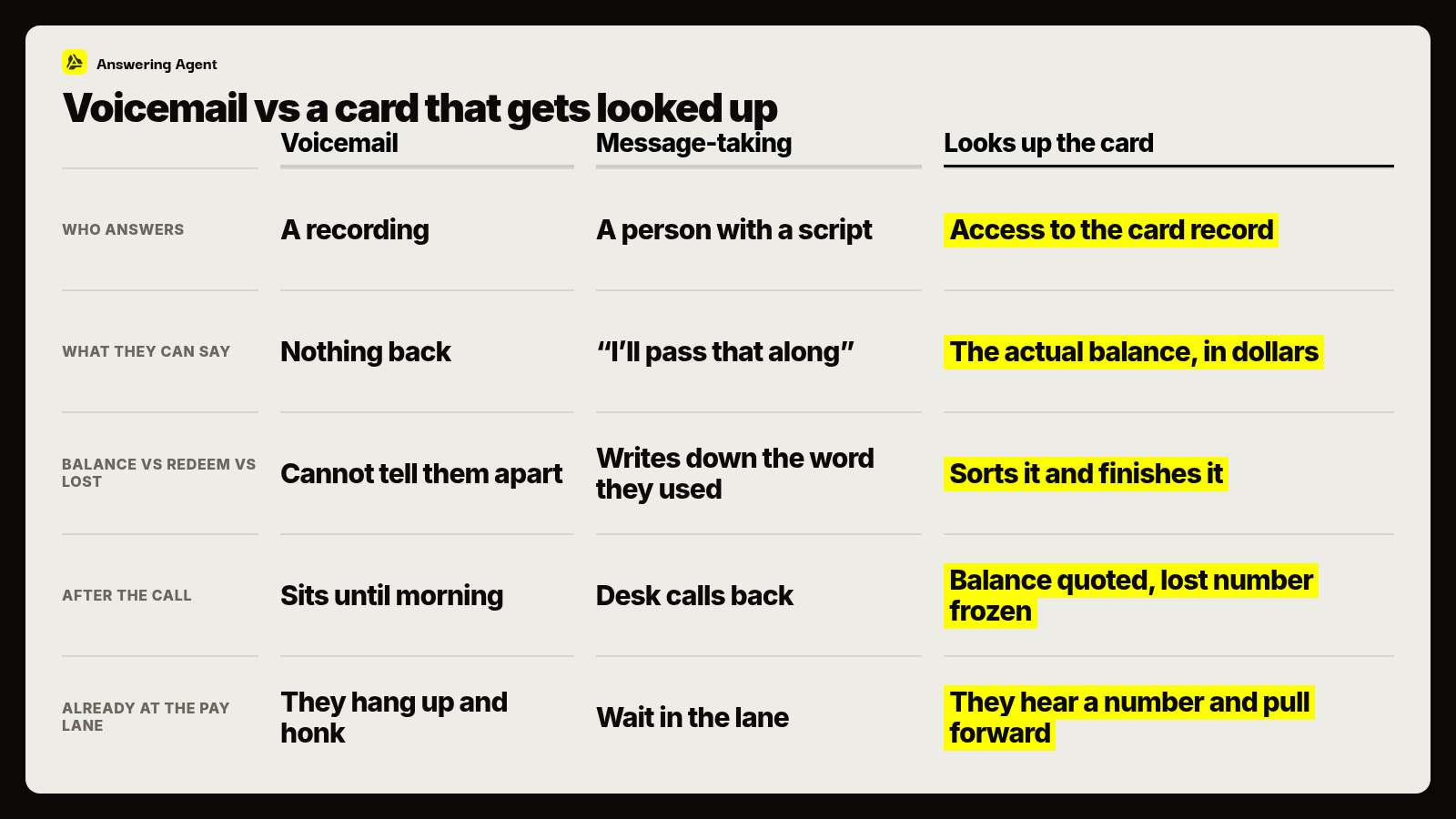
A service that only takes a name and number works for quote requests. For gift cards, it's a more expensive voicemail.
What should you check before software takes that call?
Hold software to the same standard as a cashier. It should be able to:
- Take the last four digits and pull the card.
- Name the balance.
- Apply a redemption.
- Freeze a lost number.
- Hand a messy call to a person.
The handoff matters. A card that may be stolen, shared, or half refunded should go to a manager, not get improvised. On Answering Agent, about 1 in 10 calls get forwarded to a person.
For the mechanics, start with AI phone answering, then read how phone answering works at a wash. Gift cards run through the same line as account changes like adding a vehicle to a membership.
To test it, check pricing, put it on your line, and call it yourself:
- Ask, "What's left on my gift card?"
- Call back and say, "I lost the card."
If it names the balance and freezes the lost number the way your cashier would, it's ready for real calls.
FAQ
Can someone apply a leftover gift card balance toward a membership?
It depends on your POS and your policy. Some systems can credit a remaining balance against the first month, but most treat gift cards as wash-only. Decide ahead of time and write the answer as one sentence the phone can repeat. The worst outcome is a caller hearing yes on the phone and no at the pay lane.
They bought the card at a different location in our chain. Will it work at my site?
If your locations share one POS, it usually works, so say so plainly. If each site runs its own system, tell them to redeem it where they bought it, and name that location. Either way, you need the last four digits to check anything.
A caller says their gift card expired. What do we tell them?
Check your state's rules first. Many states restrict or ban gift card expiration. If the card is legally still good, honor the balance. If your program does let cards lapse, look up the last four digits before you say no. A lookup keeps the call calm, while a flat no often ends in a bad review.
Someone wants to buy a gift card over the phone. Should we take the card number?
No. Don't let anyone read a credit card number to a person or a bot on your line. Text them a payment link, or point them to the kiosk or your website. The phone's job is to capture the amount, the recipient, and where to send the link. That keeps you clear of PCI problems and still closes the sale.
Does automated answering only help if it connects to our wash POS?
No. Without a POS connection, a phone answer can still state your gift card policy, collect the last four digits, and text the caller next steps. That already beats voicemail. A POS connection adds balance checks during the call. Start without the integration and add it once you see the value.
How do we try this without touching our published number?
Use call forwarding instead of porting your number. Keep your main number and set conditional forwarding so unanswered calls roll to the agent after a few rings. Your team still answers what it can. If the test doesn't work out, you can turn forwarding off in a minute. Test-forward notes for washes are on the car wash page.
What should a demo prove on a gift card call specifically?
Call in as a confused gift card holder. Hold back the last four digits at first, then give them. Watch whether the agent asks the right follow-up, states your actual policy, and texts a summary. If it gets your policy wrong in a demo, it will get it wrong on live calls.
When should a gift card call go to a manager instead?
Send it to a manager when money is in dispute, when a card was drained by fraud, or when someone wants a refund on a purchased card. Those calls need judgment and sometimes a freeze while you investigate. Balance checks, redemptions, and questions about where to use the card should never reach a manager. If too many calls are getting forwarded, tighten the script.
Book a walkthrough
See it handle your calls.
Book 20 minutes, or hear a sample call first.