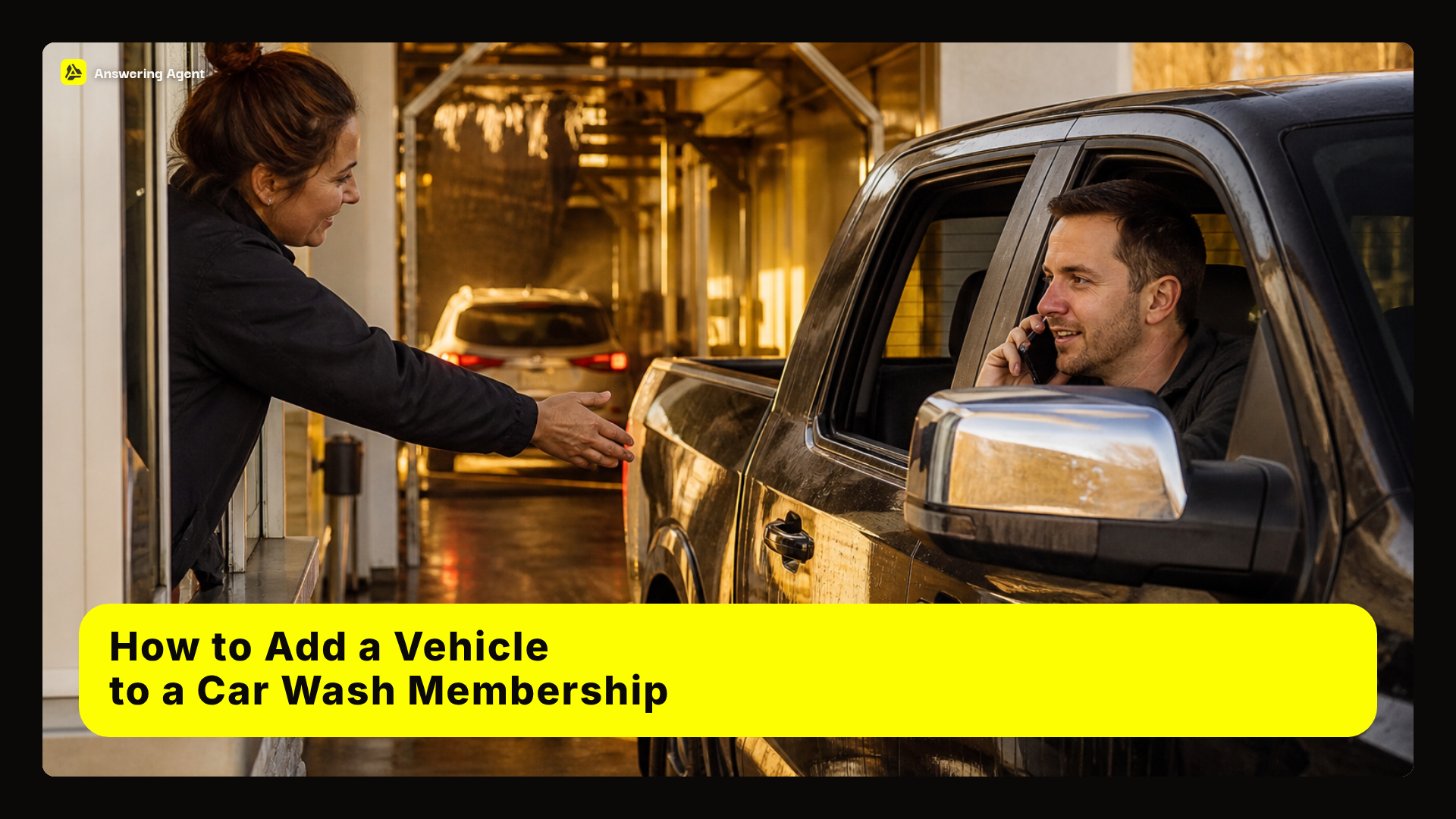
When a member calls to add a vehicle, pull the account while they are on the line and read back the plate on file. Take the new plate and update the record before you hang up. Then tell them what the next draft will be.
Success means the new car is on the plan, the member heard the plate read back, and nothing surprises them at the tunnel or on the statement.
Why do members call to add or swap a vehicle?
Members call because something changed in the driveway. They bought a truck, sold the sedan, passed a car to a teenager, or added a spouse's commute. The plan is tied to a plate or an RFID tag, and the tunnel will not open for a car that is not on file. A member who calls ahead wants to keep paying you, so make the change easy.
Plate changes come up a lot on these calls. A member renews their tags or moves, and the camera stops recognizing a car that has washed with you for years. If your wash runs on plate recognition, that is usually a quick record update. Sometimes the plate on file is right and the camera just missed it, so I run the car wash plate not reading call playbook before I touch the record.
Several calls sound similar but need a different playbook:
- A second draft the member did not expect is a billing call. See handling a double charge.
- A member from another site with a new plate is still an add. True cross-site reciprocity is covered in handling a member from another car wash location.
- A missing or stolen tag that keeps the arm down goes to the lost or stolen car wash membership tag call guide.
- Moving the plan to a new name or primary holder goes to the car wash membership transfer call guide.
What should you actually do on that call?
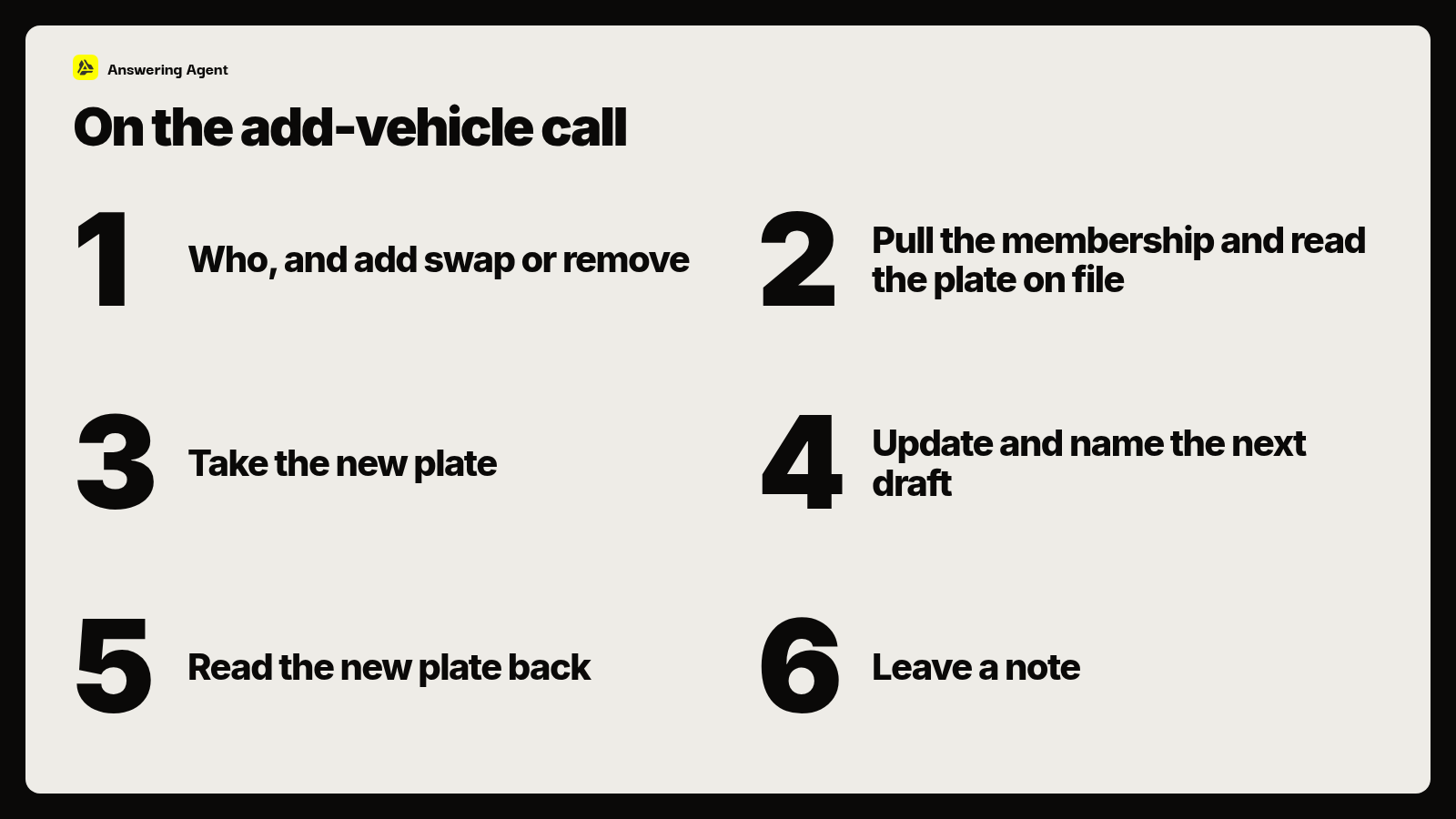
Finish the change during the call. Do not just take a message.
- Ask two things. Ask who is on the account. Then ask whether they want to add, swap, or remove a car. Each one is a different edit.
- Pull the membership and read it out loud. "I have a gray Camry, plate ABC1234, tag on the windshield." Now you are both looking at the same account.
- Take the new vehicle. Get the plate, make, model, and color, and confirm the plate letter by letter. Ask whether the old car is leaving the plan or staying.
- Update the record and state the price. If a second vehicle costs more, give the amount and the date of the next draft.
- Read the new plate back and have them repeat it. One transposed letter and the tunnel will not recognize them.
- Leave a note for the next shift. For example: "Added F150, plate XYZ789, second-vehicle rate, tag pending."
The read-back is the step people skip most often. Do not skip it.
Add, swap, or remove: how do you tell them apart?
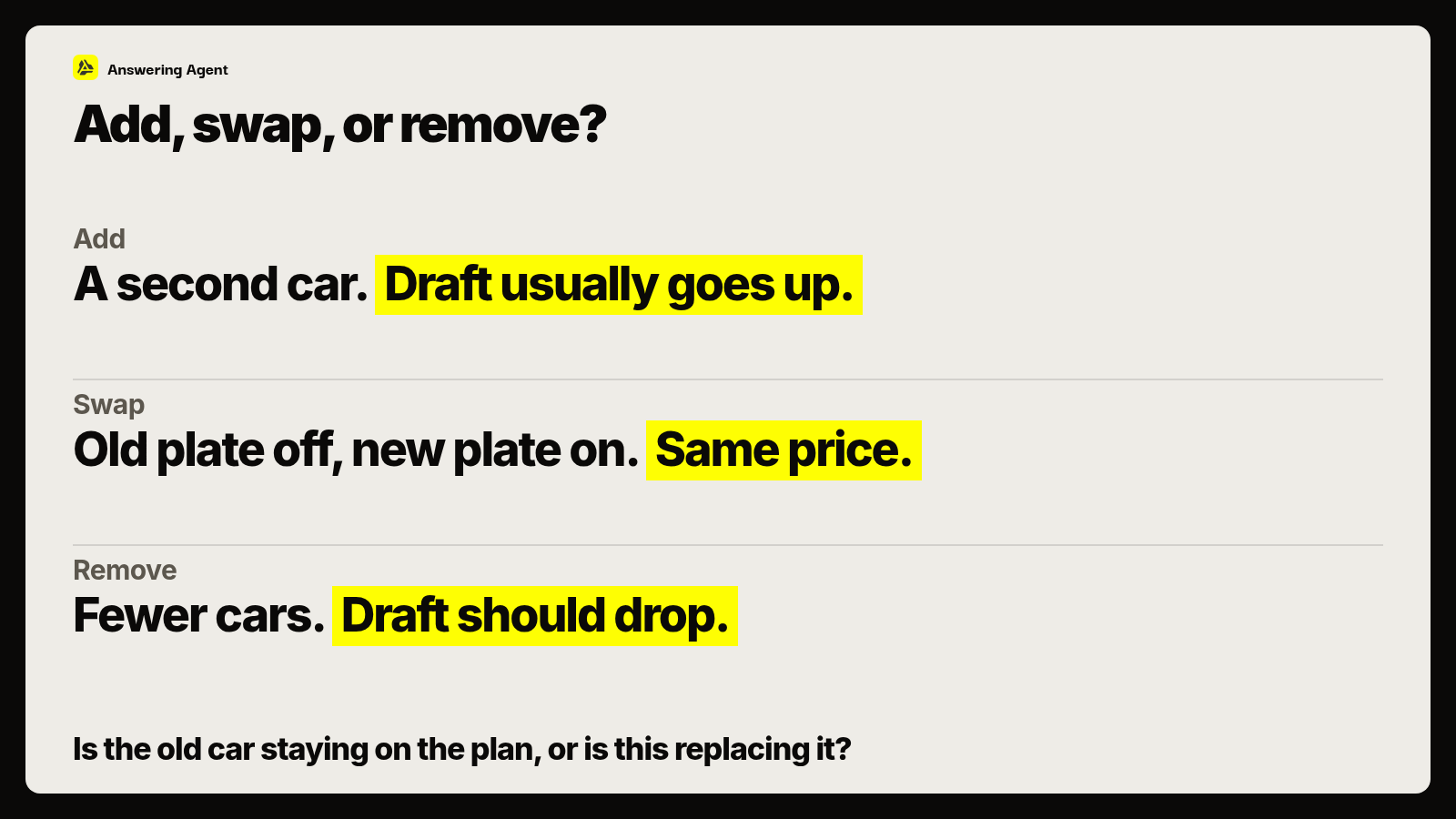
Each request changes the account differently:
- Add: A second car joins the plan, and the draft usually goes up.
- Swap: The old plate comes off and the new one goes on at the same price.
- Remove: The member has fewer cars, and the draft should drop.
Members often say "add" when they mean "swap." If someone sold the sedan and bought a truck and you only add the truck, the sold car stays on the plan. The draft goes up, and they call back angry a month later. Ask: "Is the old car staying on the plan, or is this replacing it?"
Follow two rules. First, never leave a sold car on the account, even if the member says to leave it for now. Take it off today or get a date. Second, never add a vehicle without stating the new draft and getting a yes.
On a swap, say all four parts out loud: old plate off, new plate on, same rate, note in the record.
What do you do when they are already at the tunnel?
Sometimes a member calls from the pay lane. The new truck is at the gate, the tag is on the old car at home, and the arm will not lift. Wave them through if your policy allows it, but get the plate on the record before you hang up.
Read the plate back before you hang up.
A wave-through only solves today. If it is the only thing that happens, the member will be stuck at the same gate next week. They are already in the car, so they can read the plate off the registration while you update the account.
If they need a physical RFID sticker, tell them where and when to get it. "Pull around after your wash and we will put the tag on" works better than "someone will follow up."
How is this different from taking a voicemail?
A voicemail records the request but does not complete it. An add-vehicle call is done when the plate is on the plan, not when someone promises a callback.
| Voicemail | Message-taking service | Coverage that can update the membership | |
|---|---|---|---|
| Who answers | Nobody | An operator with a script | Something working from your member record |
| What they can say | A beep | "Someone will call you back" | "I see the Camry on file, what's the new plate?" |
| Add vs swap vs remove | Not sorted | Written down as words | Applied: add, swap, or remove, with the next draft named |
| After the call | A message to hear later | A note for the morning desk | A plate on the plan with a read-back |
| When they are already at the tunnel | Silence | "They said they are at the gate" | Plate captured on the call, wave-through if you allow it |
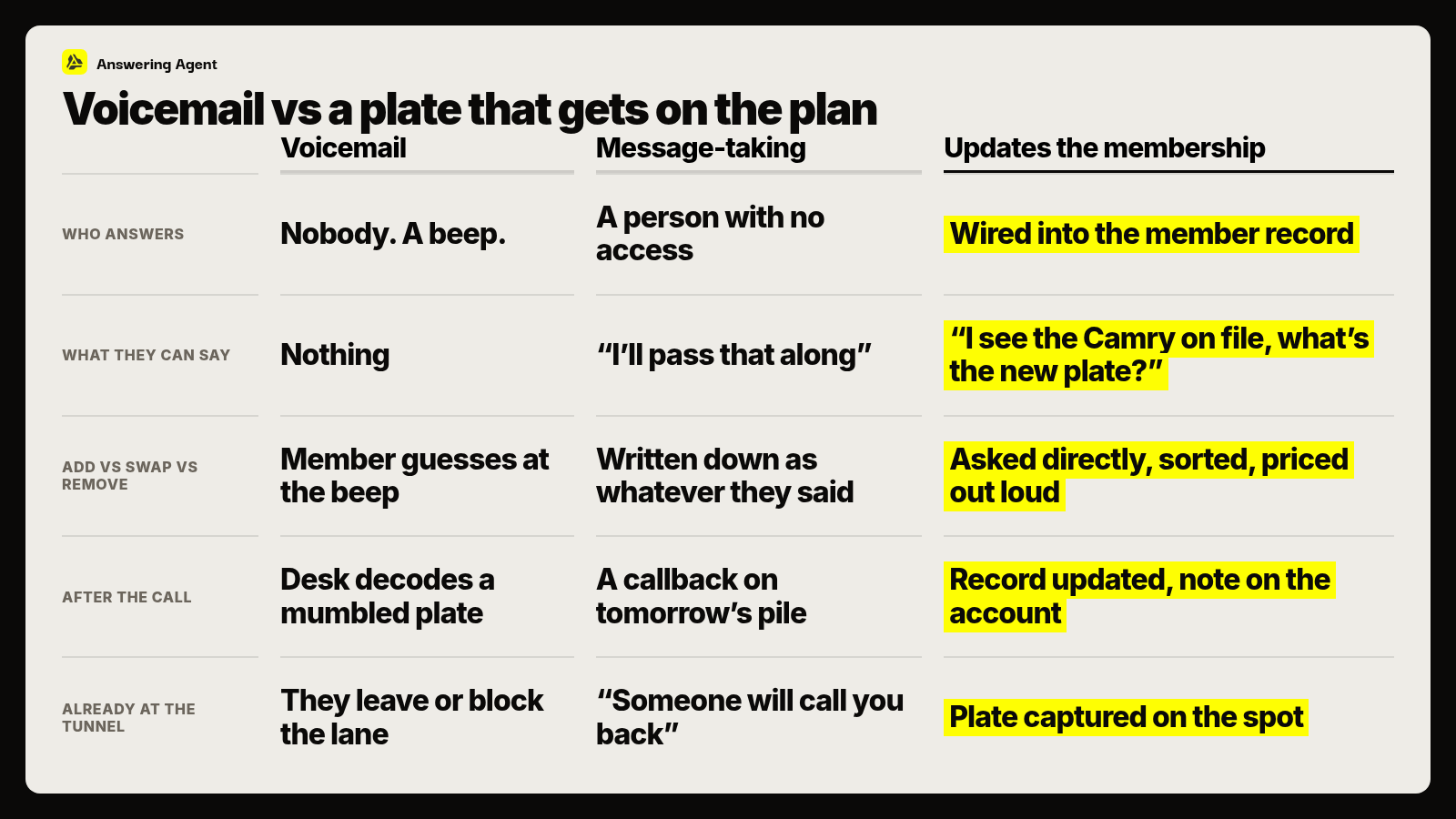
A name-and-number service is fine for a lost sunglasses call. It does not work for a vehicle change. By the time the morning desk calls back, the member may already have been stuck at a closed gate.
What should you check before software takes that call?
Check whether the software can complete the call. It should pull the account, name the plate on file, sort add from swap from remove, update the vehicle, and state the next draft. If it can only take a message, it will not solve the problem.
Answering Agent has answered more than 350,000 calls for service businesses. Some calls still need a person, such as a plate already on someone else's plan or a billing dispute, so the software should transfer those.
For more detail, see how AI phone answering works, the car wash page, and how this plays out at a wash. Related calls include car wash gift card calls and rain and rewash calls.
To test it, check pricing, set it up on a test line, and call it yourself. Say "I need to add my truck," then "I sold the old car." It should handle both the way your best cashier would.
FAQ
Does adding a second car always cost more?
Usually. A swap keeps the vehicle count the same, so the price stays the same. An add puts a second plate on the plan, and most washes bill for the extra vehicle. First ask whether the old car is staying, then state any new charge.
They sold the old car but it is still on the plan. What now?
If they have a replacement car, process a swap. If they do not, remove the old car. Confirm the old plate, take it off, and add the new plate if there is one. Do not start a cancellation just because the member said "sold." For a travel freeze, see membership pause calls. Keep the car wash membership phone calls desk guide handy for related billing and hold calls.
They only changed the plate. Same car. Same call?
Almost, and it is the easiest version. The vehicle and RFID tag stay the same, and only the plate on file changes. Confirm the old plate, update it to the new one, and read it back. If your tunnel reads plates, the camera will not recognize the car until you update it. Billing does not change.
Can they peel the RFID sticker off and stick it on the new car?
No. Most tags are single-use and break when peeled. Update the plate now so the member can wash today, then have them stop at the booth for a new tag. Make sure they do not leave the call thinking the old sticker will scan.
Does this only work if we connect our wash POS?
No. Without a connection, capturing the name, plate, make, model, and whether it is an add, swap, or remove still gives your cashier a complete request. With a connection, the plate is added to the membership during the call. Wash notes are on the car wash page.
How do we try it without changing our published number?
Keep your published number and forward calls to the service on no-answer or after a few rings. Members who reach the cashier will not notice a change. Run it for two weeks, read the call summaries, and then decide.
What should a demo prove on an add-vehicle call?
Ask to add a truck. Halfway through, say you are keeping the old car, and listen for the extra-vehicle rate. Then ask to swap a sold sedan. If it handles both, it can handle routine vehicle calls. Set up a test at book a demo.
When should this call transfer to a manager?
Transfer when the plate is already on someone else's plan or when the member disputes the extra-vehicle price. Fleet account calls go to a manager too. Plain swaps and plate updates should be finished on the call. Write the transfer rule down so every shift uses it.
Book a walkthrough
See it handle your calls.
Book 20 minutes, or hear a sample call first.
Book a walkthrough
See it handle your calls.
Book 20 minutes, or hear a sample call first.