Pull the company account, capture the contact and the plate list or unit count, say what happens next, and hand it to the manager who owns fleet. The fleet washes, the account stays one account, and nobody opens a retail membership at the window to clear the line.
What counts as a fleet call at a car wash?
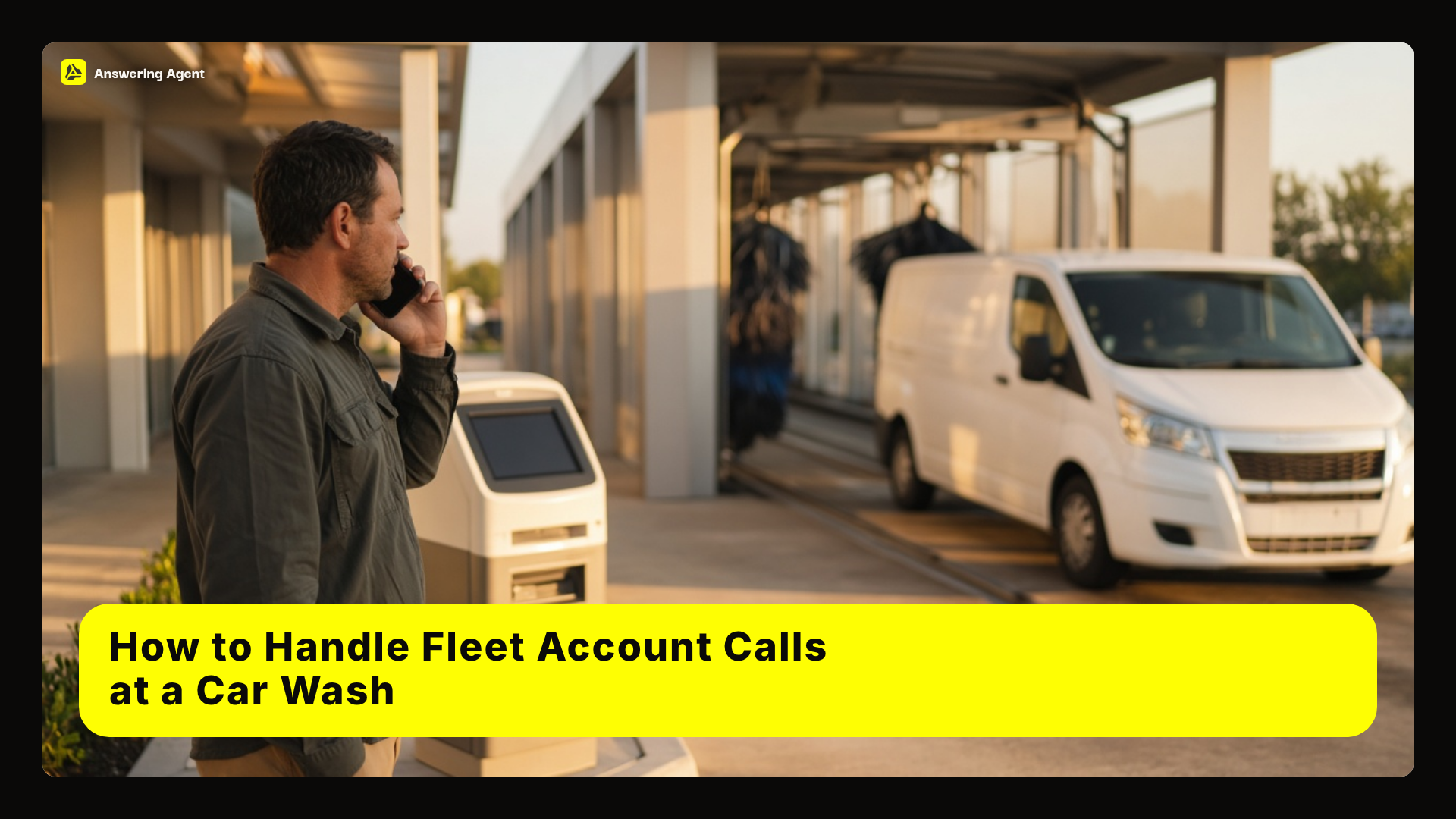
A fleet call is any commercial account work: new account setup, adding or removing plates, billing contact changes, preferred site, invoice questions, or a driver who says they wash under a company plan. A dispatcher asking about commercial pricing counts. So does a driver in the lane with a company name and no account number, and an office manager confirming that the plates from their spreadsheet went in.
One fleet call can move real monthly revenue, which is why the express car wash side of the business treats these accounts differently from drive-up members.
A retail member adding a second personal car is a different job, covered in how to add a vehicle to a car wash membership. That work stays on the personal plan. Fleet belongs with the commercial account and the manager who owns pricing.
What should you actually do when the fleet call comes in?
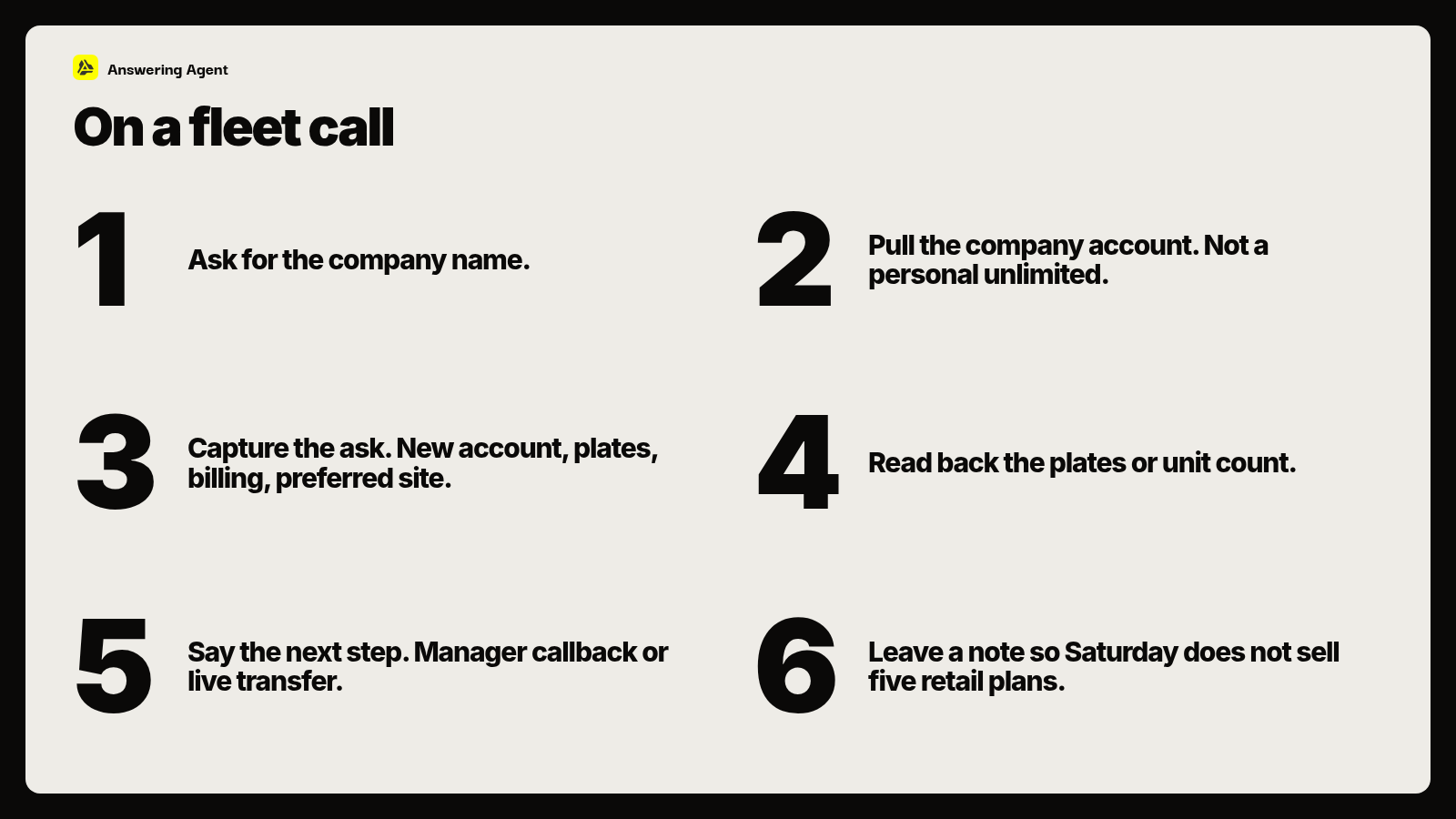
- Ask for the company name and how they wash with you today. Get the account number if they have it.
- Pull the company account, not a personal unlimited under the driver's last name.
- Capture the ask: new account, add plates, remove plates, billing contact, preferred site, or invoice question.
- Read back the plates or the unit count.
- Say the next step: a manager callback by a set time, or a live transfer if your rule calls for one.
- Leave a note the next shift can see.
Pull the company account before you sell them a retail plan.
Staff skip the read-back when the phone is busy, and skipping it costs the most. The plate list is the contract between the account and the tunnel. If it's wrong, a covered truck gets turned away, or a truck that isn't on the account washes free for months.
The note matters because the account holder only sees one wash. If one shift takes the call and writes nothing down, the next shift starts from zero when that company shows up, and Saturday ends up selling them five retail memberships.
Retail unlimited, personal add-vehicle, or fleet account: how do you tell them apart?
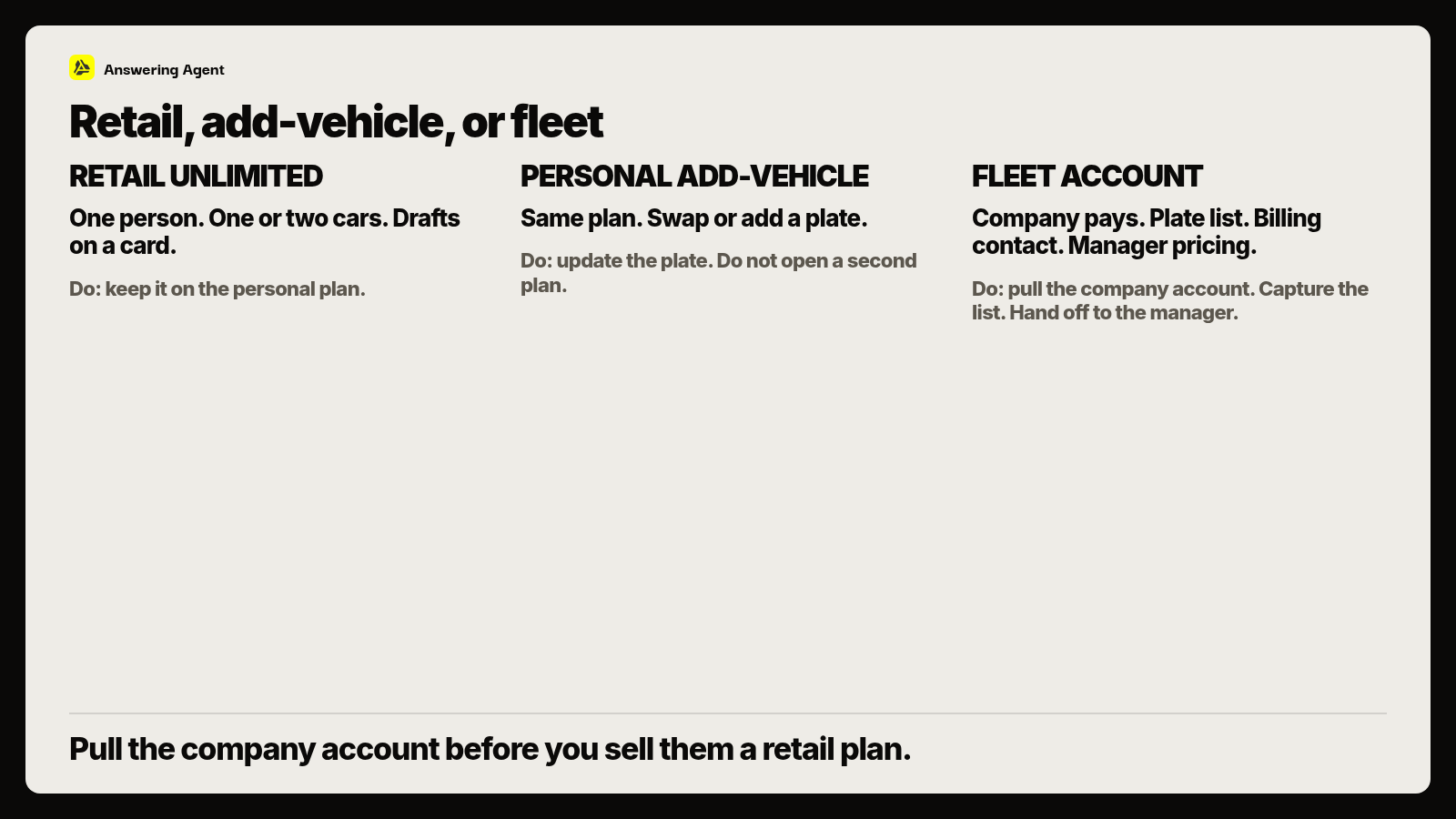
Ask two questions: who pays, and how many plates? If one person pays with their own card for their own car, it's retail. If that person wants a spouse's car on the plan, it's a personal add-vehicle, covered in the add-vehicle post. If a company pays, or the caller mentions an invoice, a spreadsheet, a yard, a dispatcher, or more than a couple of vehicles, it's fleet.
The buckets blur. A small business owner with two work trucks on two retail unlimiteds is a fleet account waiting to happen. When they call to add a third truck, flag the manager instead of opening a third retail plan.
Fleet drivers also roam. The account lives at your north site, and the truck shows up at the south site because that's where the route ended. The lookup works the same way as handling a member from another car wash location: find the account where it lives, honor it where the vehicle is, and log the visit.
Two rules apply. Never open five retail unlimiteds to clear a yard of vans. Never leave a new fleet lead in voicemail.
What if the driver is already in the lane?
The window needs a fast answer to one question: is this plate on this company's list? If it is, wash the truck and log the visit. If it isn't, capture the plate, note the company, and follow your site rule.
Some sites charge for one wash and hand the driver a card. Others wash once and flag the plate for the manager. Either rule works. Having no rule is what breaks, because Saturday improvises, and the improvisation is usually a retail membership.
Whoever answers the phone needs the same fleet rules as the window crew. A dispatcher asking whether a new truck is covered should get the same answer at either place. Fleet lookup and transfer rules belong in your knowledge base, as covered in training the phone on your actual policies.
How is this different from taking a voicemail?
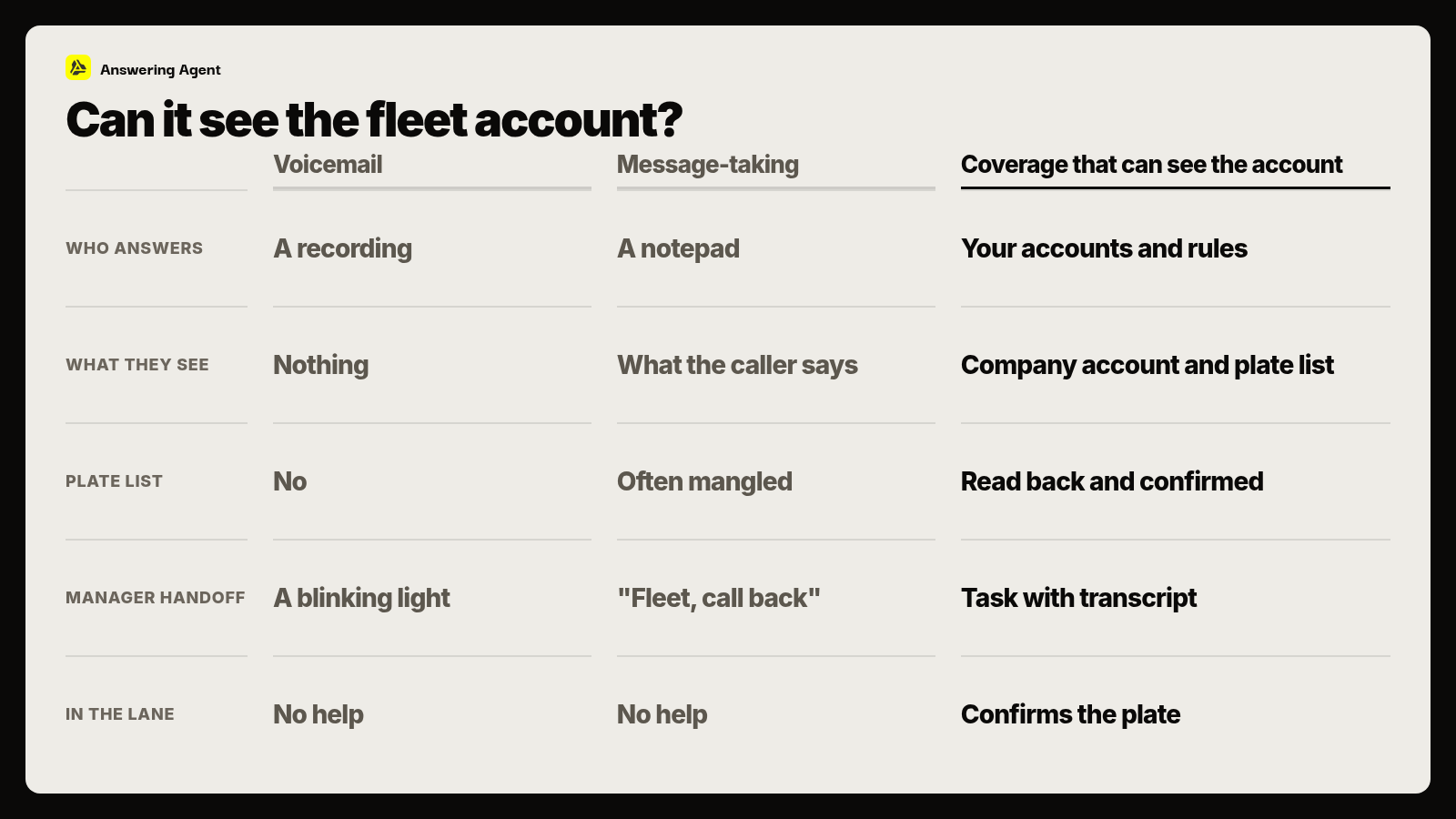
Voicemail can't pull a company account or a plate list. A message-taking service writes "fleet, please call back" while the vans leave. Coverage that can see the account finishes intake on the call, or hands the manager a clean task. Car wash damage claim calls work the same way: build the record, then get it to the person who owns it.
| Voicemail | Message-taking service | Coverage that can see the fleet account | |
|---|---|---|---|
| Who answers | Nobody | A generalist with a notepad | Coverage trained on your accounts and rules |
| What they can see | Nothing | The caller ID | The company account and its plate list |
| Capture plate list | No | Sometimes, often mangled | Yes, read back and confirmed |
| Route to manager | A blinking light | A note that says "fleet, call back" | A task with the full ask and a transcript |
| When the driver is in the lane | No help | No help | Confirms the plate against the account |
Gift cards, fundraisers, and commercial accounts all walk when nobody picks up, because those callers have other options. The coverage case is in why car washes need phone coverage around the clock.
What should you check before software takes that call?
Run the cashier test. Can it pull the company account? Can it tell fleet from retail and from a personal add-vehicle? Can it capture a plate list and read it back? Can it hand a messy commercial ask to a person instead of guessing? If it fails any of these, it will sell retail to clear the line.
Answering Agent captures the company name, contact, plate list or unit count, and preferred site. It then creates a task with a transcript for your fleet manager, or transfers the call live if you flag fleet as urgent. The phone answering feature page explains how it works, and the car wash phone playbook covers the wider setup.
Check pricing, then test it yourself by calling as a dispatcher with three plates. It passes if it takes the company account path, reads back the list, and routes the call to the manager. It fails if it opens retail memberships.
FAQ
What is a fleet account at a car wash?
A fleet account is a commercial wash account. A company pays for washes across multiple vehicles, usually with a plate list, a billing contact, and an invoice. A manager on your side owns it.
Should I sell a retail unlimited to a company with several trucks?
No. Several retail plans create several billing relationships when the company wanted one invoice. Pull the company account, capture the ask, and hand it to the manager who owns fleet pricing.
What information should I capture on a fleet call?
Capture the company name, contact name, callback number, plate list or unit count, preferred site, and what they need done. Read the plates back, then leave a note the next shift can see.
What if the fleet driver is in the lane and the plate is not on the list?
Don't invent a retail plan. Capture the plate, note the company, and follow your site rule, whether that's charging for one wash or washing once and flagging the plate for the manager. Either rule works, but you need one.
Who should own fleet calls, the window or a manager?
The window or the phone captures the details. A manager closes pricing and billing terms. What kills fleet deals is a note with no owner.
Can phone coverage handle fleet account intake?
Yes. Coverage can capture the company name, contact, plate list or unit count, and preferred site. It then creates a task with a transcript for the manager, or transfers live if fleet is flagged urgent. A person at your wash still handles pricing.
Book a walkthrough
See it handle your calls.
Book 20 minutes, or hear a sample call first.