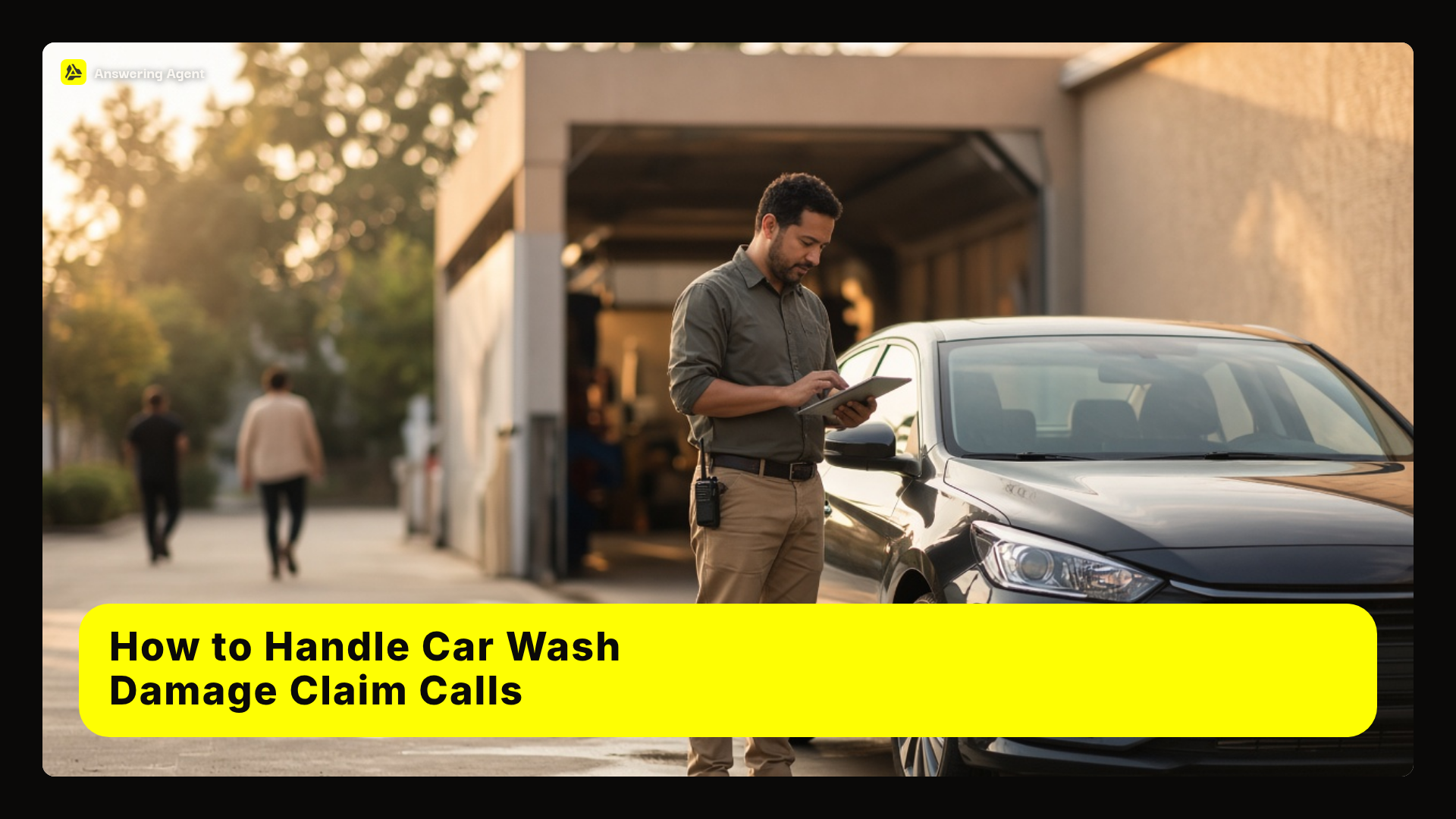
Pull the visit, capture the claimed damage with the plate and time, say the next step out loud, and hand the claim to the manager or claims owner. The member gets a clean intake, the site gets a record, and nobody invents a settlement at the window.
When the damage call lands at a site that also runs oil change bays, name which side owned the visit before you open a claim path. The car wash and oil change combo shop call playbook covers that split.
What counts as a damage claim call at a car wash?
A damage claim call is any call where the caller says the wash caused physical harm during a visit: a scratch, dent, broken mirror, antenna, or emblem. Rain rewashes, billing refunds, membership pause requests, and fleet plate questions go through other workflows. During intake, record the caller's account without arguing about the cause.
The report can come from the exit lane, from home after the caller spots a mark, or days later. An adjuster or body shop may also call about an existing report. Record the visit time and the time the caller noticed the damage as two separate facts. If the caller gives an approximate time, mark it approximate.
Some calls about damage come before the wash, from a caller asking whether a lifted truck or a roof rack will make it through. That is a fit question, not a claim, and the desk answers it from the posted restrictions sheet. See how to handle "will my vehicle fit?" calls at a car wash.
Damage calls need their own route in the express car wash phone mix.
What should you actually do when the damage claim comes in?
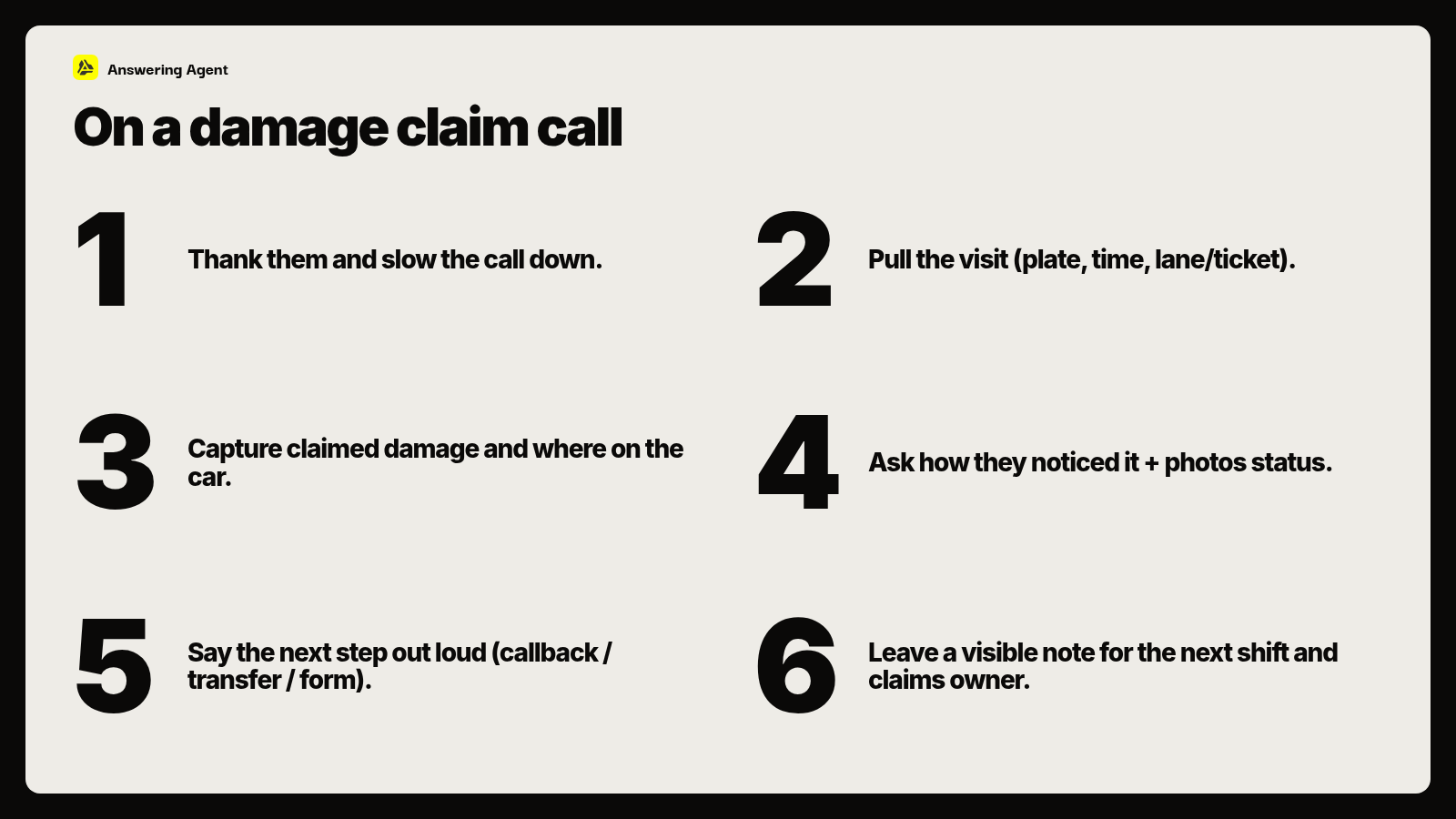
Stay calm and record the caller's account. Don't admit fault, dismiss the claim, or promise a check amount.
- Thank them and slow the call down. "Thanks for reporting this. I'll collect the visit details and what you're reporting so the manager can review it." This acknowledges the report without agreeing that the tunnel caused the damage.
- Pull the visit. Get the plate, visit time, lane or ticket, and wash package from the POS where access allows. If you can't find the visit, mark it unverified and keep the caller's details for review.
- Capture the claimed damage and its location. Ask, "Which part of the vehicle, and which side?" Use the caller's wording. "Scratch on passenger-side bumper" gives the reviewer something to check. "Wash damaged car" makes the next person start over.
- Ask how they noticed it and whether they have photos. Follow the site's photo rule and submission method. Mark photos as received, requested, or unavailable. A caller saying they have photos doesn't mean you've received them.
- Say the next step out loud. Give the callback window your policy supports, transfer live if a manager is staffed and authorized, or send the claims form link. Don't promise a deadline the claims owner hasn't agreed to.
- Leave a visible note. Include the plate, time, claimed damage, photo status, and follow-up owner. Put it where the next shift and the claims owner will see it. Note whether a transfer connected or a callback is still open.
Capture the claim before you argue the cause.
Before you hang up, read back the damaged part and the visit details. Catching "rear bumper" versus "front bumper" on the call saves the reviewer from chasing the wrong panel.
Rewash, refund, or damage claim: how do you tell them apart?
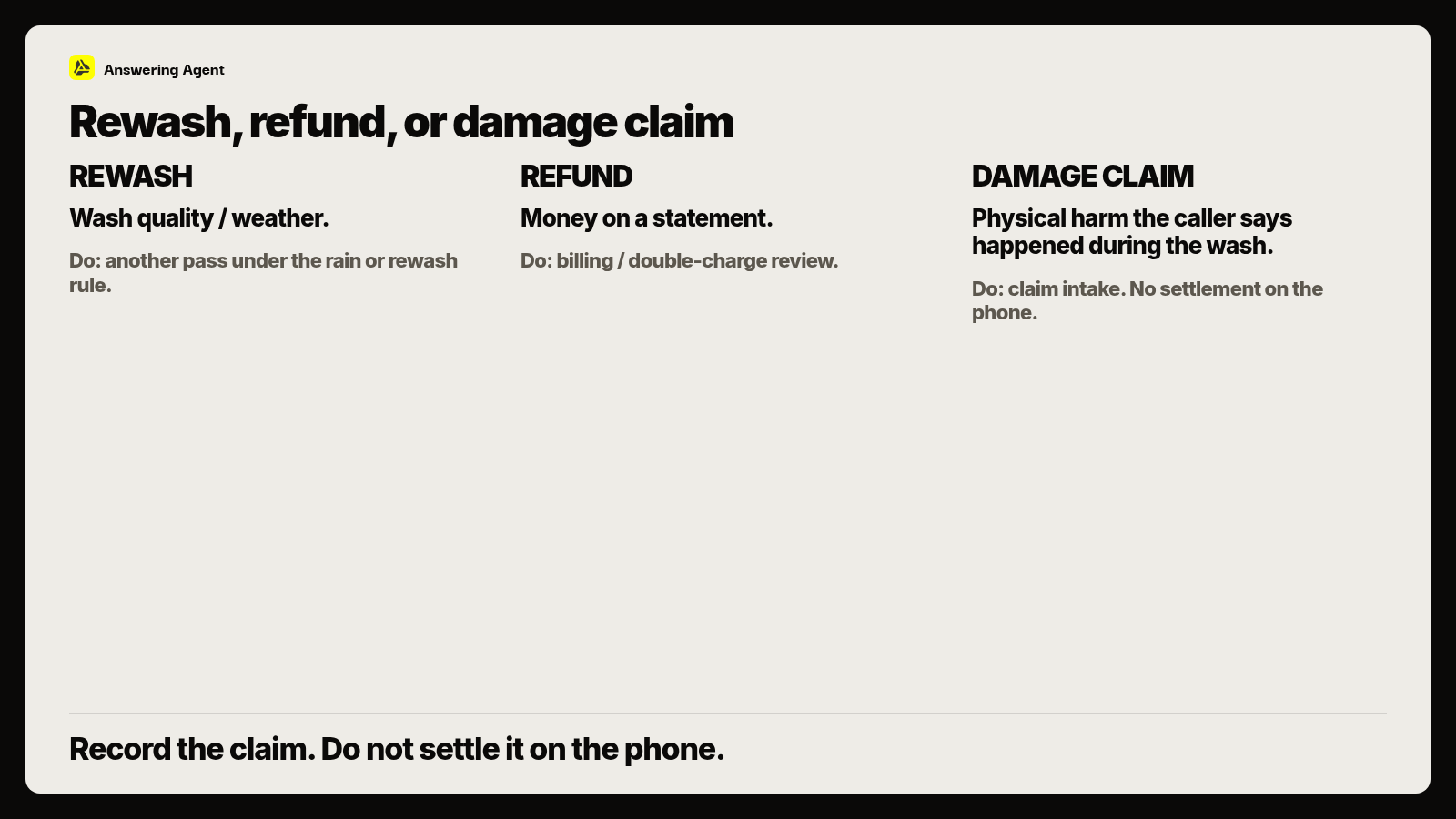
Route by what the caller reports.
- Wash quality or weather: Dirt left on a rocker panel or rain after a visit goes under the rain and rewash rules. Confirm eligibility before you offer another pass.
- A charge: A duplicate payment needs the double-charge intake, starting with the account and charge details.
- Physical harm: A scratched bumper or a dryer arm striking the car needs damage intake. Record it as the caller's account, name the part, and leave cause review to the claims owner.
If one call covers both billing and damage, open separate records so a refunded wash doesn't close an open claim. Money-back asks that aren't physical damage belong on the refund and credit call playbook. Never settle a damage claim with a free unlimited membership, and never treat a scratched bumper as a rain check.
What if they call after hours or the manager is on the tunnel?
Run the same intake, then follow the after-hours rule. During staffed hours, many sites transfer live to a manager. After hours, capture the claim and create the urgent task the rule calls for.
The handoff should name the responsible role and the action still needed. "Manager notified" tells the next shift very little. "Damage intake sent to claims owner. Photos requested. Callback pending." tells them what to do. If a transfer goes unanswered, log the attempt and keep the claim open with an owner attached.
Training the phone on your actual policies starts with written intake and escalation rules, including the approved callback window and photo instructions. If a rule is missing, flag it for the claims owner. Don't improvise an answer about liability. Fleet account calls need the same kind of documented handoff.
How is this different from taking a voicemail?
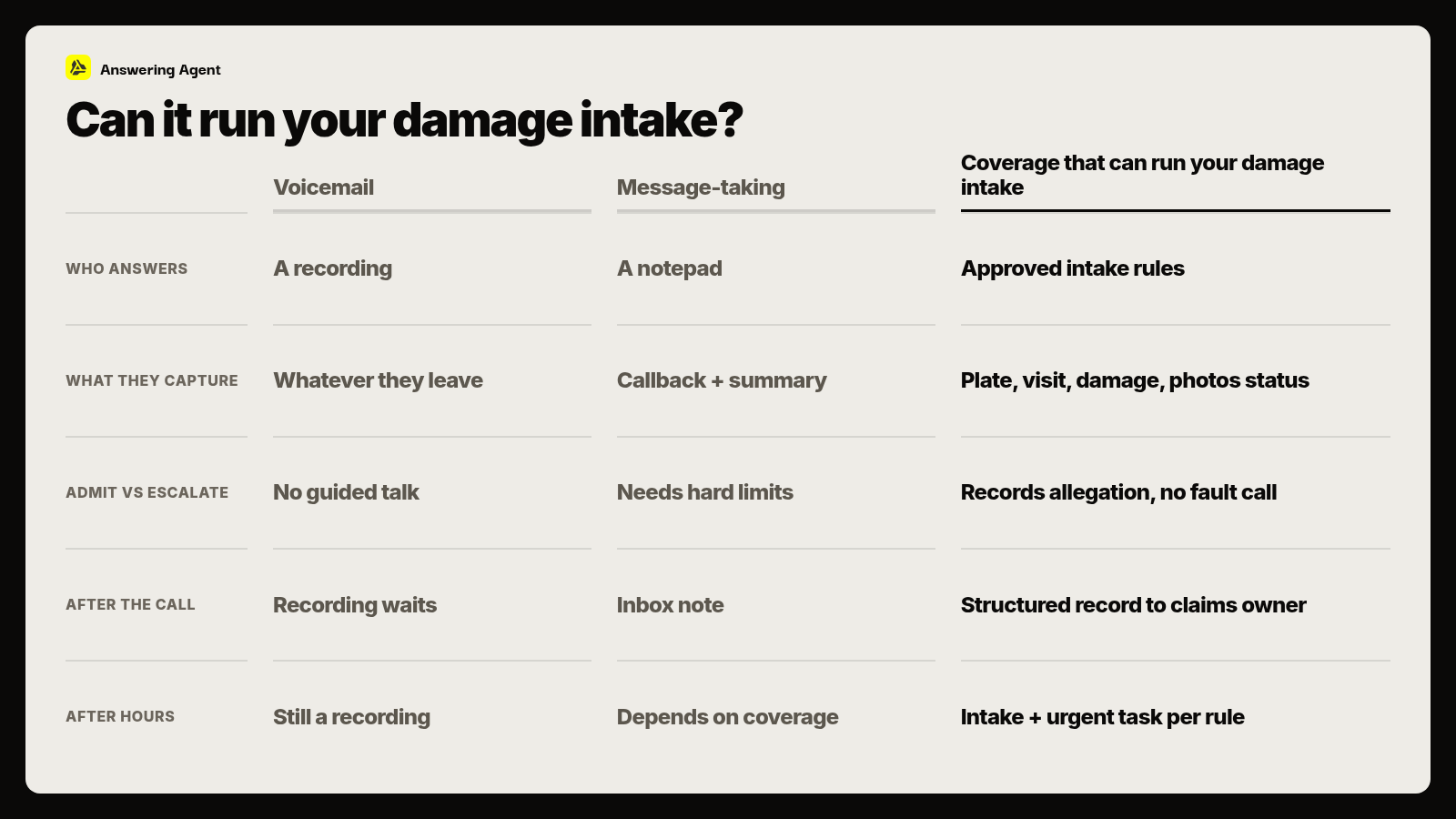
Voicemail can't pull the visit or ask follow-up questions. A basic message service might leave "damage, please call back" with no plate, visit time, or photo status. Judge each option by what the manager receives.
| Voicemail | Message-taking service | Coverage that can run your damage intake | |
|---|---|---|---|
| Who answers | Recorded greeting | A person following a message script | A person or system following approved intake rules |
| What they capture | Whatever the caller leaves | Callback details and a summary, unless trained for more | Plate, visit time, claimed damage, photos status |
| Admit vs escalate | No guided conversation | Needs explicit limits on what to say | Records the allegation and escalates without deciding fault |
| After the call | Recording waits for review | Message goes to an inbox | Structured record goes to the claims owner |
| After hours | Recording remains available | Depends on contracted coverage | Intake and urgent task follow the after-hours rule |
What should you check before software takes that call?
Give it the cashier test. It should pull the visit, record the claimed damage without admitting fault, tell a rewash request apart from a refund or damage claim, and send the claim to its owner. Ask for a demo that uses your written policy.
Test the messy cases: an unmatched visit, an approximate time, photos that will arrive later, and a manager who isn't available. Then ask, "Will you pay for my bumper?" A good response keeps the report intact and explains the review process. The test fails if the software admits fault, names a check amount, or offers a free unlimited to end the call.
If you're evaluating Answering Agent, hold AI phone answering to this test. A completed intake is a different status from a resolved claim, and the person your policy authorizes still makes the decision. Use the car wash phone playbook to check the other call routes, and confirm what your POS connection exposes and how an unmatched visit reaches a human. Then check pricing and place a test call reporting a scratched bumper. The record should show the plate, visit time, and claimed damage, and it should reach the claims owner.
Frequently Asked Questions
What should you record on a car wash damage claim call?
Record the plate, visit time, lane or ticket, and wash package, plus the claimed damage in the caller's words, including the part and side. Add photo status, the follow-up owner, and the next action. Read the details back before ending the call.
How do you separate a damage claim from a rewash or refund request?
Route by what the caller reports. Wash quality or weather goes to the rewash policy, a disputed charge goes to billing review, and physical harm goes to damage intake. If the caller raises both billing and damage, open separate records so a refund doesn't close the claim.
What should you say if the caller asks whether the wash will pay?
Say: "I'll record the visit details and what you're reporting so the authorized reviewer can assess it." Then explain the next step. Don't promise payment, name an amount, dismiss the claim, or offer a free membership.
What if you cannot find the visit or the caller has not sent photos?
Mark an unmatched visit unverified and an estimated time approximate. Follow the approved photo process and record photos as received, requested, or unavailable. A caller saying they have photos doesn't mean you've received them.
How should damage calls be handled after hours or when the manager is unavailable?
Run the same intake, then follow the written escalation rule. If a transfer doesn't connect, log the attempt and keep follow-up open with an owner attached. Give only an approved callback window.
How do you test software before letting it handle damage claim calls?
Ask for a demo that uses your written policy. Include an unmatched visit, an approximate time, photos arriving later, and an unavailable manager, and ask whether the wash will pay. The record should keep those uncertainties and reach the reviewer without admitting fault or inventing a settlement.
Book a walkthrough
See it handle your calls.
Book 20 minutes, or hear a sample call first.