
A membership call goes well when the desk finds the right account and gives the member a clear answer without hunting down a manager.
That's what I work toward with wash CX teams, member services, and site managers. The person answering needs to know what they can finish and when they need approval. A double charge shouldn't become a string of callbacks because nobody recorded which transactions the member questioned.
These requests repeat, so the desk shouldn't have to work out a process from scratch each time. Give each call type a name and a short procedure. Keep the deeper how-to close for exceptions.
What counts as a membership phone call?
Membership phone calls are requests to explain, change, or investigate a member's account or wash access. The desk needs to identify the account and understand what the caller wants before applying a rule. From there, someone either has authority to finish the task or needs to make a useful handoff.
I sort calls by what the caller needs done. "My pass didn't work" describes the problem, but it doesn't tell the desk which process to use. The plate might be wrong. The member might be at a location their plan doesn't cover, or the account might never have attached to the vehicle.
Gift cards, fleet accounts, and damage claims also reach the same desk. They belong here because they require careful lookup and follow-through, even when there's no monthly membership involved.
Which seven call types should the desk recognize?
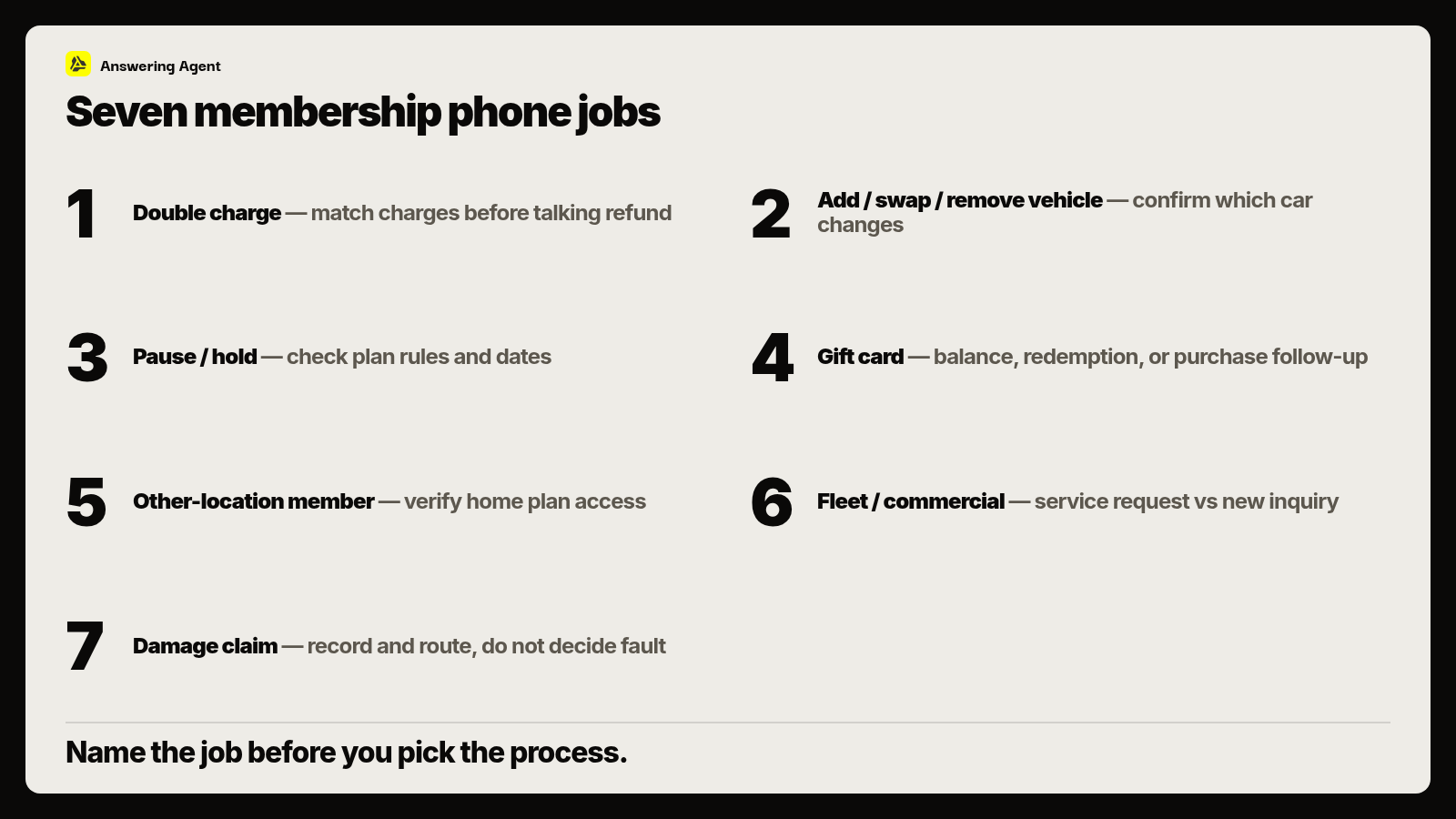
Use these seven call types to decide which process fits the request. Each starts with the first thing to check, followed by a deeper guide for the details and exceptions.
Double charge
Match the reported charges to the correct account and transactions before discussing a refund.
I start with the dates and amounts the member questions. Then the desk can check what the POS shows. Two completed charges need a different answer from a pending authorization. Separate memberships may explain matching amounts.
Don't call something a duplicate just because the amounts match. Explain what you found and what you're authorized to do. If billing review is needed, tell the member what happens next. Use the double-charge membership call guide for the lookup and resolution process.
Add, swap, or remove a vehicle
Confirm which vehicle stays and what changes before editing the account.
"Change my car" can mean replacing a traded vehicle or adding another paid vehicle. It can also mean removing one from a multi-vehicle account. I want that settled before anyone edits a plate.
Verify the existing vehicle and any new vehicle details. Check what the plan allows, including any billing effect. Read the plate back before saving. One wrong character can send the member back to the window. Start with the vehicle membership change guide, then follow the wash's rules for the requested change.
Pause or hold
Check whether the plan permits a hold before explaining how it would work.
A member asking for a break needs to know when wash access changes and how billing resumes. I keep those dates in the same explanation so "paused" doesn't become an open-ended promise.
If a hold needs approval, record the request without saying it's active. If the plan doesn't offer holds, say so and explain the available next step. The membership pause call guide helps the desk work through the request without guessing at policy.
Gift card
Find out whether the caller needs a balance check or help using the card. A purchase investigation needs its own follow-up.
A gift card call can sound like a payment failure when the issue is where or how the card can be used. Check the card type and redemption rules before promising it will pay for a membership.
I also check whether the caller bought the card or received it. The receipt may be with somebody else. Use the car wash gift card call guide to organize the lookup and explain what comes next.
Member from another location
Verify the home location and the plan's access rules before promising entry.
A shared name on the sign doesn't establish what a particular membership includes. Confirm the account, then check whether that plan works at the requested location.
I want the member to hear a definite answer when the records support one. If they don't, identify who can verify access. Passing along another phone number without context leaves the member to start over. The guide to helping a member from another location covers the cross-location check and handoff.
Fleet or commercial account
Separate an existing account service request from a new fleet inquiry.
An approved contact adding a truck needs a different process from a business asking about rates. For an existing account, verify the caller's authority before discussing the affected vehicles and requested change. For a new inquiry, capture the business contact and the service they need.
I leave negotiated pricing and credit decisions with the person authorized to make them. The desk can still gather a useful request. Follow the fleet account phone guide so the next person has enough information to act.
Damage claim
Record the report and send it to the designated reviewer without deciding responsibility.
Confirm the location, visit date and approximate time, vehicle, and contact details. Record what the caller says happened. Keep their account separate from anything the wash has verified.
I would rather have a complete handoff than an early promise about repairs. Explain the review process and give only a response window the team can honor. Use the car wash damage claim call guide for documentation and escalation.
How should the desk run any of these calls?
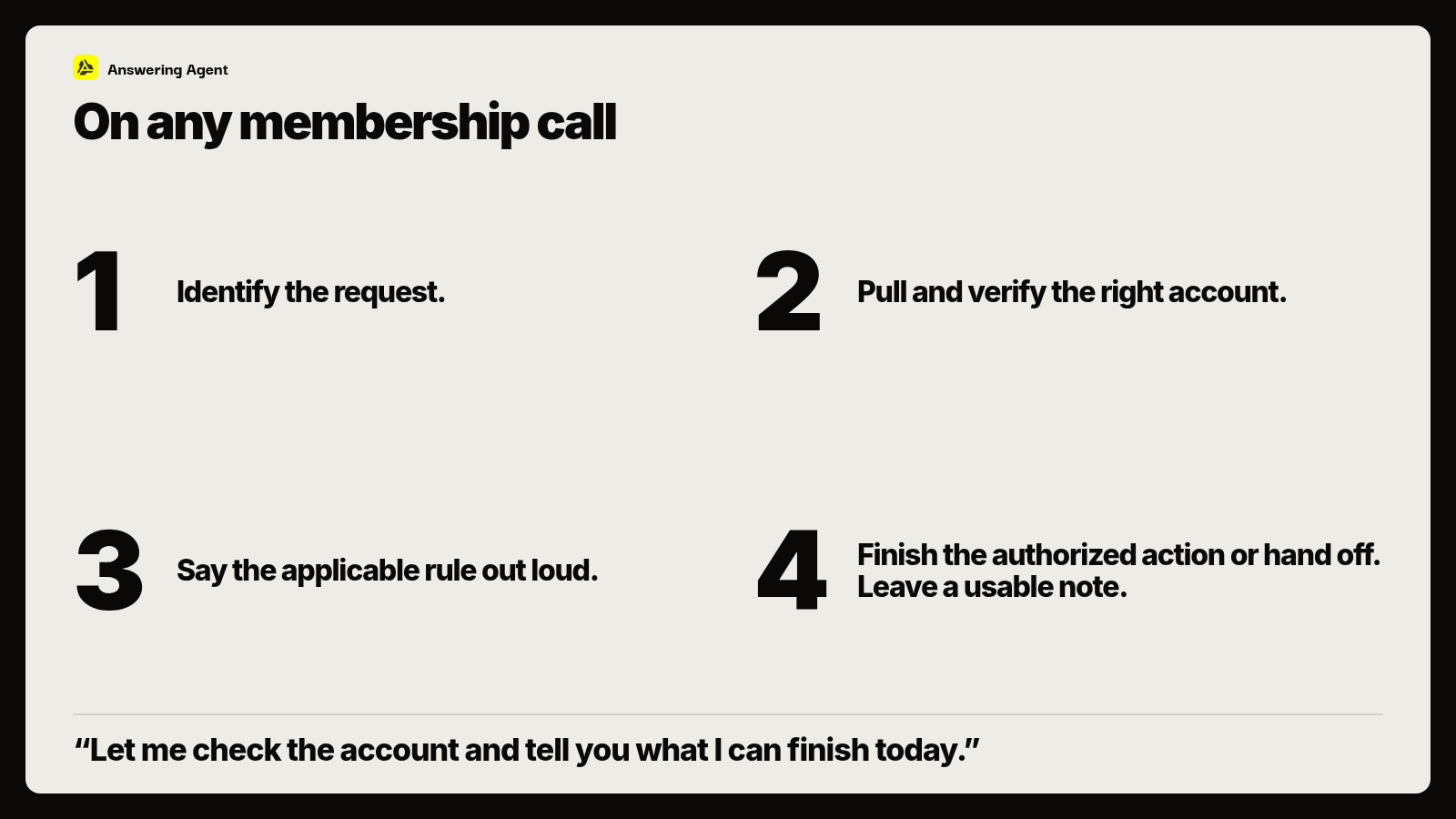
Start by identifying the request and verifying the right account. Explain the applicable rule before taking action. Then finish what you're authorized to do or send the exception to the person who can decide it.
I start account lookup with the least information needed, often a phone number or plate. Finding a matching record doesn't establish the caller's authority. Follow the wash's verification procedure before discussing private details or making changes.
Explain the relevant condition in terms of this account. If a vehicle swap changes access, say when. If a refund requires approval, make clear that you're submitting a request. Don't let the member leave the call thinking the refund is complete.
"Let me check the account and tell you what I can finish today."
That works on the phone and at the window because it commits the desk to checking and answering. It doesn't promise an outcome that needs someone else's approval.
Leave a note the next person can use. Include the call type and affected vehicle or transaction, along with what you verified and did. If work remains, name the responsible team and record any callback commitment. Keep full payment card details out of free-text notes.
What kind of phone coverage can actually move the job forward?
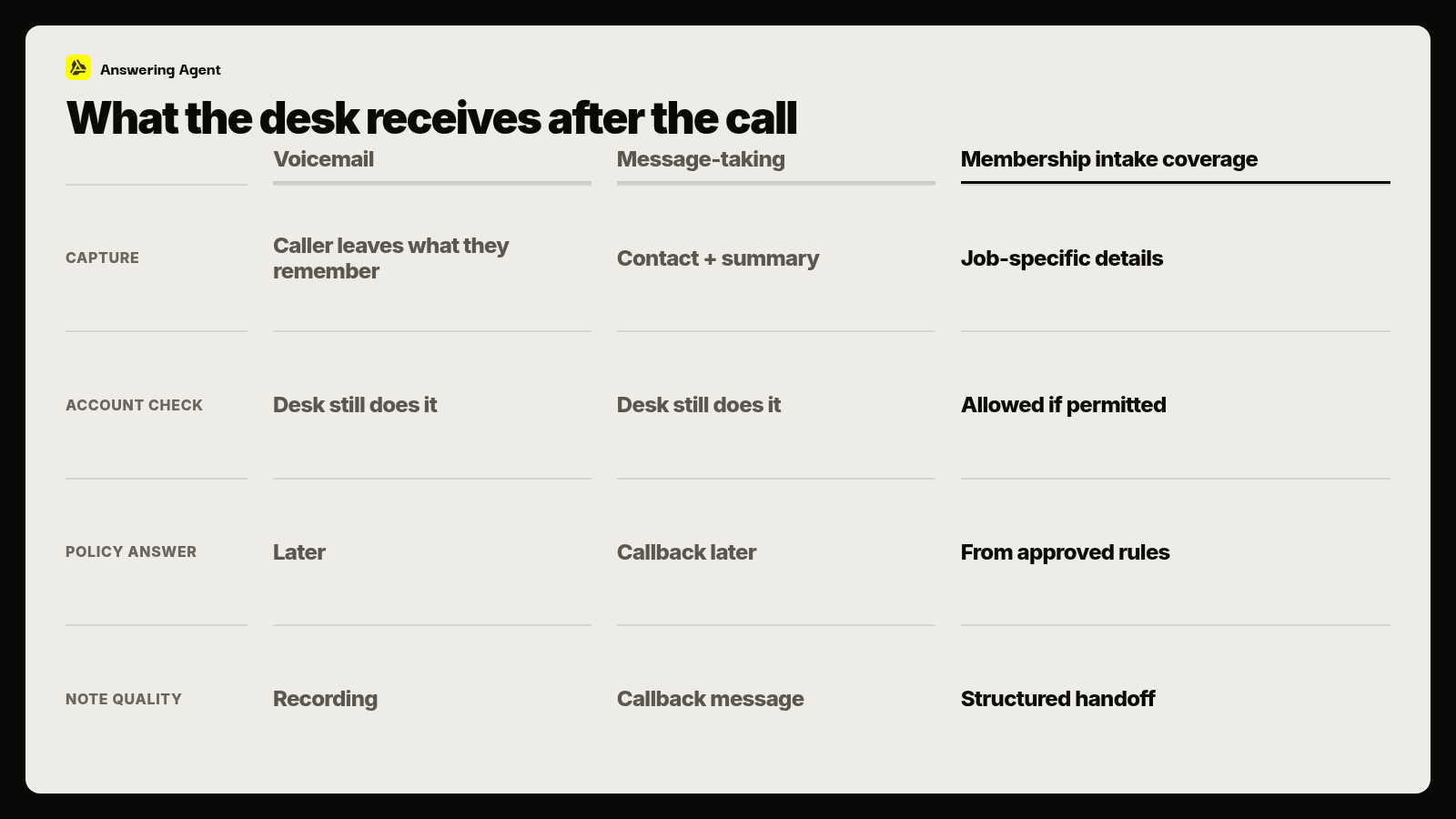
Phone coverage helps when it keeps the caller from having to repeat the request and moves the work toward a decision. Voicemail and message-taking leave different amounts of work for the desk. Membership intake can go further, depending on its permissions.
| Coverage | What it can capture | Work still left for the desk |
|---|---|---|
| Voicemail | Whatever details the caller chooses to leave | Classify the request, verify the account, collect missing details, and resolve it |
| Message-taking | Contact details and a summary from a general script | Perform account checks and explain the applicable membership rule |
| Membership intake coverage | Job-specific details, approved policy answers, and a structured handoff | Handle exceptions and any action outside the coverage's permissions |
The last row depends on the setup. Account lookup requires permitted access, and policy answers need current rules. Any account change requires explicit authority. A detailed message doesn't prove that an account was updated.
I would test coverage with a double-charge question and a vehicle swap before judging it by how friendly it sounds. I'd also check how it handles a member asking about access at another location. Look at what the desk receives after each call and whether the caller knows what remains unresolved.
Rain and rewash requests are related tunnel calls. Keep the rain and rewash phone guide handy so a service-policy question doesn't get treated as a membership change.
Where can I evaluate Answering Agent for membership phone coverage?
Answering Agent has been in the space for two years. The agent picks up and responds in about a second and a half. About two out of three calls are handled start to finish without needing a human. About 1 in 10 phone calls get forwarded.
If you're evaluating it, I'd use the call types above to check what it can finish under your wash's rules and what still needs your team.
Start with Answering Agent for express car washes. Review the AI phone answering features against the work your desk handles, then check Answering Agent pricing.
What should the desk have ready for Tuesday?
I'd put these seven call names beside the phone with the matching how-to links. Each exception needs a current approval contact so the desk knows where to send it.
Then check whether the person answering can find the membership rules and verify an account. Review what goes into the handoff note. If a permission is missing or nobody knows who owns the next step, fix that before adding more to the script.
FAQ
What counts as a car wash membership phone call?
A membership call asks the desk to explain, change, or investigate an account or wash access. Identify what the caller needs, find the correct account, and follow the wash's verification procedure before sharing private details or making changes.
Which membership call types should the desk recognize?
Keep seven call types handy: double charges, vehicle changes, pauses or holds, gift cards, members from another location, fleet accounts, and damage claims. Gift cards and damage reports may not involve a membership, but they still need a clear lookup process and follow-through.
What should the desk check before calling a charge a duplicate?
Match the dates and amounts the member questions to the account's transactions. Check whether the entries are completed charges, a pending authorization, or payments for separate memberships. Explain what the records show, and distinguish a submitted refund request from an approved or completed refund.
What should the desk verify before changing a membership vehicle?
Confirm whether the member wants to add, replace, or remove a vehicle, then verify which vehicle stays and which details change. Check the caller's authority, plan limits, and any billing effect. Read the plate back before saving, and explain when the change affects wash access.
What belongs in a membership call handoff note?
Record the call type, affected vehicle or transaction, verified details, and actions taken. If work remains, name the responsible team and include any callback commitment. Make clear what is still awaiting approval, and keep full payment card details out of free-text notes.
How should a wash evaluate Answering Agent for membership phone coverage?
Test it with a double-charge question, a vehicle swap, and a cross-location access request using your wash's current rules. Check whether it collects the required details, stays within its permissions, and gives the desk a usable handoff. The caller should know what was completed and what still needs review.
Book a walkthrough
See it handle your calls.
Book 20 minutes, or hear a sample call first.
Ready to see it handle your calls?
Book a walkthrough, or hear a short sample call first.
Related Articles

How to Handle Pickleball Guest Fee Calls
Handle pickleball guest fee calls by identifying the visit type, quoting the written fee sheet, and confirming payment, court access, and check-in requirements.
How to Handle Car Wash Membership Pause Calls
Handle car wash membership pause calls with written hold rules, clear dates, billing and plate status, and a reopen note the next shift can use.
How to Handle Car Wash Damage Claim Calls
Handle car wash damage claim calls with a clear intake: capture plate, visit time, and claimed damage, then hand the record to the claims owner without promising a settlement.